Whitmore Name Meaning and Origin
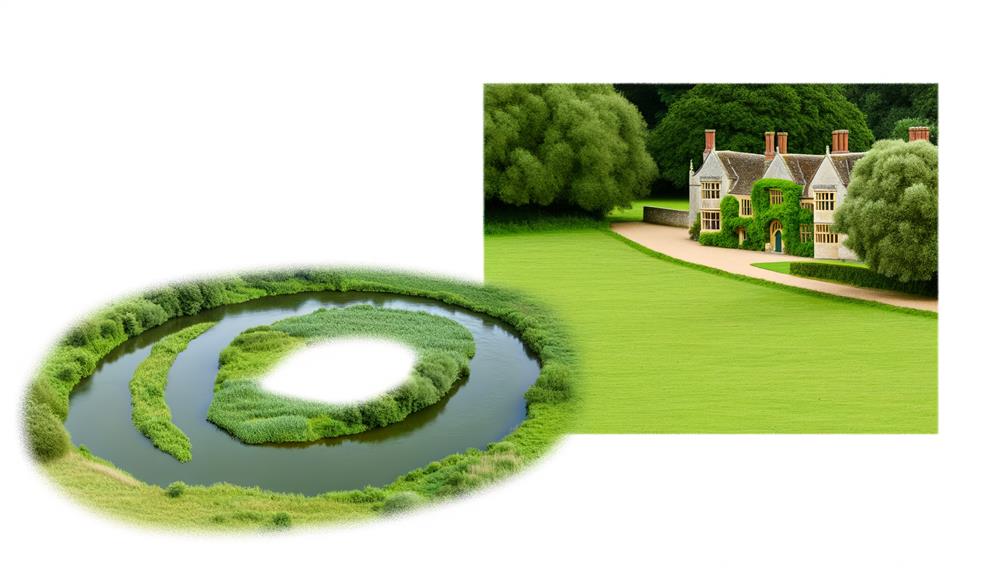
The surname Whitmore traces its origins to medieval England, deriving from the Old English words 'hwit' (white) and 'mor' (moor). It historically referred to inhabitants of light-colored moorlands and was associated with landownership and local governance, reflecting regional prominence.
Early records from the 12th century illustrate its bearers' roles in shaping rural communities and their place in the English social hierarchy. The surname has various forms, such as Whittemore and Whitmire, showing its evolution through time and geography.
Whitmore remains significant today, with prominent descendants contributing to diverse fields. Explore the intricate history and notable bearers of this storied name further.
Key Takeaways
- The Whitmore name traces back to medieval England and is associated with land ownership and local prominence.
- Etymologically, Whitmore combines the Old English words 'hwit' (white) and 'mor' (moor), indicating light-colored moorland.
- Early records from the 12th century highlight Whitmore bearers' involvement in local governance and landownership.
- Variants of the Whitmore surname include Whittemore, Wetmore, and Whitmire, reflecting regional phonetic adaptations.
- The Whitmore name remains significant today, with descendants prominent in academia, arts, and community philanthropy.
Historical Background
Tracing its origins back to medieval England, the Whitmore surname is deeply rooted in the socio-political landscape of the period, reflecting both geographical and familial influences.
During the 11th and 12th centuries, the establishment of surnames became increasingly common as a means of distinguishing individuals within growing communities. The Whitmore name emerged within this context, often associated with land ownership and local prominence.
Families bearing this surname were typically linked to specific regions, playing significant roles in local governance and feudal responsibilities. The name's persistence through centuries underscores its historical significance. It was not merely an identifier but also a marker of status and lineage, integral to the evolving English social hierarchy, thereby encapsulating a rich tapestry of historical narratives.
Etymology of Whitmore
The etymology of the surname Whitmore reveals its origins in Old English, combining the words 'hwit,' meaning 'white,' and 'mor,' meaning 'moor,' thereby indicating a geographical connection to a white or light-colored moorland area. This linguistic amalgamation suggests that the earliest bearers of the name were likely inhabitants of or near such distinctive landscapes.
Old English place names often reflected prominent natural features, and 'Whitmore' exemplifies this tradition. The term 'hwit' was frequently used in toponyms to describe areas distinguished by lighter soil or vegetation. Meanwhile, 'mor' denoted a tract of uncultivated upland, commonly associated with marshy or boggy terrain. Ergo, Whitmore encapsulates a vivid description of the environment familiar to its original bearers.
Geographic Roots
Grounded in the topographical features of the British Isles, the surname Whitmore is mainly associated with specific regions in England known for their characteristic moorland landscapes.
These regions include:
- Staffordshire: Renowned for its extensive moorlands and historical estates, Staffordshire plays an essential role in the proliferation of the Whitmore surname.
- Shropshire: This county, with its rolling hills and ancient moorlands, also serves as a significant geographic root for the name Whitmore, reflecting the Old English term 'hwita' (white) and 'mor' (moor).
- Cheshire: Known for its varied terrain, Cheshire's moorlands contribute to the historical backdrop against which the Whitmore surname emerged, highlighting the interplay between geography and nomenclature in medieval England.
Early Records
Documented as early as the 12th century, the Whitmore surname appears in historical records that offer valuable insights into its medieval origins and the social standing of its bearers.
Early records, such as the Domesday Book and various medieval tax rolls, indicate that individuals bearing the Whitmore name were often landowners, which suggests a certain level of wealth and influence.
Charters and legal documents from this period reveal that the Whitmores were frequently involved in local governance and agricultural management. These records not only provide a glimpse into the socio-economic status of the Whitmore family but also highlight their contributions to the development of rural communities during the Middle Ages.
This foundational information sets the stage for understanding the broader historical context of the Whitmore lineage.
Whitmore in England
England's rich tapestry of history is intricately woven with the Whitmore family's enduring presence, reflecting their significant role in both local and national narratives. The Whitmores have left an indelible mark on various aspects of English life:
- Land Ownership: The Whitmore family held substantial estates, influencing regional economies and social structures, particularly in Staffordshire and Shropshire.
- Political Involvement: Members of the Whitmore lineage served in prominent governmental roles, contributing to legislative processes and political discourse, especially during the Tudor and Stuart periods.
- Cultural Contributions: The family patronized the arts and education, supporting institutions that fostered cultural and intellectual advancements.
These elements underscore the Whitmore family's significant integration into the fabric of English society, highlighting their multifaceted contributions.
Migration Patterns
The migration patterns of the Whitmore family reveal a complex interplay of economic motivations, political pressures, and social aspirations. This tracing of their movements extends from the English heartlands to various global destinations. During the 17th and 18th centuries, economic opportunities in the American colonies attracted many Whitmores, seeking prosperity through land acquisition and trade.
The Industrial Revolution spurred further relocations, as some sought employment in burgeoning urban centers. Political upheavals, including the English Civil War, also prompted migrations to safer regions. In the 19th century, the expansion of the British Empire facilitated Whitmore ventures to Australia and Canada, driven by prospects of new beginnings.
This diaspora reflects broader societal shifts, encapsulating the Whitmore family's adaptive resilience and global dispersal.
Notable Whitmores
The Whitmore lineage boasts a number of distinguished individuals, both in historical and contemporary contexts. Notable historical figures bearing the Whitmore name have made significant contributions in fields such as politics, literature, and science, establishing a lasting legacy.
In modern times, influential Whitmores continue to impact various sectors, including business, entertainment, and academia, thereby perpetuating the prominence of this storied surname.
Famous Historical Figures
Among the significant individuals bearing the Whitmore surname, several have left indelible marks on history through their important contributions to politics, literature, and military service. Their legacies reflect a rich tapestry of dedication and achievement.
Sir George Whitmore: A distinguished English military engineer in the 16th century, Whitmore's expertise in fortifications was essential during England's numerous conflicts, particularly in fortifying the Isle of Wight.
William Henry Whitmore: An influential 19th-century American genealogist and historian, Whitmore's literary contributions, including extensive genealogical records, have been priceless to historical scholarship.
Samuel Whitmore: A prominent figure in the American Revolutionary War, Whitmore's bravery in the Battle of Lexington and Concord epitomized the fierce patriotism of early American fighters.
Contemporary Influential Whitmores
Building upon the legacy of historical figures, contemporary Whitmores continue to influence diverse fields through their remarkable achievements and leadership. Notable Whitmores today excel in areas ranging from academia and business to entertainment and politics, each contributing uniquely to their respective domains. Their accomplishments reflect a blend of innovation, dedication, and resilience, shaping modern society in profound ways.
| Name | Field | Notable Achievement |
|---|---|---|
| Dr. James Whitmore | Medicine | Pioneer in cardiothoracic surgery techniques |
| Emily Whitmore | Business | CEO of a Fortune 500 company |
| Robert Whitmore | Politics | Influential Senator advocating for healthcare |
| Sarah Whitmore | Entertainment | Award-winning actress and producer |
| Prof. Alan Whitmore | Academia | Renowned historian and author of seminal works |
These individuals embody the dynamic spirit of the Whitmore lineage, driving progress and inspiring future generations.
Variations of the Name
The surname Whitmore has exhibited several variations over time, influenced by regional linguistic practices and historical transcription inconsistencies.
Common variants include Whittemore, Whittamore, and Whitmor, each reflecting localized phonetic adaptations.
These regional differences not only underscore the name's etymological evolution but also provide insights into migratory patterns and cultural exchanges.
Common Whitmore Variants
Exploring the common variants of the Whitmore surname reveals a fascinating tapestry of linguistic adaptations and regional influences. These variations often reflect historical spelling conventions and phonetic interpretations.
Here are three notable examples:
- Whitmire: This variant is particularly prevalent in the United States, likely influenced by Germanic linguistic patterns, where 'mire' denotes a swampy area.
- Whittemore: An older form that retains additional syllables, this variant often appears in historical records and genealogical documents, suggesting a direct descent from early English settlers.
- Wetmore: A simplified form that emerged over time, reflecting phonetic spellings influenced by dialectal pronunciations, particularly in North America.
Each variant underscores the dynamic nature of surnames and their evolution through time and geography.
Regional Name Differences
Numerous regional variations of the Whitmore surname can be traced back to the distinct linguistic, cultural, and historical contexts in which they developed. In England, the name often appears as Whitmoore or Whittemore, influenced by Old English and regional dialects. In contrast, the Scottish variant Whitemuir reflects the Scottish Gaelic influence, denoting a landscape feature. In the United States, the Whitmore surname has seen standardization, though regional accents have occasionally altered its pronunciation.
| Region | Variant | Historical Influence |
|---|---|---|
| England | Whitmoore | Old English dialects |
| Scotland | Whitemuir | Scottish Gaelic |
| USA | Whitmore | Standardization, accents |
These variations underscore how the Whitmore surname has evolved in response to diverse linguistic and cultural dynamics.
Whitmore in Modern Times
Having evolved through centuries, the Whitmore name continues to hold significance in contemporary society, reflecting a rich tapestry of historical legacy and modern adaptation.
The name's persistence is visible in various sectors:
- Academic and Professional Fields: Whitmore descendants are prominent in academia, law, and medicine, contributing to ongoing research and innovation.
- Cultural and Artistic Contributions: Several Whitmores have made notable impacts in literature, film, and visual arts, thereby enriching cultural heritage.
- Community and Philanthropy: The Whitmore name is associated with numerous charitable endeavors, underscoring a commitment to social responsibility and community support.
Conclusion
The Whitmore name, steeped in historical significance and linguistic evolution, reflects a journey from its Old English roots to its modern manifestations.
Its geographic origins and early records in England chart a path of migration and adaptation.
Notable bearers of the name have left indelible marks across various fields.
Variations of the name further illustrate its dynamic nature.
Today, Whitmore continues to be a sign of a rich heritage, subtly altering with the winds of time.