Wesley Name Meaning and Origin
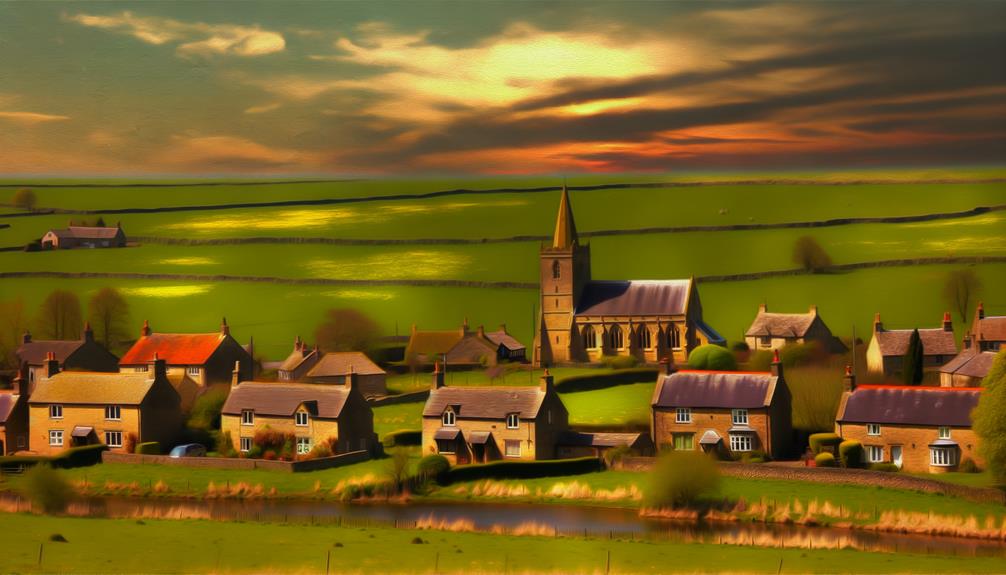
The name Wesley originates from Old English, combining 'west' and 'lēah' to mean 'western meadow' or 'clearing.' It initially described a geographic location, gaining prominence in the Middle Ages and appearing in documents from the 12th and 13th centuries. The name evolved into a surname and was recorded in the Domesday Book of 1086.
Wesley's popularity surged due to John Wesley, a significant religious figure. The name remains popular today, balancing classic charm with modern appeal.
To uncover Wesley's enduring cultural significance and notable bearers, continue to explore its rich historical tapestry.
Key Takeaways
- Wesley originates from Old English elements 'west' and 'leah', meaning 'western meadow' or 'clearing'.
- The name Wesley gained prominence in the Middle Ages and is linked to specific localities in England.
- As a surname, Wesley first appeared in the Domesday Book of 1086.
- John Wesley's influence on religious and social reforms significantly boosted the name's popularity.
- Wesley is a popular name for boys in English-speaking countries, ranking within the top 200 in the US.
Etymology of Wesley
Derived from Old English elements, the name Wesley originates from 'west' signifying 'west' and 'lēah' signifying 'wood' or 'clearing.' This compound formation suggests that the name Wesley was initially used to describe a geographical location, specifically a western wood or clearing.
The term 'lēah' was commonly employed in Old English to denote a meadow or open land within a forest. The prefix 'west' provides a directional context, indicating that this land was situated towards the west.
Therefore, the etymology of Wesley reflects its roots in the language and landscape of early Anglo-Saxon England, offering insight into how place names evolved into surnames and later, given names. Understanding these linguistic components enriches our appreciation of the name's historical significance.
Historical Background
The name Wesley first gained prominence in historical records during the Middle Ages, particularly in England, where it was often associated with specific localities and later adopted by notable families.
Derived from Old English elements 'west' (meaning west) and 'lēah' (meaning meadow or clearing), Wesley likely referred to someone living near a western clearing. Historical documents from the 12th and 13th centuries frequently mention the name in various forms, reflecting its geographical roots.
Wesley as a Surname
Frequently appearing in historical accounts, Wesley developed from a place-based reference to a recognized surname by the late medieval period. Originating from Old English elements 'wes' (west) and 'leah' (meadow or clearing), Wesley denotes 'western meadow.'
Initially used to describe geographic locations, it evolved into a hereditary surname as populations stabilized and landholding records became essential. The Domesday Book of 1086, an extensive survey of England, contains early instances of the name.
Families adopting Wesley as a surname often hailed from regions where the western meadow was a notable feature. Over centuries, the surname Wesley not only identified lineage but also indicated social and geographical roots, solidifying its place in genealogical and historical studies.
Influence of John Wesley
John Wesley, an 18th-century theologian and founder of Methodism, profoundly influenced both religious thought and social reform movements. His theological contributions emphasized personal faith and sanctification, shaping Protestant beliefs. Wesley's impact is seen in several key areas:
- Preaching and Evangelism:
Wesley preached over 40,000 sermons, traveling extensively to spread his message.
- Social Reforms:
He advocated for education, healthcare, and the abolition of slavery, contributing to significant societal changes.
- Organizational Innovations:
Wesley introduced the concept of 'Methodist societies' and small group meetings, which fostered community and accountability among believers.
These contributions not only solidified his legacy within the religious community but also left a lasting mark on social and cultural developments.
Popularity Over Time
The name Wesley has experienced varying degrees of popularity since its origin, influenced significantly by historical figures such as John Wesley. Modern popularity rankings indicate a resurgence in recent decades, with notable peaks in the United States and the United Kingdom.
Additionally, regional name variations have emerged, reflecting cultural and linguistic adaptations over time.
What Should You Know About Historical Name Trends?
Examining the historical trajectory of the name Wesley reveals its fluctuating popularity across different time periods and cultural contexts. Originating from Old English, Wesley became more prominent in the 18th century, largely due to John Wesley, the founder of Methodism.
- 18th Century: The name gained recognition through John Wesley's religious influence.
- 19th Century: Wesley maintained moderate popularity, often associated with religious families.
- 20th Century: The name saw a resurgence in the 1980s, partly influenced by the rise of notable personalities in entertainment and sports.
Throughout these centuries, Wesley has experienced cycles of popularity, reflecting broader socio-cultural trends and influences. Understanding these shifts offers insight into the name's enduring legacy and its adaptation across generations.
What Should You Know About Modern Popularity Rankings?
In recent decades, the name Wesley has seen a consistent presence in modern popularity rankings, reflecting its sustained appeal across diverse demographic groups. According to the Social Security Administration, Wesley has maintained a steady position within the top 200 names in the United States since the late 20th century.
This longevity can be attributed to its classic yet contemporary sound, making it appealing to parents seeking a name that is both traditional and modern. The name's usage has seen minor fluctuations, with notable peaks in the early 2000s and a resurgence in the 2010s.
Such trends underscore Wesley's versatility and enduring charm, ensuring its continued relevance in the ever-evolving landscape of baby names.
What Should You Know About Regional Name Variations?
Across different regions, the name Wesley has experienced varying degrees of popularity over time, revealing intriguing historical and cultural patterns in its usage. In the United States, Wesley reached its peak in the late 19th century, remaining a steadfast choice for decades.
Conversely, in the United Kingdom, its popularity surged during the 18th century, largely influenced by the Methodist movement led by John Wesley.
Other notable trends include:
- Australia: The name saw increased use during the mid-20th century, coinciding with British emigration.
- Canada: Wesley maintained moderate popularity, reflecting both British and American influences.
- South Africa: The name gained traction in the 20th century, influenced by British colonial presence.
These regional nuances highlight Wesley's dynamic historical appeal.
Cultural Significance
The name Wesley carries substantial historical and religious significance, primarily due to its association with John Wesley, the founder of Methodism in the 18th century.
Additionally, the name has permeated popular culture, prominently featured in literature, film, and television.
This blend of historical roots and contemporary influence underscores Wesley's enduring cultural relevance.
How Does Historical and Religious Roots Impact Your Choice?
Wesley, derived from Old English elements 'wes' (west) and 'leah' (wood or clearing), historically refers to a geographical location and has long-standing cultural and religious importance, particularly within Christianity.
The name is most notably associated with John Wesley, the founder of Methodism in the 18th century. His influence has made Wesley a prominent name within Christian circles.
The historical and religious roots of the name Wesley are underscored by three key points:
- John Wesley's Evangelical Work: His efforts in preaching and social reform greatly shaped modern Christianity.
- The Wesleyan Tradition: This theological movement emphasizes personal faith and social holiness.
- Educational Impact: Institutions like Wesleyan University reflect the lasting influence of his teachings.
What Should You Know About Influence in Popular Culture?
In popular culture, the name Wesley has permeated various forms of media and entertainment, often symbolizing intellect, resilience, and leadership.
One notable example is Wesley Crusher from the television series 'Star Trek: The Next Generation,' where the character, a prodigious young officer, embodies intelligence and potential.
Similarly, Wesley Wyndam-Pryce from 'Buffy the Vampire Slayer' and its spinoff 'Angel' showcases a transformation from a bumbling watcher to a formidable warrior.
The name also appears in classic cinema through the character Wesley in 'The Princess Bride,' portraying heroism and unwavering love.
These portrayals in film and television have cemented Wesley as a name associated with strong, dynamic characters, influencing public perception and cultural significance.
Modern-Day Usage
Today, the name Wesley enjoys widespread popularity and versatility, frequently chosen for its classic yet contemporary appeal. Historically rooted in English tradition, the name has evolved, resonating across various cultures.
In recent years, Wesley has maintained a steady presence in baby name rankings in the United States and other English-speaking countries.
Modern-day usage of Wesley can be attributed to several factors:
- Timeless Appeal: Its historical significance offers a sense of heritage.
- Celebrity Influence: Public figures named Wesley, such as actor Wesley Snipes, enhance its visibility.
- Literary and Media Presence: The name appears in various books, TV shows, and films, reinforcing its cultural relevance.
This enduring name continues to be a favored choice for parents worldwide.
Conclusion
The name Wesley, rich in historical and cultural significance, has traversed centuries, evolving from a geographical surname to a widely recognized given name.
The influence of John Wesley, the founder of Methodism, has cemented its place in religious and social history.
Over time, Wesley's popularity has ebbed and flowed, like a river carving its path through time, reflecting societal shifts and cultural trends.
Today, Wesley continues to hold a respected position in modern nomenclature.