Meaning of the Name Miller
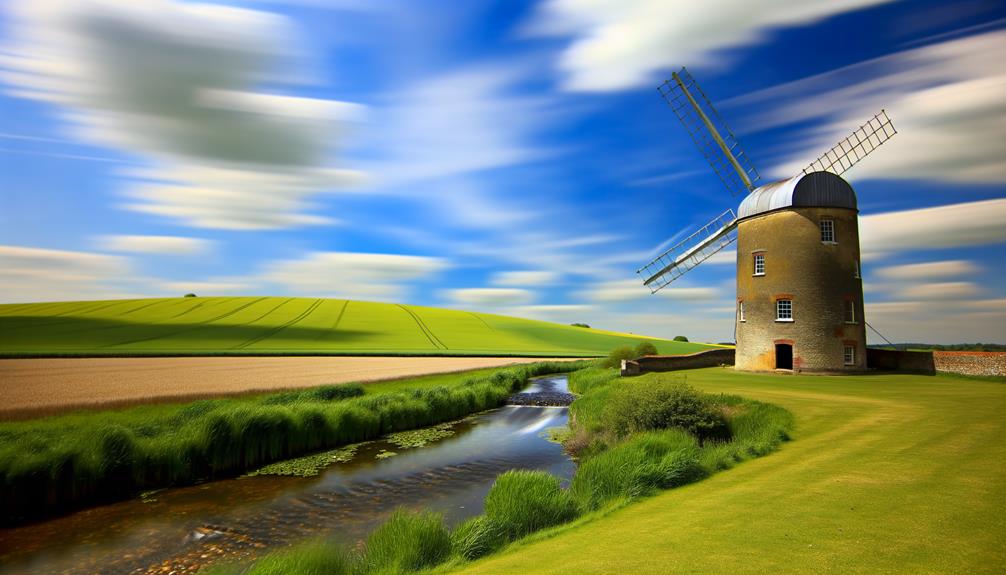
The name Miller originates from the Old English term 'mylen' and the Latin 'molina', both referring to a mill worker or grain grinder. During the Middle Ages, millers held significant roles in European societies, being essential for converting grain into flour, therefore sustaining daily life and economic stability.
The surname Miller became common as hereditary surnames emerged, reflecting this significant occupation. Its prevalence spread widely across English-speaking countries due to historical migration.
Today, Miller has seen a resurgence, adopted as both a first name and surname, embodying a blend of tradition and contemporary appeal. Continue to uncover its rich history and cultural impact.
Key Takeaways
- The name Miller originates from the Old English term 'mylen' and the Latin word 'molina' meaning 'mill.'
- Historically, a Miller was responsible for converting grain into flour, a crucial role in medieval European society.
- The name Miller reflects the integral role of millers in local economies and daily sustenance.
- In modern times, Miller is popular as both a first name and surname, often chosen for its traditional and historical significance.
- The adoption of Miller as a given name reflects a trend towards heritage names and their contemporary appeal.
Etymology of Miller
The name Miller originates from the Old English term 'mylen,' which refers to a person who operates a mill. This occupation-based surname is derived from the Latin word 'molina,' meaning mill.
The role of a miller was pivotal in agrarian societies, responsible for grinding grain into flour, an essential food staple. The term 'mylen' evolved phonetically over centuries into various forms in different regions, such as 'Müller' in German and 'Molino' in Spanish.
The occupational surname gained prominence during the Middle Ages, reflecting the importance of milling in community sustenance. Additionally, the name Miller has been documented in historical records dating back to the 7th century, underscoring its longstanding presence in European nomenclature.
Historical Context
Examining the historical context of the surname Miller reveals its deep roots in medieval European societies, where the role of the miller was integral to daily life and economic stability. Millers operated mills that ground grain into flour, a vital process for food production. The name Miller, derived from the Old English 'mylen' and Latin 'molina,' became prevalent as hereditary surnames emerged.
The miller's significance was reflected in:
- Community reliance: Villagers depended on millers for their daily bread.
- Economic hub: Mills were central to trade and local economies.
- Technological innovation: Advances in milling technology drove agricultural progress.
- Societal status: Millers often held esteemed positions within their communities.
This historical backdrop underscores the enduring relevance of the name Miller.
Occupational Significance
Understanding the occupational importance of the surname Miller requires an exploration of the miller's role in pre-industrial societies. Millers were essential in converting grain to flour, directly impacting both local economies and daily sustenance. They operated mills – key infrastructure in agrarian communities – employing either water, wind, or animal power to grind cereals. Their expertise guaranteed the availability of flour, a staple in bread production, which was important for food security.
The miller's role also extended to maintaining and repairing milling equipment, managing grain storage, and quality control. Therefore, the surname Miller, derived from this occupation, signifies a significant historical function that intertwined agricultural productivity with economic stability, reflecting the miller's essential position within societal frameworks.
Geographic Distribution
The geographic distribution of the surname Miller reveals distinct regional popularity trends, especially in English-speaking countries such as the United States, Canada, and the United Kingdom.
Historical migration patterns, including significant waves of immigration during the 19th and early 20th centuries, have significantly influenced its prevalence.
Understanding these factors provides insight into the historical and socio-economic contexts that have shaped the dispersion of the name Miller globally.
What Should You Know About Regional Popularity Trends?
Although the surname Miller is prevalent across many English-speaking countries, its geographic distribution reveals significant concentrations in specific regions such as the United States, the United Kingdom, and Germany. Within these areas, the name holds varying degrees of popularity, influenced by historical and cultural factors.
- In the United States, Miller ranks as the seventh most common surname, a reflection of its deep-rooted presence.
- In the United Kingdom, the name is noticeably frequent in the Midlands and Northern regions.
- In Germany, 'Müller' (the German equivalent) stands as the most common surname, reflecting agrarian roots.
- In Canada, Miller enjoys moderate popularity, especially in provinces with strong British and German heritage.
These trends highlight the enduring legacy and widespread appeal of the Miller surname globally.
What Should You Know About Historical Migration Patterns?
Historical migration patterns reveal that the Miller surname spread through waves of transatlantic immigration during the 18th and 19th centuries. In particular, German and British settlers bearing the Miller name sought opportunities in the New World, profoundly impacting the surname's geographic distribution.
German immigrants, often recorded as 'Müller,' anglicized their name to Miller upon arrival in America. The surname proliferated in Pennsylvania, New York, and Virginia, reflecting settlement trends of these immigrant groups.
Additionally, Scottish and Irish Millers contributed to the surname's dispersion across the United States. These migration patterns underscore the widespread adoption of the Miller surname, as it became emblematic of diverse European origins converging in the burgeoning American landscape.
Cultural Impact
Miller, as a surname, has greatly influenced various cultural domains, including literature, music, and film. Its prominence is seen through numerous notable figures and works that have left an indelible mark on cultural history.
For instance, Arthur Miller revolutionized American theater with his poignant plays, while Glenn Miller's contributions to the Big Band era reshaped the landscape of American music. In cinema, Henry Miller's novels, often adapted for the screen, challenged societal norms and provoked thought.
- Arthur Miller: His plays, like 'Death of a Salesman,' evoke empathy for the common man.
- Glenn Miller: His music brings nostalgia and joy, reflecting the World War II era.
- Henry Miller: His works inspire introspection and courage.
- Sienna Miller: Her performances captivate audiences worldwide.
Modern Usage
In contemporary society, the name Miller has seen a notable increase in popularity, both as a first name and a surname. This trend can be attributed to broader cultural influences and naming conventions that favor the adaptation of surnames into given names.
Additionally, recent data from naming registries reflect these shifts, highlighting Miller's rising prominence in modern nomenclature.
What Should You Know About Popularity in Baby Names?
The name Miller has seen a notable resurgence in popularity as a given name in recent years, particularly in the United States. This trend is supported by various social factors, including a growing appreciation for surnames as first names and a preference for names that evoke strength and reliability. Statistical data from the Social Security Administration indicates a steady increase in the use of Miller as a first name over the past decade.
- Nostalgia: Parents seek meaningful names with historical significance.
- Uniqueness: Miller offers a distinctive choice compared to more common names.
- Cultural Influence: Celebrities and public figures adopting the name.
- Versatility: Suitable for both genders, enhancing its appeal.
Understanding these factors provides insights into the modern naming preferences.
What Should You Know About Surname to First Name?
Adopting surnames as first names has become an increasingly prevalent trend in modern naming conventions, reflecting broader cultural shifts and evolving societal values.
Historically, surnames like Miller were indicative of one's occupation or social standing. In contemporary settings, the use of Miller as a first name signifies a departure from traditional naming practices, embracing a more individualistic and sometimes unisex approach.
This trend can be traced back to the late 20th century, when parents began seeking names that were unique yet resonant with historical depth. The name Miller, originally an occupational surname for grain mill operators, conveys a sense of heritage and individuality.
This evolution underscores a growing preference for names that blend uniqueness with historical significance.
How Does Cultural Influences and Trends Impact Your Choice?
As the trend of transforming surnames into first names gains momentum, contemporary cultural influences and societal trends play a pivotal role in how names like Miller are perceived and adopted. The name Miller, originally an occupational surname, has found favor in modern naming conventions due to its strong, straightforward appeal and historical significance.
Notably, several factors contribute to its rising popularity:
- Celebrity Influence: Public figures and celebrities choosing Miller for their children.
- Appeal of Tradition: A resurgence in valuing heritage and traditional names.
- Uniqueness Factor: Parents seeking distinctive yet familiar names.
- Gender Neutrality: Its adaptability for both boys and girls.
These elements reflect broader cultural shifts towards embracing names that carry both historical weight and contemporary relevance.
Conclusion
In sum, the name Miller, rooted in ancient etymology and rich historical context, reflects significant occupational heritage and diverse geographic distribution.
Its cultural impact resonates through centuries, evolving yet retaining its foundational essence.
This surname, emblematic of industriousness, continues to be relevant in modern usage.
Like a millstone shaping grains into flour, the name Miller shapes identities across generations, embodying both tradition and continuity in an ever-changing world.