Meaning of the Name Mecca
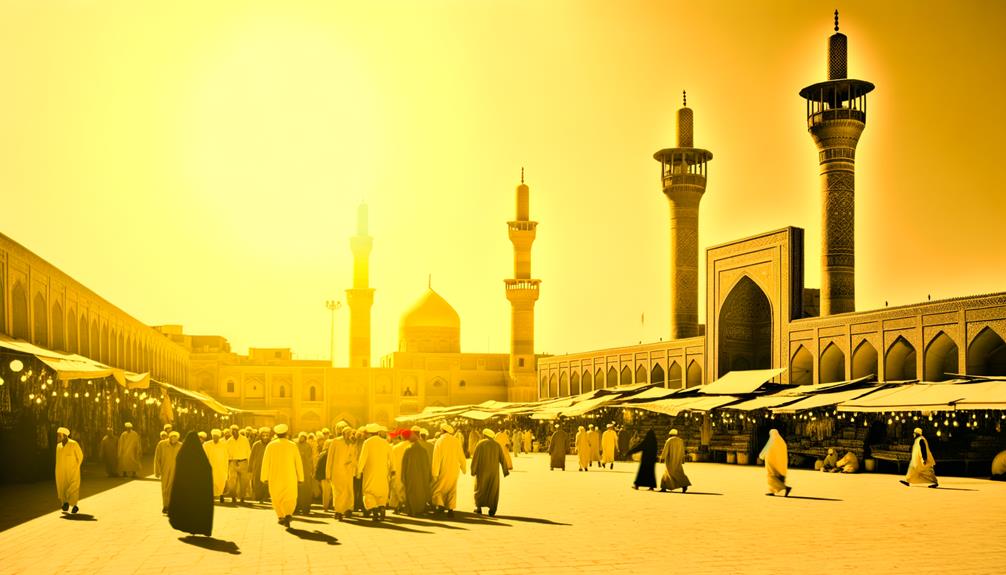
The name ‘Mecca’ derives from the ancient Semitic root ‘m-k-k,’ signifying a place of gathering. Historically, Mecca was a pivotal trade hub in pre-Islamic Arabia. Religiously, it is the birthplace of Prophet Muhammad and home to the Kaaba, central to Islamic practice. The evolution from ‘Bakkah’ to ‘Mecca’ in Arabic underscores its historical trajectory from a commercial center to a global spiritual focal point.
The name 'Mecca' derives from the ancient Semitic root 'm-k-k,' signifying a place of gathering. Historically, Mecca was a pivotal trade hub in pre-Islamic Arabia.
Religiously, it is the birthplace of Prophet Muhammad and home to the Kaaba, central to Islamic practice. The evolution from 'Bakkah' to 'Mecca' in Arabic underscores its historical trajectory from a commercial center to a global spiritual focal point.
In modern contexts, 'Mecca' symbolizes any central hub attracting specific enthusiasts, such as Silicon Valley for tech. To explore the rich layers of Mecca's significance further, one can learn about its enduring impact on culture and language.
Key Takeaways
- The name 'Mecca' traces its etymology to the ancient Semitic root 'm-k-k,' indicating a place of gathering.
- 'Mecca' evolved from the earlier name 'Bakkah,' which appears in pre-Islamic poetry and inscriptions.
- Mecca is the birthplace of Prophet Muhammad and the site of the Kaaba, central to Islamic faith.
- The term 'Mecca' symbolizes a central hub for specific activities, like Silicon Valley for technology.
- Modern usage extends 'Mecca' beyond religious contexts to denote places attracting enthusiasts, such as the 'Mecca of fashion.'
Historical Origins
Tracing the historical origins of the name 'Mecca' reveals a complex tapestry of linguistic, cultural, and religious influences that have shaped its significance over millennia.
The etymology of 'Mecca' is believed to derive from the ancient Semitic root 'm-k-k,' which means to 'suck' or 'draw in,' potentially referencing the valley's ability to attract people and resources.
Historical texts suggest various iterations of the name, such as 'Bakkah,' denoting a place of gathering. This evolution signifies the city's role as a focal point in Arabian trade routes and early settlements.
Additionally, pre-Islamic poetry and inscriptions provide evidence of Mecca's prominence long before it became the center of the Islamic world, highlighting its enduring cultural and economic importance.
Religious Significance
The religious significance of Mecca is deeply rooted in its association with the Islamic faith, serving as the birthplace of the Prophet Muhammad and the site of the Kaaba, the most sacred structure in Islam.
The Kaaba, a cube-shaped edifice draped in black cloth, is believed to have been built by the Prophet Abraham and his son Ishmael. It is the focal point of the Hajj pilgrimage, an obligation for Muslims who are physically and financially able to undertake it at least once in their lifetime.
Additionally, Muslims around the world face the Kaaba during their five daily prayers, symbolizing unity and submission to Allah. This profound spiritual connection underscores Mecca's unparalleled religious importance in Islam.
Cultural Impact
Integrating centuries of historical tradition, Mecca's cultural impact extends beyond its religious significance, influencing arts, architecture, and social practices throughout the Islamic world. The city's iconic structures, such as the Kaaba and the Grand Mosque, serve as architectural benchmarks, inspiring design elements in mosques globally.
Artistic expressions, including Islamic calligraphy and geometric patterns, often draw inspiration from Mecca's sanctity and heritage. Socially, the annual pilgrimage of Hajj fosters a sense of unity and shared cultural identity among Muslims, reinforcing communal values and practices.
Additionally, Mecca's role in Islamic education and scholarship has historically attracted intellectuals, further disseminating its cultural and academic influence. Mecca remains a pivotal reference point in the cultural tapestry of the Islamic civilization.
Linguistic Evolution
Delving into the linguistic evolution of the name 'Mecca' reveals a rich tapestry of etymological transformations and cultural exchanges that reflect the city's historical and religious significance.
The earliest references to Mecca in pre-Islamic poetry and inscriptions refer to it as 'Bakkah,' a term whose roots are debated but generally signify a place of gathering.
Over time, as the city became a focal point for Islamic pilgrimage, the name evolved to 'Mecca,' deriving from the Arabic 'Makkah.' This evolution mirrors the region's shift from a local commercial hub to a global spiritual center.
Moreover, the phonetic and orthographic variations observed across different languages underscore Mecca's widespread influence and the diverse cultures engaging with its profound legacy.
Modern Usage
Modern usage of the name 'Mecca' extends beyond its geographical and religious connotations, symbolically representing any place regarded as a central hub for a particular activity or interest.
In contemporary vernacular, 'Mecca' is frequently employed to describe locales that attract enthusiasts or professionals from specific fields, such as Silicon Valley being termed the 'Mecca of technology' or Paris as the 'Mecca of fashion.' This metaphorical application highlights the cultural and economic magnetism of such places.
Conclusion
The name 'Mecca' encapsulates historical origins, religious significance, cultural impact, and linguistic evolution.
Embedded in ancient traditions, it signifies a spiritual epicenter for millions.
Its cultural resonance transcends geographical boundaries, influencing various aspects of global society.
Linguistically, 'Mecca' has evolved to symbolize any place of great importance.
Modern usage retains these layers of meaning, reflecting a rich tapestry of history and belief.
Consequently, 'Mecca' stands as a multifaceted symbol within human civilization.