Meaning of the Name Massimo
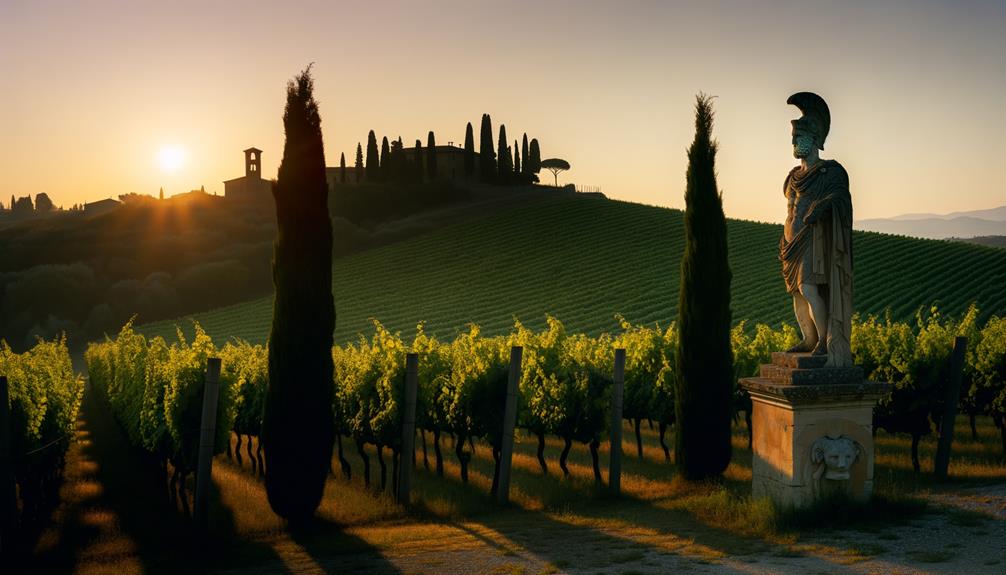
The name Massimo, derived from the Latin 'Maximus,' signifies 'the greatest.' This name carries a distinguished historical context, having been an honorific title in ancient Rome, symbolizing status and honor. In Italian culture, Massimo has continued to denote greatness, resilience, and leadership.
Notable individuals like designer Massimo Vignelli and footballer Massimo Ambrosini have enriched the name's prestigious legacy. Popular in Italy, particularly during the Renaissance, it has also gained global appreciation, especially in the late 20th and early 21st centuries.
For those valuing a name that blends cultural heritage with contemporary appeal, Massimo offers a rich tapestry of meaning.
Key Takeaways
- Derived from Latin 'Maximus,' meaning 'the greatest.'
- Symbolizes greatness, resilience, and leadership.
- Associated with strength and moral integrity in Italian culture.
- Reflects historical significance from ancient Rome to the Renaissance.
- Popular among notable figures, enhancing its esteemed reputation.
Etymology of Massimo
The name Massimo originates from the Latin word 'Maximus,' which means 'the greatest' and reflects a historical tradition of bestowing names that signify eminence and distinction.
This etymology underscores a cultural practice where names carried profound implications, often linked to virtues or esteemed qualities. In ancient Rome, 'Maximus' was not only a name but also an honorific title granted to individuals who achieved exceptional feats or held significant societal roles.
The transformation of 'Maximus' to 'Massimo' illustrates the linguistic evolution through centuries, adapting to regional dialects and phonetic preferences. This adaptation preserved the original connotation of greatness, thereby maintaining its cultural relevance and enduring appeal in contemporary naming conventions.
Such names continue to resonate with those valuing historical depth and distinguished identity.
Historical Background
Rooted in its etymological significance, the historical background of the name Massimo traces its prominence through various epochs, particularly within the Roman Empire where names symbolized status and honor. Derived from the Latin term "Maximus," meaning "the greatest," the name was often bestowed upon individuals of notable achievement and high social rank. This reverence persisted through the Middle Ages and Renaissance, further solidifying its historical importance.
| Epoch | Significance |
|---|---|
| Roman Empire | Symbol of status and honor |
| Middle Ages | Continuation of reverence |
| Renaissance | Cultural and historical solidification |
The enduring legacy of the name Massimo underscores its deep-rooted historical context, reflecting societal values and esteemed characteristics across centuries.
Cultural Significance
In myriad cultures, the name Massimo has come to symbolize not only greatness but also resilience and leadership, resonating deeply within various societal frameworks.
Historically rooted in the Latin term 'Maximus,' meaning 'the greatest,' Massimo has transcended its origins to embody a broader cultural significance. In Italy, the name is often associated with strength and moral integrity, reflecting the valor of ancient Roman figures.
Beyond Italy, Massimo's allure extends to diverse regions, where it signifies not just personal excellence but also communal respect. This rich tapestry of meanings underscores Massimo's enduring appeal, making it a favored choice for those who seek a name that conveys both historical depth and contemporary relevance.
Famous Namesakes
Celebrating the name Massimo across various fields, numerous notable figures have carried this name, enriching its legacy with their achievements and influence.
In the domain of architecture, Massimo Vignelli stands as a paragon of modernist design, leaving an indelible mark on graphic and industrial design.
In the world of sports, Massimo Ambrosini is revered for his contributions to Italian football, particularly with A.C. Milan.
The cinematic landscape is not without its own Massimo, exemplified by Massimo Troisi, an iconic Italian actor and filmmaker known for his poignant performances.
Each of these individuals, through their varied accomplishments, has imbued the name Massimo with a rich tapestry of cultural and historical significance, illustrating its enduring relevance across diverse domains.
Popularity Over Time
How has the name Massimo evolved in popularity over the centuries, reflecting broader cultural and historical trends?
Originating from the Latin 'Maximus,' Massimo has long been favored in Italy, epitomizing strength and greatness.
During the Renaissance, its usage surged as classical antiquity's reverence reemerged.
In the 20th century, immigration spread the name globally, particularly to North America, where it found a niche audience.
By the late 20th and early 21st centuries, Massimo experienced renewed interest, possibly influenced by global cultural exchanges and the media's portrayal of Italian heritage.
Today, Massimo continues to be esteemed, blending traditional values with contemporary appeal, demonstrating its enduring nature amidst evolving naming conventions.
Variations and Nicknames
What are the various forms and affectionate diminutives of the name Massimo that reflect its rich cultural heritage and linguistic adaptability? The name Massimo, rooted in Latin origins, embodies grandeur and significance. Over time, it has evolved into various forms and affectionate nicknames, reflecting cultural nuance and personal attachment. The following table encapsulates these variations across different languages and cultures:
| Language | Variation | Nickname |
|---|---|---|
| Italian | Massimiliano | Massi |
| Spanish | Máximo | Max |
| Portuguese | Mássimo | Mino |
These variations showcase the name's adaptability while retaining its core essence. Each form and nickname provides a glimpse into local linguistic traditions, emphasizing the universal appeal and timeless nature of the name Massimo.
Massimo in Literature
The name Massimo has been immortalized in various literary works, spanning from classic literature to contemporary fiction. Characters named Massimo often embody traits of strength and nobility, reflecting the name's etymological roots in Latin.
Examining these characters provides insight into how the name has been culturally and historically resonant across different literary periods.
What Should You Know About Literary Characters Named Massimo?
Exploring literary characters named Massimo reveals a rich tapestry of cultural and historical contexts that underscore the name's enduring appeal in storytelling. The name Massimo, rooted in Italian heritage, often symbolizes strength and grandeur. Characters bearing this name frequently appear in narratives that highlight themes of power, loyalty, and moral complexity.
| Character Name | Work Title | Author |
|---|---|---|
| Massimo | The Italian | Ann Radcliffe |
| Massimo | The Betrothed | Alessandro Manzoni |
| Massimo | The Name of the Rose | Umberto Eco |
These characters span a range of genres, from gothic romance to historical fiction, each contributing to the rich literary mosaic that celebrates the name Massimo. Each portrayal offers a unique perspective, reflecting the multifaceted nature of this distinguished name.
What Should You Know About Massimo in Classic Literature?
In classic literature, the name Massimo often emerges as a symbol of nobility and intellectual prowess, reflecting the cultural and historical depth associated with its Italian origins. Characters named Massimo frequently embody virtues such as wisdom, integrity, and leadership.
The name itself, derived from the Latin 'Maximus,' meaning 'the greatest,' is often bestowed upon protagonists who navigate complex moral landscapes with a sense of duty and honor. This nomenclature choice is not arbitrary; it aligns with the rich Italian heritage where names carry significant ancestral and societal weight.
Through classic literary works, Massimo becomes a vessel for exploring themes of power, virtue, and the human condition, offering readers a nuanced understanding of these timeless concepts.
What Should You Know About Modern Fiction Featuring Massimo?
Modern fiction continues to embrace the name Massimo, often casting characters with this name as complex figures facing contemporary societal challenges. Authors utilize the name to evoke a sense of gravitas and cultural depth, drawing on its Italian heritage.
In recent narratives, Massimo is frequently portrayed as a multifaceted character, grappling with issues such as identity, morality, and modernity. These characters often navigate intricate personal and professional dilemmas, reflecting the nuanced realities of today's world.
The name Massimo, with its historical resonance and strong phonetic presence, provides an ideal canvas for exploring the human condition. In doing so, modern literature ensures that Massimo remains a poignant and relevant figure, symbolizing strength, resilience, and intellectual depth.
Choosing Massimo Today
Choosing the name Massimo today reflects a blend of historical significance and contemporary appeal, making it a distinguished choice for parents seeking a timeless yet modern name.
Rooted in Latin, Massimo translates to 'the greatest,' a meaning that carries weight and gravitas. Historically, it has been borne by influential figures in Italian culture and nobility, enhancing its esteemed reputation.
In contemporary settings, Massimo resonates with a sophisticated elegance, appealing to those who value cultural heritage while embracing modernity. Its phonetic strength and melodic cadence make it memorable and distinctive.
As a name that bridges past and present, Massimo offers a rich tapestry of cultural relevance, making it an exceptional choice for today's discerning parents.
Conclusion
To conclude, the name Massimo, originating from Latin etymology and enriched by historical and cultural importance, has upheld its prominence through the ages. Evoking ideas of magnificence and superiority, it has been carried by significant figures, solidifying its lasting impact.
As the saying goes, 'A name is a glimpse into the essence,' and Massimo, with its lasting fame and literary influence, still holds strong significance within modern society, embodying both heritage and everlasting charm.