Meaning of the Name Madonna
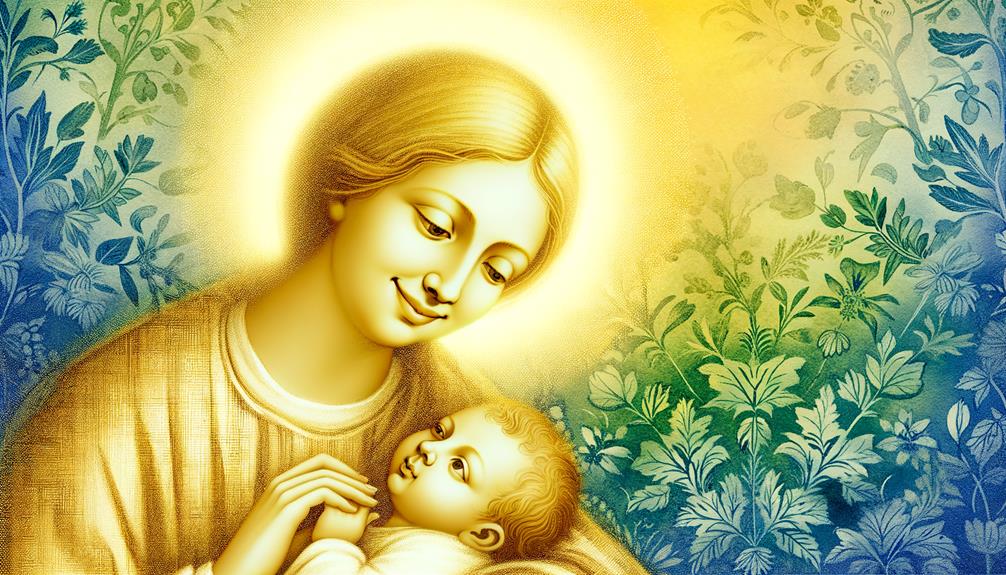
The name Madonna has deep roots in the Italian term ‘ma donna,’ meaning ‘my lady,’ derived from the Latin ‘mea domina.’ Historically, it signified respect for noblewomen and influential social figures. In religious contexts, particularly within Christianity, Madonna is closely associated with the Virgin Mary, embodying purity, maternal devotion, and divine intercession.
This connection underscores its use in Christian iconography and theology. Over time, the name acquired broader cultural significance, particularly after Madonna Louise Ciccone’s rise to fame, symbolizing empowerment and modern femininity.
Exploring further reveals its profound impact across various contexts and eras.
What Is Key Takeaways?
- Derived from the Italian term ‘ma donna’ meaning ‘my lady’.
- Historically used to refer to noblewomen and respected figures.
- Strongly associated with the Virgin Mary and Christian iconography.
- Symbolizes purity, maternal virtue, and divine intercession.
- Popularized in modern culture by artist Madonna Louise Ciccone.
What Is Etymology of Madonna?
The etymology of the name ‘Madonna‘ is rooted in the Italian language, where it is derived from the Old Italian term ‘ma donna,’ meaning ‘my lady.’
This term, a form of address reflective of respect and veneration, evolved from the Latin ‘mea domina.’ Historically, ‘ma donna’ was used to refer to noblewomen and figures of significant social standing.
The linguistic shift from Latin to Old Italian encapsulates the cultural change during the Middle Ages, wherein vernacular languages began to supplant Latin in everyday communication.
The term’s evolution reveals the interplay between language and societal norms, underscoring how linguistic roots can offer insights into historical contexts and social hierarchies. This analysis highlights the rich tapestry underlying the name ‘Madonna.’
What Is Madonna in Religious Context?
In religious contexts, the name ‘Madonna‘ is inextricably linked to the Virgin Mary, revered in Christianity as the mother of Jesus Christ. Rooted in the Latin term ‘mea domina,’ meaning ‘my lady,’ the title signifies a deep veneration and underscores Mary’s emblematic role as a symbol of purity and maternal virtue.
Historically, this appellation has transcended linguistic boundaries to become an iconic representation of sanctity and divine motherhood in Christian iconography.
What Is Virgin Mary Significance?
Reverence for Madonna as a title for the Virgin Mary traces back to the early Christian Church, symbolizing purity, maternal devotion, and divine intercession.
The term ‘Madonna’ itself is derived from the Italian ‘ma donna,’ meaning ‘my lady,’ reflecting the honorific nature of the title.
Historically, the Virgin Mary has been venerated as a key figure in Christian theology, embodying the ideal of a devoted mother and intercessor between humanity and the divine.
Linguistically, the adoption of this title underscores the blend of reverence and familiarity with which she is regarded.
The early Church Fathers emphasized Mary’s unique role in salvation history, enhancing her status as a central figure in religious devotion and iconography.
What Is Symbol of Purity?
Mary’s role as the Madonna is intricately linked to the concept of purity, a quality that has been emphasized throughout Christian teachings and iconography. This emphasis on purity aligns with the etymology of ‘Madonna,’ derived from the Italian ‘ma donna,’ meaning ‘my lady,’ which conveys reverence and respect.
Historically, Mary’s perpetual virginity has underscored her divine purity, setting her apart in Christian doctrine as a paragon of virtue.
Key elements that reinforce this symbolism include:
- Immaculate Conception: Teaching that Mary was conceived without original sin.
- Annunciation: Angel Gabriel’s announcement to Mary, highlighting her purity.
- White Lily Symbolism: Often depicted with Mary, representing her chastity and innocence.
This linguistic and historical context enriches our understanding of Mary as a symbol of purity.
What Is Icon in Christianity?
As a central figure in Christianity, the Madonna embodies profound theological and spiritual significance, serving as an enduring symbol of divine motherhood and intercession.
Historically, the term ‘Madonna’ originates from the Italian ‘Ma Donna,’ meaning ‘My Lady,’ reflecting reverence and veneration.
In Christian iconography, the Madonna often appears as the Virgin Mary, mother of Jesus Christ, depicted in countless artworks and sculptures.
This veneration traces back to early Christianity, where Mary was honored as Theotokos, meaning ‘God-bearer’ in Greek.
Her role encompasses both a nurturing mother and a compassionate intercessor for humanity, bridging the divine and mortal spheres.
The Madonna’s imagery reinforces themes of purity, grace, and maternal care, integral to Christian faith and practice.
What Is Cultural Significance in Italy?
In Italy, the name Madonna evokes a profound cultural and religious significance, deeply rooted in the country’s historical veneration of the Virgin Mary. The term ‘Madonna’ originates from the Italian ‘mia donna,’ meaning ‘my lady,’ reflecting a deep-seated reverence.
Italy’s rich Catholic tradition has perpetuated the Madonna as a symbol of purity, motherhood, and divine intercession. This reverence is evident in various aspects of Italian life, from religious festivals to daily expressions of faith.
Historical Context: The veneration dates back to medieval times, entrenched in Italy’s religious history.
Linguistic Roots: Derived from Latin, the term underscores a personal and respectful address.
Cultural Practices: Numerous Italian towns have Madonna-centric festivities, showcasing her enduring influence.
Understanding these elements provides a clearer grasp of Madonna’s cultural resonance in Italy.
What Is Artistic Representations?
Numerous artistic representations of the Madonna have been created throughout history, reflecting the multifaceted significance of this revered figure in religious and cultural contexts. From Byzantine mosaics to Renaissance masterpieces, each artwork encapsulates varying theological interpretations and cultural values.
Linguistically, the term ‘Madonna’ derives from the Italian ‘mia donna,’ meaning ‘my lady,’ underscoring her esteemed status. Iconographically, the Madonna is often depicted with the Christ Child, symbolizing purity, maternal devotion, and divine grace. The evolution of her portrayal—from early Christian art emphasizing her role as Theotokos (Mother of God) to later works highlighting humanistic elements—reveals shifts in doctrinal emphasis and artistic innovation.
Such representations continue to influence contemporary understandings of sacred art and religious identity.
What Is Madonna in Literature?
How has the figure of the Madonna been interpreted and reimagined in literary works across different historical periods and cultures?
The Madonna, rooted in the Latin ‘mea domina,’ meaning ‘my lady,’ has been a symbol of purity, maternal devotion, and virtue. In medieval literature, she often embodied the idealized woman, influencing chivalric codes and moral narratives.
During the Renaissance, writers like Dante and Petrarch invoked the Madonna as a muse, blending sacred and secular themes.
More contemporary literature explores her as a complex symbol, reflecting societal changes and feminist perspectives.
- Medieval texts: Reflect the Madonna as an archetype of divine femininity.
- Renaissance poetry: Blends spiritual reverence with romantic idealism.
- Modern literature: Examines her role in cultural and gender discourses.
This evolution showcases the Madonna’s enduring literary significance.
What Is The Pop Icon’s Influence?
Madonna’s influence as a pop icon extends far beyond her musical accomplishments, embedding her into the cultural fabric of late 20th and early 21st centuries.
Her ability to continuously reinvent her fashion and style has not only set trends but also challenged and reshaped societal norms.
This cultural impact and legacy illustrate a profound convergence between her artistic persona and the evolving narrative of modern popular culture.
What Is Cultural Impact and Legacy?
The cultural impact and legacy of Madonna, often referred to as the ‘Queen of Pop,’ are evident in her transformative influence on music, fashion, and societal norms since the early 1980s. Her innovative approach to blending genres and pushing artistic boundaries has reshaped the landscape of popular music.
Linguistically, the name ‘Madonna’ evokes religious connotations, juxtaposing sacred imagery with contemporary culture, challenging and redefining societal norms.
Key aspects of her legacy include:
- Musical Innovation: Pioneered new genres and incorporated diverse influences.
- Social Commentary: Addressed taboo topics, paving the way for future artists.
- Feminist Icon: Advocated for women’s empowerment and independence.
This intricate blend of artistry and cultural critique solidifies Madonna’s place as a transformative figure in modern history.
What Is Fashion and Style Evolution?
A multitude of fashion transformations throughout her career have cemented Madonna as a perennial style icon, continuously redefining and influencing global fashion trends. Emerging in the 1980s, her bold ensembles—such as the iconic “Like a Virgin” wedding dress—pushed boundaries and sparked widespread emulation. In the subsequent decades, Madonna’s sartorial choices evolved, from the conical bras designed by Jean-Paul Gaultier to her sophisticated “Ray of Light” era aesthetics. Each phase of her fashion journey reflects not only personal reinvention but also broader shifts in cultural and social landscapes.
| Era | Iconic Look |
|---|---|
| 1980s | “Like a Virgin” wedding dress |
| Early 1990s | Jean-Paul Gaultier conical bras |
| Late 1990s | “Ray of Light” era sophistication |
| 2000s and beyond | Reinvented avant-garde and high fashion |
Madonna’s influence remains indelible, continually inspiring modern fashion.
What Is Modern Interpretations?
In contemporary discourse, the name ‘Madonna’ has evolved beyond its religious origins to encompass a range of cultural and artistic connotations. Historically rooted in the Italian term for ‘My Lady,’ it initially signified reverence towards the Virgin Mary.
However, modern interpretations have diversified, reflecting shifts in societal values and artistic expressions. The linguistic transformation from a purely sacred term to one imbued with multifaceted meanings underscores the dynamic nature of language and culture.
- Feminist Symbol: Represents female empowerment and autonomy.
- Artistic Inspiration: A muse in various art forms, from Renaissance paintings to contemporary music.
- Cultural Icon: Embodies a blend of tradition and modernity, resonating across different generations.
This evolution illustrates the interplay between historical context and contemporary relevance.
What Is Madonna in Popular Culture?
Across various media, ‘Madonna‘ has emerged as a symbol of cultural zeitgeist, reflecting and shaping societal norms through its rich historical legacy and contemporary resonance.
Originating from the Italian term ‘ma donna,’ meaning ‘my lady,’ the name initially referred to the Virgin Mary, embodying ideals of purity and maternal grace. However, in modern times, it has been recontextualized, most notably by the pop icon Madonna Louise Ciccone.
This transformation has imbued the name with connotations of empowerment, rebellion, and artistic reinvention. Her influential presence in music, fashion, and social commentary illustrates the dynamic interplay between historical reverence and modern individuality, highlighting the name’s enduring relevance and multifaceted impact on popular culture.
What Is Name Popularity Trends?
The name ‘Madonna,’ deeply rooted in religious and cultural history, has experienced varying degrees of popularity over the centuries, influenced by societal shifts and prominent public figures.
Originating from the Italian term ‘ma donna,’ meaning ‘my lady,’ it has strong ties to the veneration of the Virgin Mary.
The name saw a resurgence in the 1980s, largely due to the global fame of the pop icon Madonna. However, its popularity has since waned, potentially due to its strong association with the celebrity.
- Historical Peak: Gained prominence during the Renaissance due to religious influences.
- 1980s Surge: Increased dramatically with Madonna Louise Ciccone’s rise in the music industry.
- Modern Decline: Usage has diminished in recent decades, likely due to its strong cultural associations.
What Is Conclusion?
The name ‘Madonna‘ weaves a rich tapestry of history, faith, and culture. Rooted in religious reverence, it symbolizes purity and maternal devotion, echoing through Italian traditions and artistic masterpieces. Literature immortalizes its sanctity, while the modern pop icon redefines its resonance, bridging past and present.
This blend of linguistic heritage and cultural evolution underscores a timeless significance, reflecting society’s shifting paradigms yet anchored in enduring symbolism. The name’s popularity waxes and wanes, yet its essence remains indelible.