Meaning of the Name Hadrian
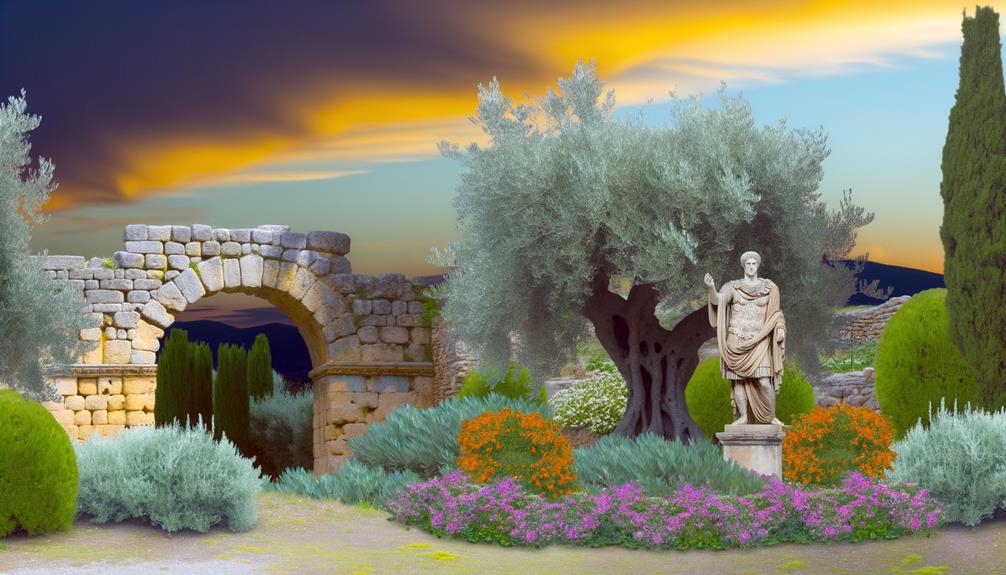
The name Hadrian stems from the Latin "Hadrianus," meaning 'from Hadria,' a town in northern Italy near the Adriatic Sea, noted for its historical significance in the Roman period. Roman naming conventions often emphasized geographic origins, linking personal identity with regional heritage.
Hadrian is renowned primarily due to the Roman Emperor Hadrian, known for his architectural projects including Hadrian's Wall and the Pantheon, as well as his military and administrative reforms. The name embodies themes of resilience, wisdom, and cultural sophistication, and continues to be chosen for its historical resonance and distinctive sound.
Continue to discover more about its rich legacy.
Key Takeaways
- The name Hadrian originates from the Latin Hadrianus, meaning 'from Hadria,' a town in northern Italy.
- It reflects Roman naming practices that emphasize geographic origins and social status.
- The name symbolizes resilience, wisdom, and cultural sophistication, inspired by Emperor Hadrian's legacy.
- It carries historical resonance and gravitas due to its association with the Roman Emperor.
- Modern usage of Hadrian reflects classical roots and a distinctive sound, chosen for its historical significance.
Origins of the Name
The name Hadrian originates from the Latin name Hadrianus, which means 'from Hadria,' a town in northern Italy. This ancient town, located near the Adriatic Sea, was a significant settlement during the Roman period.
The etymology of Hadrianus underscores the importance of geographic origins in Roman naming conventions, reflecting the individual's connection to a specific locale. Hadria itself played a notable role in the development of Roman culture and identity.
The influence of such names extended beyond mere identification, often carrying connotations of heritage and social status. In the broader historical context, names like Hadrianus denote the intricate relationship between personal identity and geographical heritage within the Roman Empire, illustrating how place names became embedded in personal nomenclature.
Roman Emperor Hadrian
Roman Emperor Hadrian, a pivotal figure in Roman history, is renowned for his extensive contributions across various domains.
Beginning with his early life and ascent to power, his reign is marked by significant architectural innovations, including the construction of Hadrian's Wall, and strategic military campaigns that sought to consolidate and secure the Roman Empire's vast territories.
Understanding Hadrian's multifaceted legacy provides insight into his lasting impact on Roman civilization and governance.
How Does Early Life and Rise Impact Your Choice?
Born on January 24, 76 AD, Publius Aelius Hadrianus emerged from a prominent family with close ties to the upper echelons of Roman society, setting the stage for his eventual rise to power.
Orphaned at a young age, Hadrian was adopted by his relative, Emperor Trajan, which greatly influenced his political trajectory. His education was extensive, encompassing literature, philosophy, and military skills, aligning with the ideals of the Roman elite.
Hadrian's early career was marked by various military and administrative roles, including serving as a tribune in several legions. His adeptness in governance and military strategy garnered him favor, culminating in his adoption by Trajan and subsequent ascension to the imperial throne in 117 AD.
How Does Architectural Innovations and Projects Impact Your Choice?
Renowned for his visionary approach to architecture, Emperor Hadrian's reign was marked by an array of ambitious construction projects that greatly influenced the architectural heritage of the Roman Empire.
Among his most notable achievements is Hadrian's Wall, a monumental fortification in Northern Britain designed to protect the Roman province from invasions.
Additionally, Hadrian commissioned the Pantheon in Rome, a marvel of engineering with its massive, unreinforced concrete dome that remains the largest of its kind.
His interest in Greek culture is evident in the construction of the Villa Adriana in Tivoli, a sprawling complex that emulated Greek architectural styles.
These projects not only showcased Hadrian's architectural innovation but also reflected his broader vision of a unified and culturally enriched empire.
How Does Military Campaigns and Strategies Impact Your Choice?
While Emperor Hadrian is celebrated for his architectural advancements, his strategic acumen in military campaigns equally underscored his leadership. Recognizing the expansive and overextended nature of the Roman Empire, Hadrian prioritized consolidation over conquest.
He reinforced existing frontiers, most notably with the construction of Hadrian's Wall in Britain, to secure the empire's boundaries. His approach to military strategy emphasized diplomacy and stabilization, fostering alliances with neighboring tribes to maintain peace.
Hadrian also reorganized the Roman army, ensuring it was well-trained and efficiently managed. This proactive defense policy not only safeguarded the empire's territories but also optimized resources, reflecting a sophisticated understanding of sustainable governance in a vast and diverse domain.
Hadrian's Wall
Hadrian's Wall, constructed during the reign of Emperor Hadrian in AD 122, stands as a monumental demonstration to Roman engineering and military strategy.
Its historical significance lies in its role as a defensive fortification marking the northern boundary of the Roman Empire in Britain.
The construction techniques employed, including the use of local stone and advanced Roman building methods, highlight the sophistication and resourcefulness of Roman architecture.
What Should You Know About Historical Significance?
Constructed during the early second century A.D. under the command of Roman Emperor Hadrian, Hadrian's Wall served as a formidable fortification marking the northern boundary of the Roman Empire in Britain. This monumental structure represented not only military might but also the administrative acumen of the Roman Empire. Stretching approximately 73 miles from the River Tyne to the Solway Firth, it acted as a deterrent to invasions and facilitated control over trade and movements.
| Aspect | Detail | Significance |
|---|---|---|
| Length | 73 miles | Defined the empire's northernmost border |
| Primary Function | Military fortification | Prevented invasions and controlled movements |
| Construction Time | Early 2nd century A.D. | Showcased Rome's engineering capabilities |
Hadrian's Wall remains a symbol of Rome's enduring legacy in Britain.
What Should You Know About Construction Techniques?
The construction techniques employed in building Hadrian's Wall exemplify the advanced engineering prowess of the Roman Empire. Incorporating a combination of stone and turf materials depending on the geographical landscape. In regions abundant with stone, Roman engineers utilized locally sourced sandstone to create a robust and enduring structure. In contrast, areas where stone was scarce saw the use of turf, resulting in a less durable, yet still effective barrier.
The wall's foundation consisted of a broad stone base, ensuring stability, while the superstructure featured a mix of stone blocks and turf layers. Additionally, milecastles and turrets were strategically placed at regular intervals to enhance defense and surveillance, showcasing a meticulous approach to military fortification and resource optimization.
Cultural Significance
Among various cultures, the name Hadrian holds significant historical and symbolic importance rooted in its association with the prominent Roman Emperor Hadrian, whose reign left a lasting legacy across the Roman Empire. His notable accomplishments include the construction of Hadrian's Wall in Britain, enhancing the empire's defenses and symbolizing Roman strength.
Culturally, Hadrian was a patron of the arts and architecture, fostering a period of prosperity and cultural flourishing. His admiration for Greek culture led to the promotion of Hellenistic ideals, influencing Roman art and literature. Additionally, his policies of consolidation and travel across the empire demonstrated a commitment to administrative efficiency and unity.
Consequently, the name Hadrian evokes themes of leadership, cultural patronage, and architectural grandeur across different societies.
Etymology and Language
Rooted in the rich tapestry of its historical significance, the name Hadrian originates from the Latin name Hadrianus, meaning 'from Hadria,' a town in Northern Italy.
Etymologically, Hadrianus is derived from 'Hadria,' an ancient settlement, which contributed its name to the Adriatic Sea. The Latin suffix '-anus' signifies origin or belonging, thus encapsulating the geographic and cultural essence of the region.
Historically, the name gained prominence through Emperor Publius Aelius Hadrianus, known for his extensive building projects and consolidation of the Roman Empire's boundaries.
Linguistically, the name demonstrates the Roman practice of combining geographic identifiers with personal names, reflecting societal norms and the importance placed on regional identity within the Roman nomenclature system.
Modern Usage
In contemporary contexts, the name Hadrian continues to evoke historical resonance while also finding its place in modern naming conventions across various cultures. Its usage, though not widespread, carries a sense of gravitas due to its association with the Roman Emperor Hadrian, known for his architectural and cultural contributions.
Modern parents may choose the name for its classical roots and distinctive sound, seeking a balance between uniqueness and historical depth. In some regions, Hadrian is adopted in various forms, reflecting local linguistic adaptations.
Despite its ancient origins, the name fits seamlessly into contemporary settings, indicating an enduring appeal that bridges historical significance with modern identity.
Notable People Named Hadrian
Numerous individuals throughout history have borne the name Hadrian, each contributing to its legacy in distinct ways. The most renowned is Roman Emperor Hadrian, who ruled from 117 to 138 AD, noted for consolidating and fortifying the empire's boundaries. In more recent times, Hadrian Zbarcea, a prominent Romanian lawyer, has made significant contributions to the legal field. Additionally, Hadrian Mendoza, a celebrated Filipino ceramic artist, has achieved international acclaim for his innovative works.
| Name | Contribution |
|---|---|
| Emperor Hadrian | Roman Emperor, architectural patron |
| Hadrian Zbarcea | Prominent lawyer in Romania |
| Hadrian Mendoza | Internationally acclaimed ceramicist |
These figures illustrate the diverse fields in which individuals named Hadrian have excelled, enriching the name's historical and cultural significance.
Hadrian in Literature
The name Hadrian has not only been borne by influential historical figures but has also found a prominent place in literature, where it often symbolizes strength, leadership, and cultural sophistication. Prominent works such as Marguerite Yourcenar's 'Memoirs of Hadrian' explore deeply into the complexities of Emperor Hadrian's character, examining themes of governance, philosophical inquiry, and personal introspection.
In this novel, Hadrian is depicted as a multifaceted leader whose intellectual pursuits and administrative reforms are carefully scrutinized. Similarly, in contemporary literature, the name Hadrian is frequently called upon to evoke a sense of historical grandeur and formidable authority. This literary presence highlights the enduring legacy of Hadrian's name and its connotations of intellectual and cultural eminence.
Symbolism and Meanings
Symbolic interpretations of the name Hadrian often encompass themes of resilience, wisdom, and cultural sophistication, reflecting the historical and literary significance attributed to it. Hadrian, rooted in Roman history, evokes the strength and strategic acumen of Emperor Hadrian, renowned for Hadrian's Wall and his philosophical inclinations. This name embodies a rich tapestry of symbolic meanings:
- Resilience: Reflecting the enduring legacy of the Roman Empire.
- Wisdom: Emphasizing the philosophical pursuits and administrative reforms of Emperor Hadrian.
- Cultural Sophistication: Signifying the blend of Greco-Roman art and architecture promoted during Hadrian's reign.
- Strategic Insight: Highlighting the strategic military and infrastructural advancements, such as Hadrian's Wall.
Thus, Hadrian symbolizes a multifaceted legacy of strength, intellect, and cultural heritage.
Conclusion
The name Hadrian holds a rich historical and cultural significance, stemming from its origins in ancient Rome. It evokes the legacy of Emperor Hadrian and his monumental contributions, such as Hadrian's Wall. The etymology reveals linguistic evolution, while modern usage and literary references underscore its enduring appeal.
What does the persistent presence of the name Hadrian in various contexts signify about human fascination with historical figures? Ultimately, Hadrian symbolizes strength, leadership, and a lasting impact on civilization.