Meaning of the Name Duke
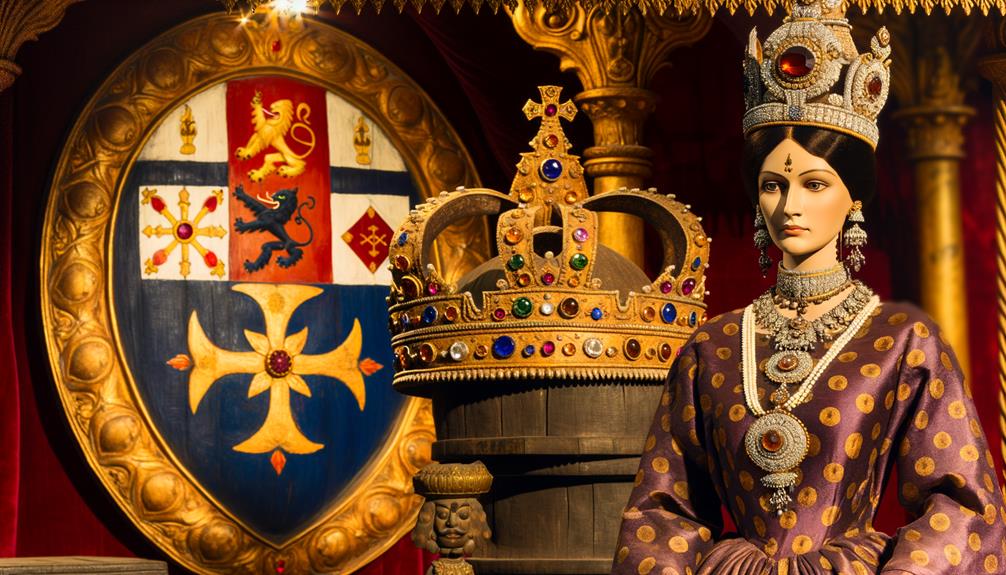
The name Duke originates from the Latin term ‘dux,’ which referred to a military leader or commander. During the Roman Empire, ‘dux’ signified generals, while in medieval Europe, it evolved to denote high-ranking nobility governing duchies. Through its adaptation into Old French (‘duc’) and Middle English, the title maintained its connotations of leadership and authority. Historically, the term transformed from a military to a hereditary noble title, embodying notions of supremacy and governance.
The name Duke originates from the Latin term 'dux,' which referred to a military leader or commander. During the Roman Empire, 'dux' signified generals, while in medieval Europe, it evolved to denote high-ranking nobility governing duchies.
Through its adaptation into Old French (‘duc') and Middle English, the title maintained its connotations of leadership and authority. Historically, the term transformed from a military to a hereditary noble title, embodying notions of supremacy and governance.
Today, it continues to carry an aura of prestige and excellence, celebrated through various cultural figures. Explore further to grasp the full historical and cultural richness.
Key Takeaways
- The name 'Duke' originates from the Latin word 'dux,' meaning leader or commander.
- 'Duke' evolved to signify high-ranking nobility in medieval Europe.
- The term retains connotations of authority, strength, and leadership.
- Modern usage of 'Duke' symbolizes excellence and prestige.
- Notable figures like Duke Ellington and Duke Kahanamoku exemplify the name's association with excellence.
Origin of the Name
The name 'Duke' stems from the Latin word 'dux,' which historically denoted a military leader or commander. In the context of ancient Rome, a 'dux' was a title bestowed upon generals or leaders of troops, often designated in times of war.
Over time, the term evolved in medieval Europe, becoming linked with high-ranking nobility. By the Middle Ages, 'Duke' had come to signify the sovereign rulers of duchies, regions governed by dukes. This progression mirrors the shift from military to hereditary leadership roles.
Understanding the historical context of the term 'Duke' provides insight into its significance, illustrating the evolution of leadership titles from martial command to territorial governance. Therefore, 'Duke' embodies a legacy of authority and prestige.
Etymology and Linguistic Roots
The name 'Duke' originates from the Latin word 'dux,' meaning leader or commander, and was historically used to denote a noble rank in various European cultures.
Over time, its linguistic evolution has seen the term adopted into Old French as 'duc' and later into Middle English, retaining its connotations of nobility and authority.
This name has also acquired various cultural significances and adaptations, reflecting the socio-political landscapes in different regions.
How Does Origin and Historical Use Impact Your Choice?
Rooted in Latin, the name Duke originates from the term 'dux,' which historically signified a leader or commander. This etymology underscores the title's association with nobility and authority.
In medieval Europe, 'dux' evolved into titles such as 'duke' in English, 'duque' in Spanish, and 'duc' in French, reflecting a universal recognition of leadership.
Notably, the term's historical use can be outlined as follows:
- Roman Empire: 'Dux' referred to military commanders responsible for frontier defense.
- Medieval Period: The title 'duke' became hereditary, denoting high-ranking nobility.
- Modern Era: The name retains its noble connotations, often symbolizing prestige and honor.
Understanding this origin provides insight into the enduring legacy of the name Duke.
What Should You Know About Linguistic Evolution Over Time?
Tracing the linguistic evolution of the name Duke reveals a fascinating journey through various languages and cultural transformations. The term originates from the Latin 'dux,' meaning leader or commander, which was used in the Roman military context.
Over time, 'dux' evolved into the Old French 'duc,' maintaining its connotation of leadership and nobility. The Anglo-Norman influence during the Norman Conquest of England in 1066 further cemented the term within the English lexicon.
How Does Cultural Significance and Variations Impact Your Choice?
From its Latin origin 'dux' to its entrenchment in English nobility, the name Duke encapsulates a rich tapestry of cultural significance and linguistic evolution. Initially signifying a leader or commander, 'dux' metamorphosed through Old French into the Middle English 'duk.' This shift reflects historical changes in governance and societal structures.
To illustrate its cultural significance:
- Nobility: The title 'Duke' has historically denoted one of the highest ranks in British peerage, emphasizing its aristocratic implications.
- Military Leadership: As 'dux' originally indicated a military leader, the name carries martial and strategic connotations.
- Modern Usage: Today, 'Duke' is also a popular given name, representing strength and authority.
This transformation highlights the name's enduring legacy across different cultures and epochs.
Historical Significance
The name 'Duke' carries substantial historical significance, rooted in its association with nobility and royalty. Originating from the Latin 'dux,' meaning leader, the title was prevalent in medieval European aristocracy, signifying high-ranking nobles entrusted with significant responsibilities.
Over time, the term has evolved, maintaining its prestigious connotations in modern contexts while increasingly being adopted as a given name.
How Does Nobility and Royalty Origins Impact Your Choice?
Rooted in medieval European hierarchies, the title 'Duke' historically signified a rank of nobility second only to the monarch. Originating from the Latin word 'dux,' meaning leader, it initially described military commanders in the Roman Empire. Over time, the term evolved to denote prominent territorial lords wielding considerable influence.
The significance of the title can be understood through its historical context:
- Authority: Dukes governed expansive regions, often acting as sovereigns within their domains.
- Loyalty: They played pivotal roles in feudal allegiances, pledging fealty to kings in exchange for lands and privileges.
- Legacy: The title has persisted into modern times, symbolizing enduring prestige and power.
Understanding these elements provides insight into the enduring legacy of the term 'Duke'.
What Should You Know About Medieval European Titles?
In medieval Europe, titles such as Duke, Count, and Baron held specific hierarchical and administrative roles that shaped the sociopolitical landscape. The title of Duke, derived from the Latin "dux," signified a military leader who governed large territorial domains, often wielding significant power and autonomy. Counts, from "comes," managed counties and were responsible for judicial and administrative duties. Barons, the lowest tier of nobility, ruled over smaller regions and owed military service to higher lords.
| Title | Origin | Role |
|---|---|---|
| Duke | dux | Military leader, territorial governor |
| Count | comes | Judicial and administrative manager |
| Baron | baro | Local lord, military service provider |
Understanding these titles offers insight into the feudal system's complexity and the linguistic roots of European nobility.
What Should You Know About Evolution in Modern Times?
As the medieval period waned, the titles of Duke, Count, and Baron adapted to the evolving sociopolitical landscape, reflecting changes in governance and societal structure.
The term 'Duke,' historically signifying a ruler of independent territories, experienced a transformation in its meaning and application. In modern times, its significance shifted due to:
- Centralization of Power: Monarchies consolidated power, reducing the political autonomy of dukes.
- Nobility Reforms: Various European countries redefined noble titles, often replacing feudal roles with ceremonial or honorific functions.
- Linguistic Evolution: The word 'duke' itself entered common parlance as a metaphor for leadership and excellence.
These shifts underscore the dynamic nature of titles and their adaptation to contemporary political and social contexts.
Nobility and Aristocracy
The title 'Duke' historically signifies one of the highest ranks of nobility, often associated with significant territorial power and influence within European aristocratic hierarchies. Originating from the Latin term 'dux,' meaning leader, the designation was initially military, denoting commanders responsible for frontier regions of the Roman Empire.
By the Middle Ages, the title evolved to denote sovereign rulers of duchies, territories granted substantial autonomy. In feudal systems, dukes held vast lands and exercised considerable influence over vassals and serfs. The English peerage system, formalized by the Normans, further cemented the title's prestige, placing it directly below the monarch.
The linguistic shift from 'dux' to 'duke' reflects both the militaristic and administrative evolution of the role throughout European history.
Cultural Impact
Beyond its historical importance within nobility and aristocracy, the name 'Duke' has spread across different cultural realms, representing leadership, strength, and authority. This cultural influence can be seen in several areas:
- Literature and Film: Characters like Duke Leto Atreides from Frank Herbert's 'Dune' embody wisdom and valor.
- Music: Duke Ellington, a significant figure in jazz, embodies artistic mastery and innovation.
- Sports: Duke University's athletic teams are renowned for their excellence and competitive spirit.
Such allusions strengthen the characteristics linked with the name, embedding it profoundly into cultural awareness.
Historically, the term evolved from a noble title to a versatile symbol of distinction, showcasing the lasting impact of 'Duke' across various mediums.
Modern Usage
In contemporary contexts, the name 'Duke' has transcended its aristocratic origins to become a popular personal name and brand identifier, symbolizing excellence and authority.
Linguistically, 'Duke' evokes a sense of leadership and nobility, attributes that have contributed to its modern appeal.
Historically, the title denoted high-ranking nobility, but in today's society, it has been democratized and repurposed.
The name is frequently used in various sectors, including entertainment, education, and commerce, to convey prestige and reliability.
The shift from noble title to accessible moniker underscores a broader societal trend toward the appropriation of elite symbols for widespread cultural use.
Consequently, 'Duke' now intersects with contemporary values of distinction and trustworthiness.
Famous Namesakes
Among the many notable individuals bearing the name 'Duke', several have left an indelible mark on history, culture, and society. This name, with its noble connotations, has been carried by figures of great influence:
- Duke Ellington: An iconic jazz composer and pianist, Ellington's contributions to music are unparalleled, transforming the landscape of 20th-century jazz.
- Duke Kahanamoku: Known as the father of modern surfing, Kahanamoku popularized the sport globally and won multiple Olympic gold medals in swimming.
- Duke Snider: A celebrated Major League Baseball player, Snider's prowess as a center fielder earned him a place in the Baseball Hall of Fame.
These individuals exemplify the diverse arenas where the name 'Duke' has become synonymous with excellence and leadership.
Conclusion
In the grand tapestry of linguistic and historical evolution, the name 'Duke' stands as a resplendent thread, interwoven with tales of nobility, power, and cultural significance.
Emerging from etymological roots steeped in authority, its historical journey mirrors the ascent of aristocratic hierarchies.
The name's enduring presence in modernity, coupled with illustrious bearers, underscores its perpetual resonance.
Therefore, 'Duke' encapsulates an enduring legacy, embodying a timeless emblem of dignity and distinction across epochs.