Meaning of the Name Devi
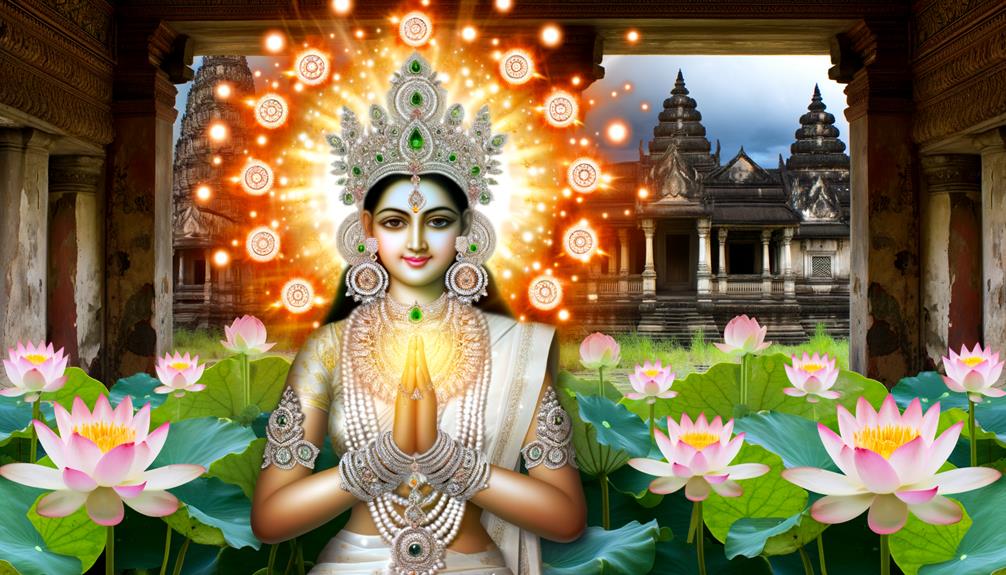
Rooted in Sanskrit, the name 'Devi' denotes 'goddess' or 'divine.' It embodies the concept of female divinity across South Asian religions, particularly Hinduism, where it reflects the goddesses Durga, Lakshmi, and Saraswati. The term is culturally significant, paralleling titles like 'Theotokos' in Byzantine Christianity and 'Shakti' in Tantric traditions.
Variants such as 'Devyani' and 'Debi' demonstrate linguistic adaptation across regions. Additionally, 'Devi' symbolizes the divine feminine in Buddhism as Tara and in Jainism as Padmavati.
The name's usage in modern times continues to reflect both traditional reverence and contemporary cultural values. Discover further nuances in its usage and significance.
Key Takeaways
- 'Devi' originates from Sanskrit, meaning 'goddess' or 'divine.'
- Represents the divine feminine power in Hindu mythology, manifesting as Durga, Lakshmi, and Saraswati.
- Symbolizes creation, preservation, and destruction within the cosmic cycle.
- Reflects cultural, religious, and linguistic diversity with variants like 'Devyani,' 'Debi,' and 'Devika.'
- Widely used in South Asia and popular in spiritual circles globally, signifying women's empowerment and resilience.
Etymology and Origin
The name 'Devi,' rooted in the ancient Sanskrit language, is derived from the word 'deva,' meaning 'divine' or 'god-like,' reflecting its profound significance in various cultural and religious contexts across South Asia.
Etymologically, 'Devi' embodies the feminine form of 'deva,' indicating a goddess or a female deity. This nomenclature is not merely linguistic but is imbued with cultural resonance, symbolizing the veneration of female divinity.
In comparative cultural analysis, 'Devi' parallels titles like 'Theotokos' in Byzantine Christianity, denoting the Virgin Mary as the Mother of God. The term is also analogous to 'Shakti' in Tantric traditions, emphasizing the embodiment of energy and power.
Therefore, 'Devi' encapsulates a multifaceted identity, bridging linguistic roots with profound cultural and religious interpretations.
Devi in Hindu Mythology
In Hindu mythology, Devi epitomizes the concept of divine feminine power, embodying the ultimate source of energy and strength. As a symbol of the Mother Goddess, she represents creation, preservation, and destruction, integral to the cosmic cycle.
Devi's various manifestations—such as Durga, Lakshmi, and Saraswati—highlight her multifaceted nature, each form serving distinct roles within the pantheon and reflecting diverse cultural values and religious practices across regions.
What Should You Know About Divine Feminine Power?
Central to Hindu mythology, Devi epitomizes the divine feminine power, embodying both nurturing and destructive aspects within the pantheon of gods and goddesses.
As an ethnographic symbol, Devi manifests in various forms such as Durga, the warrior goddess, and Lakshmi, the goddess of wealth and prosperity. This duality reflects a cultural context where power and compassion coexist.
Comparative analysis with other mythologies, such as the Greek Hera or Egyptian Isis, reveals a common thread of feminine deities balancing creation and destruction.
Devi's roles emphasize the integral nature of feminine power in maintaining cosmic order, making her indispensable in the Hindu belief system. This duality enriches our understanding of how divine feminine energy is revered and invoked.
What Should You Know About Mother Goddess Symbolism?
Revered as the Mother Goddess, Devi symbolizes fertility, protection, and the nurturing aspect of creation within Hindu mythology. Embedded in cultural traditions, Devi's veneration spans across Indian society, reflecting the agrarian roots where fertility and protection were paramount.
Comparatively, similar mother goddess figures exist in other cultures, such as Gaia in Greek mythology and Isis in Egyptian lore, underscoring a universal archetype of maternal divinity.
In Hinduism, Devi is often depicted with multiple arms, holding various symbols like the lotus and trident, signifying her multifaceted nature. Ethnographic studies reveal that festivals like Navaratri celebrate her, embodying the cyclical renewal of life.
Through these rituals, devotees express their reverence, affirming Devi's integral role in both cosmic order and daily life.
What Should You Know About Devi’s Various Manifestations?
Manifesting in myriad forms, Devi in Hindu mythology embodies diverse aspects of the divine feminine, each representing unique attributes and roles within the cosmic narrative. Her various manifestations are deeply rooted in cultural symbolism and religious practices, reflecting the complex interplay of power, compassion, and wisdom.
- Durga: The warrior goddess, symbolizing strength and protection against evil.
- Lakshmi: The goddess of wealth and prosperity, embodying abundance and fortune.
- Saraswati: The epitome of knowledge and arts, representing wisdom and learning.
- Kali: The fierce destroyer of evil, embodying transformation and time.
- Parvati: The gentle mother, symbolizing nurturing and marital bliss.
These manifestations illustrate the multifaceted nature of Devi, offering a thorough understanding of the divine feminine in Hinduism.
Symbolism in Religion
In various religious traditions, the name Devi embodies profound symbolic significance, representing the divine feminine and a multitude of goddesses who personify different aspects of life and the cosmos. In Hinduism, Devi is revered as the Great Mother, encompassing nurturing and destructive forces. Similarly, in Buddhism, Tara is a manifestation of Devi, symbolizing compassion and protection. These symbolic representations underscore the cultural context and religious ethos, reflecting the universality and diversity of the divine feminine.
| Tradition | Symbolic Representation |
|---|---|
| Hinduism | Great Mother, Life Force |
| Buddhism | Tara, Compassion, Protection |
| Jainism | Padmavati, Spiritual Wisdom |
This comparative analysis elucidates how Devi exemplifies the multifaceted nature of divinity across traditions.
Common Variations
In exploring the common variations of the name Devi, one must consider the regional name variants that reflect the linguistic diversity across South Asia.
Spelling differences, often influenced by local dialects and phonetic interpretations, further underscore the cultural richness inherent in naming conventions.
Additionally, cultural adaptations offer a comparative insight into how the name Devi is modified to align with distinct ethnic and linguistic identities.
What Should You Know About Regional Name Variants?
The name Devi, rooted in divine connotations, exhibits a rich tapestry of regional variations influenced by linguistic, cultural, and historical contexts across different parts of India and beyond. These variations reflect the nuanced ways in which different communities honor the feminine divine, adapting the name to fit their unique phonetic and cultural landscapes.
In Tamil Nadu, the name often appears as 'Devi' or 'Devyani.'
In West Bengal, it is commonly rendered as 'Debi.'
In Kerala, the name is frequently seen as 'Devi' or 'Devika.'
In Maharashtra, the name might be extended to 'Devayani.'
In Nepal, the name is often articulated as 'Debi' or 'Devee.'
Each variant reveals the deep cultural interweaving of language and spirituality.
What Should You Know About Spelling Differences Explained?
Examining the various spellings of Devi reveals not only phonetic diversity but also the intricate layers of cultural significance attributed to the name across different regions. This name, rooted in Sanskrit, is primarily used in Hindu culture to denote the divine feminine. Yet, its orthographic variations reflect regional dialects, linguistic tendencies, and historical influences. For instance:
| Spelling | Region/Cultural Context |
|---|---|
| Devi | India, Nepal |
| Devee | Bengal |
| Devi | Indonesia (Balinese Hinduism) |
| Devy | Western adaptations |
Each variant maintains the core essence of the divine feminine but adapts to local phonetic norms and cultural narratives. Understanding these variations offers a window into the syncretism and adaptability of cultural identities within the broader Indic and global context.
What Should You Know About Cultural Name Adaptations?
Across various cultures, the name Devi manifests in numerous adaptations, each reflecting unique phonetic preferences and historical influences that underscore the rich tapestry of cultural identities.
In India, 'Devi' signifies a goddess, embodying divine femininity and power.
Moving westward, the name transforms to 'Deva' in Slavic regions, wherein it denotes a spirit or deity.
The name 'Debbie' emerges in English-speaking cultures, often as a diminutive of Deborah, yet retaining a semblance to its original form.
In Hebrew contexts, 'Davi' translates to beloved, subtly aligning with the revered connotations of Devi.
Ultimately, in Southeast Asia, variations such as 'Devi' and 'Dewi' are prevalent, maintaining the name's spiritual essence.
Devi in Modern Culture
In modern culture, the name Devi retains profound significance, symbolizing both spiritual reverence and cultural heritage across various communities. Contemporary representations of Devi often reflect a blend of traditional and modern values, highlighting the name's enduring relevance.
| Community | Modern Interpretation |
|---|---|
| South Asian | Continues to signify divine feminine power, often used in names and cultural references. |
| Western | Adopted in spiritual circles, symbolizing goddess energy and empowerment. |
| Diaspora | Maintains cultural identity, bridging ancestral heritage with contemporary life. |
This table illustrates the multifaceted contemporary interpretations of Devi, underscoring its varied yet unified importance. Through ethnographic detail and comparative analysis, it is evident that the name Devi remains an essential cultural touchstone in today's diverse societal landscape.
Global Popularity
The name Devi has achieved global popularity, resonating with diverse cultures and communities as a symbol of divine femininity and spiritual empowerment. This name, deeply rooted in Hindu mythology, transcends geographical boundaries, finding relevance in various sociocultural contexts.
The following list highlights the global reach and cultural significance of the name Devi:
- India: Widely used, reflecting its mythological origins and religious significance.
- Indonesia: Popular, often associated with local deities and cultural heritage.
- Nepal: Common, symbolizing the connection to divine feminine energy.
- United States: Adopted by those embracing Eastern spirituality.
- Western Europe: Increasingly found among spiritual and yoga communities.
Across these regions, Devi embodies a universal archetype of strength, wisdom, and benevolence.
Famous Personalities
Renowned figures bearing the name Devi, such as the Indian classical singer M.S. Subbulakshmi and the Indonesian actress Dewi Sandra, illustrate the cultural richness and diverse heritage associated with this name.
M.S. Subbulakshmi, often revered as the 'Queen of Carnatic Music,' exemplifies the name's deep-rooted connection to Indian spirituality and artistic excellence.
In contrast, Dewi Sandra's prominence in Indonesian entertainment highlights the name's widespread appeal and adaptability across diverse cultural landscapes.
This comparative analysis underscores how 'Devi' transcends geographical boundaries while retaining its cultural significance.
Name Significance Today
Expanding from the illustrious figures who bear the name 'Devi,' its significance in contemporary society remains profound, reflecting ongoing cultural reverence and evolving interpretations within various global communities.
The name 'Devi,' rooted in Sanskrit, translates to 'goddess,' symbolizing divine femininity and strength.
Modern contexts reveal its enduring relevance:
- Cultural Preservation: The name persists in traditional ceremonies and rituals.
- Global Diaspora: Among Indian diasporic communities, 'Devi' signifies cultural continuity.
- Gender Empowerment: It is embraced as a symbol of women's empowerment and resilience.
- Literary and Artistic Expression: 'Devi' inspires creative works, embodying various thematic interpretations.
- Interfaith Recognition: The name crosses religious boundaries, reflecting shared values of reverence and respect.
These facets underscore 'Devi's' dynamic significance today.
Conclusion
The name 'Devi,' deeply rooted in Hindu mythology and religious symbolism, continues to resonate globally. Statistically, 'Devi' ranks among the top 1000 names for girls in countries like India and Indonesia, reflecting its enduring appeal.
The name's numerous cultural variations and its representation in modern culture underscore its dynamic significance. In an ethnographic context, 'Devi' symbolizes both divine femininity and societal values, offering a rich tapestry for comparative cultural analysis and ongoing scholarly exploration.