Meaning of the Name Beckham
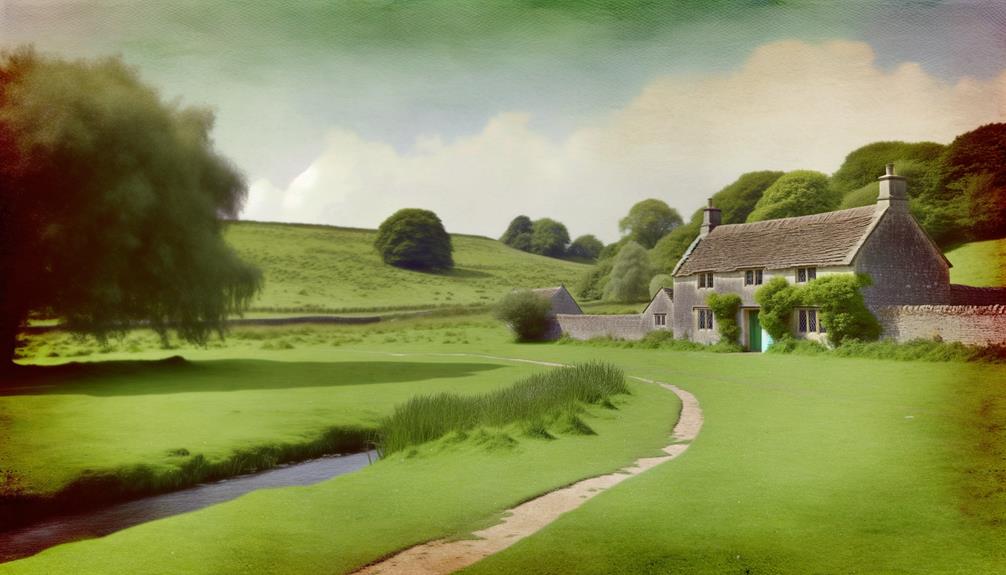
The name Beckham originates from Old English, combining ‘beck’ (stream) and ‘ham’ (settlement), thereby denoting a settlement by a stream. The term ‘beck’ reflects Norse linguistic influence and reveals historical shifts in England’s language landscape. The name encapsulates medieval agrarian life and the Old English tradition of naming places based on geographic features. Its modern recognition owes much to cultural icons like footballer David Beckham and the resultant global influence in popular media and branding.
The name Beckham originates from Old English, combining 'beck' (stream) and 'ham' (settlement), thereby denoting a settlement by a stream. The term 'beck' reflects Norse linguistic influence and reveals historical shifts in England's language landscape.
Exploring its evolution and variations, one discovers the rich tapestry of linguistic and societal influences shaping this surname over centuries.
Key Takeaways
- Beckham is derived from Old English terms 'beck' (stream) and 'ham' (settlement).
- The name likely referred to a settlement located by a stream.
- Beckham has Norse influences, reflecting historical linguistic shifts.
- The name gained modern prominence through figures like David and Victoria Beckham.
- Variations of Beckham include Beckam, Beckum, and Becham, showing its linguistic evolution.
Origin and Etymology
The name Beckham originates from Old English, specifically derived from the words 'beck,' meaning stream, and 'ham,' meaning home or settlement.
This linguistic construction reflects the geographical and societal contexts of early English settlements, where names often described prominent physical features or the nature of the locality.
The term 'beck' is particularly indicative of Norse influence, as it was commonly used in regions with significant Scandinavian settlement during the Viking Age.
'Ham,' on the other hand, was a widespread suffix in Old English place names, denoting a dwelling or village. Consequently, the name Beckham likely referred to a settlement situated by a stream, encapsulating a vivid image of the landscape and living conditions of its early bearers.
Historical Background
The name Beckham traces its roots back to Old English, originating from the combination of 'Becca,' a personal name, and 'ham,' meaning homestead or village.
Over centuries, the etymology and usage of Beckham have evolved, reflecting broader linguistic and societal changes in England.
Its cultural significance has been further amplified in contemporary times, particularly through prominent public figures bearing the surname.
What Should You Know About Old English Origins?
Originating from Old English, the name Beckham is derived from the elements 'beck,' meaning stream, and 'ham,' meaning homestead or settlement. This nomenclature reflects the geographical and societal characteristics of early English communities, where names often referenced local natural features and residential clusters.
The term 'beck' originates from Old Norse, emphasizing the cultural interplay between Norse and Anglo-Saxon settlers.
- Geographical Significance: Denotes proximity to water bodies.
- Societal Implications: Implies a settled, agrarian lifestyle.
- Linguistic Fusion: Demonstrates the integration of Norse and Anglo-Saxon languages.
- Historical Context: Reflects the medieval English countryside.
- Cultural Heritage: Preserves ancient naming traditions.
Understanding the Old English origins of 'Beckham' reveals much about the linguistic and cultural landscape of early England.
How Does Etymology and Evolution Impact Your Choice?
Building upon its Old English roots, the etymology and evolution of the name Beckham illustrate a fascinating journey through linguistic transformations and historical events that have shaped its modern interpretation.
Originating from the Old English elements 'becca,' meaning 'pickaxe,' and 'ham,' meaning 'homestead' or 'village,' the name initially described a settlement associated with a person wielding a pickaxe.
Over centuries, the name adapted through various dialects and regional influences, reflecting the socio-political changes in England.
The Norman Conquest and subsequent shifts in land ownership contributed to its phonetic and orthographic variations.
What Should You Know About Cultural Significance?
Amid the tapestry of English history, the name Beckham not only signified a geographical location but also became a marker of social identity and lineage through various epochs. Originating from the Old English terms 'Bec' (stream) and 'Ham' (homestead), Beckham was initially a toponymic surname.
The name gained cultural significance in several ways:
- Feudal Era: Denoted land ownership and local governance.
- Medieval Period: Associated with agricultural settlements.
- Post-Norman Conquest: Influenced by Norman naming conventions.
- 19th Century: Reflected in census records highlighting migration patterns.
- Modern Era: Popularized globally by figures such as David Beckham.
Understanding Beckham's historical context reveals its evolution from a geographical identifier to a symbol of cultural heritage and societal roles.
Geographic Connections
The name Beckham has strong geographic connections, originating from Old English elements 'beck,' meaning stream, and 'ham,' meaning homestead or village.
Historically, this name is tied to various place names in England, reflecting both the etymological roots and the settlement patterns of early inhabitants.
Additionally, regional popularity trends reveal fluctuations in the name's usage, influenced by cultural and socio-economic factors over centuries.
What Should You Know About Historical Place Names?
Several historical place names are intricately connected to the name Beckham, providing a deeper understanding of its geographic and cultural origins. The name Beckham originates from Old English, combining 'beck,' meaning stream, and 'ham,' meaning homestead or village. This etymology reveals key insights into the historical landscapes and settlements where the name likely emerged.
Notable places include:
- Beckingham, Nottinghamshire: A village whose name shares the same linguistic roots.
- Beckingham, Lincolnshire: Another locale echoing the cultural essence of the name.
- Beckham, Norfolk: A parish reflecting the name's historical presence in East Anglia.
- Beckhampton, Wiltshire: Illustrating the geographic spread of the name.
- Great and Little Bealings, Suffolk: Comparable place names offering further insight.
These places collectively underscore the name's deep-rooted historical and cultural significance.
What Should You Know About Regional Popularity Trends?
Analyzing the regional popularity trends of the name Beckham reveals significant geographic connections that span from its Old English roots to contemporary naming practices. Originating in England, the name was historically associated with specific locales, reflecting a geographic heritage. Over time, its popularity surged in the United States, particularly influenced by the fame of sports figures like David Beckham. This shift exemplifies the transformation of a historically anchored name into a modern cultural phenomenon.
| Region | Historical Popularity | Modern Influence |
|---|---|---|
| England | High | Historical place names |
| United States | Moderate | Celebrity culture (e.g., David Beckham) |
| Australia | Low | Increasing trend due to global media |
Thus, the name Beckham demonstrates a fascinating interplay between historical significance and contemporary cultural influences.
Cultural Significance
Exploring the cultural importance of the name Beckham reveals its deep connections to historical figures, linguistic roots, and its modern-day associations with prominent personalities.
The surname Beckham originates from Old English, combining 'Becca' (a personal name) and 'ham' (homestead or village). This etymology reflects the name's historical significance tied to landholding and community leadership in Anglo-Saxon England.
Over centuries, Beckham evolved into a surname that signifies heritage and legacy.
- Historical Etymology: Derived from Old English elements.
- Social Status: Historically linked to landowners and village leaders.
- Linguistic Evolution: Shifted from a personal name to a surname.
- Cultural Heritage: Represents a connection to Anglo-Saxon roots.
- Modern Relevance: Continues to evoke notions of heritage and prominence.
Famous Bearers
David Beckham, a name synonymous with global sports fame and cultural influence, stands as one of the most renowned bearers of the surname. Emerging from humble beginnings in East London, Beckham's career trajectory exemplifies the power of talent and determination.
His surname, rooted in Old English origins, historically refers to a homestead by a stream or brook. Beckham's impact transcends football; he has become a pivotal figure in fashion, business, and philanthropy. His marriage to Victoria Beckham, a member of the iconic pop group Spice Girls, further cemented the Beckham name in popular culture.
Their combined influence showcases how a surname with historical agrarian roots has evolved into a modern symbol of success and versatility.
Modern Usage
The widespread recognition of the Beckham surname in contemporary culture underscores its evolution from its Old English origins to a modern emblem of global influence and versatility. Initially denoting a geographical location, 'Beckham' now resonates with a broader audience due to its association with prominent figures in sports and entertainment. This transformation reflects a dynamic interplay of historical and linguistic factors that have rejuvenated its relevance.
- Cultural Icon Status: Influenced by David Beckham's global football career.
- Entertainment Influence: Victoria Beckham's impact in fashion and music.
- Popular Media: Frequent appearance in television and film.
- Branding: Usage in various commercial and lifestyle brands.
- International Appeal: Recognition and adoption in diverse global regions.
This multifaceted usage highlights the name's enduring legacy and contemporary significance.
Variations and Derivatives
Variations and derivatives of the name Beckham illustrate the rich tapestry of its etymological journey, reflecting regional influences and historical shifts in language. Originating from Old English, the name combines 'beck,' meaning stream, and 'ham,' meaning homestead.
Over centuries, regional dialects and linguistic evolution have produced variations such as Beckam, Beckum, and Becham. In Norman times, the introduction of the French language influenced anglicized versions like Beauchamp.
Migration patterns, particularly to America, led to additional adaptations. Notable bearers, such as David Beckham, have spurred modern derivatives, including shortened forms like Becks.
This dynamic evolution underscores the name's adaptability and enduring appeal, illustrating how historical and cultural contexts shape linguistic transformations.
Conclusion
In summation, the name Beckham, rooted in Old English origins, transcends mere nomenclature to embody a rich tapestry of historical, geographic, and cultural significance.
Like a river flowing through time, it has carved its mark from ancient settlements to contemporary fame, particularly through figures such as David Beckham.
The name's enduring legacy, with its various derivatives and modern adaptations, underscores its dynamic evolution within the linguistic and cultural landscape.