Lakshmi Name Meaning in English
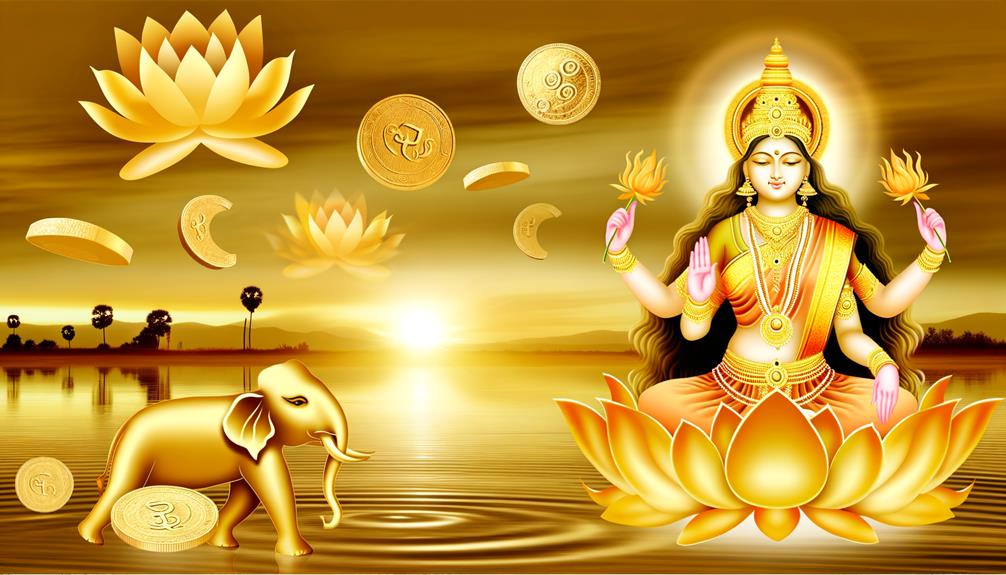
Lakshmi, rooted in Sanskrit, derives from 'lakṣ,' meaning 'to perceive' or 'to observe.' It holds profound historical and cultural significance, reflecting its origins in ancient Vedic traditions. In Hindu mythology, Lakshmi is revered as the Goddess of Wealth, embodying prosperity, fortune, and beauty.
Symbolized by the lotus flower and gold coins, she is central to rituals such as Diwali and Lakshmi Puja. Representing righteousness, wealth, desires, and liberation, her influence permeates daily life and cultural practices.
Various famous personalities bear this name, underscoring its enduring relevance. Discover how Lakshmi has shaped cultural narratives across regions.
Key Takeaways
- Lakshmi is derived from the Sanskrit word 'lakṣ' meaning 'to perceive' or 'to observe.'
- In Hindu mythology, Lakshmi is the Goddess of Wealth, prosperity, and beauty.
- The name signifies prosperity and is associated with the lotus flower and gold coins.
- Lakshmi is a central figure in festivals like Diwali and Lakshmi Puja.
- The name Lakshmi embodies attributes like righteousness, wealth, desires, and liberation.
Etymology of Lakshmi
Lakshmi's etymology is rooted in Sanskrit, where the name is derived from the word 'lakṣ,' signifying 'to perceive' or 'to observe,' which aligns with her role as the goddess of wealth, fortune, and prosperity in Hindu culture.
This linguistic origin reflects the ancient Vedic traditions, where observation and perception were viewed as pathways to understanding the divine forces that govern prosperity and well-being. Historically, the term 'lakṣ' evolved into 'Lakshmi,' encapsulating not just material wealth but also spiritual and emotional fulfillment.
Culturally, this etymological background underscores the holistic view of prosperity in Hinduism, where wealth is not merely material but also includes virtues like wisdom, compassion, and ethical conduct, essential for a balanced and fulfilling life.
Lakshmi in Hindu Mythology
In Hindu mythology, Lakshmi is revered as the Goddess of Wealth, embodying prosperity, fortune, and beauty. Her symbolism and attributes, such as the lotus flower and gold coins, represent both material and spiritual abundance.
Popular festivals like Diwali and Lakshmi Puja celebrate her divine blessings, underscoring her cultural significance in Indian traditions.
What Should You Know About Goddess of Wealth?
Revered as the embodiment of wealth and prosperity, the Goddess Lakshmi holds a pivotal role in Hindu mythology, symbolizing not only material abundance but also spiritual and moral well-being. Historically, her worship dates back to the Vedic period, reflecting deep cultural values.
The reverence for Lakshmi is evident in various aspects of Hindu life, underscoring her multifaceted importance:
- Economic Prosperity: Signifies financial stability and success.
- Agricultural Fertility: Secures bountiful harvests and sustenance.
- Spiritual Wealth: Promotes virtues such as generosity and compassion.
- Domestic Harmony: Fosters familial peace and contentment.
Lakshmi's significance extends beyond mere wealth, embodying a holistic vision of prosperity that interweaves ethical living and societal well-being.
How Does Symbolism and Attributes Impact Your Choice?
Central to understanding Lakshmi's profound impact in Hindu mythology is her rich symbolism and diverse attributes, which collectively encapsulate the ideals of prosperity, purity, and benevolence.
Historically, Lakshmi is depicted with four hands, each representing dharma (righteousness), artha (wealth), kama (desires), and moksha (liberation), the four goals of human life. Her association with the lotus flower signifies spiritual purity and detachment, while the gold coins flowing from her hands symbolize material wealth and abundance.
Cultural significance is further deepened by her role as Vishnu's consort, embodying the harmonious balance of divine prosperity and moral virtue. These attributes make Lakshmi a central figure in Hindu rituals and daily prayers, revered across generations for ensuring well-being and fortune.
What Should You Know About Popular Festivals Celebrating?
Celebrating the rich symbolism and attributes of Lakshmi, several popular festivals in Hindu mythology are dedicated to honoring her divine presence and ensuring prosperity and well-being. These festivals not only reflect the historical reverence for Lakshmi but also highlight her cultural significance in contemporary society.
Key celebrations include:
- Diwali: Known as the Festival of Lights, it venerates Lakshmi, inviting her blessings for wealth and happiness.
- Lakshmi Puja: A specific ritual during Diwali focused entirely on worshipping Lakshmi with elaborate prayers and offerings.
- Varalakshmi Vratam: Observed mainly in South India, this festival is dedicated to propitiating Lakshmi for familial prosperity.
- Kojagiri Purnima: Celebrated on a full moon night, it is believed Lakshmi descends to bless her devotees with abundance.
These festivals underscore Lakshmi's integral role in Hindu culture.
Symbolism of Lakshmi
The symbolism of Lakshmi, the Hindu goddess of wealth, prosperity, and fortune, is deeply intertwined with the cultural and spiritual fabric of India, reflecting both ancient traditions and contemporary beliefs. Historically, Lakshmi's iconography—depicted with lotus flowers, gold coins, and elephants—signifies purity, abundance, and wisdom.
The lotus represents spiritual enlightenment and purity, transcending materialism. Gold coins symbolize material wealth, essential for societal and familial stability. Elephants, often shown showering her with water, denote royal power and generative life forces.
This imagery has evolved but remains relevant, symbolizing a holistic view of prosperity that includes physical, emotional, and spiritual well-being. Understanding Lakshmi's symbolism offers insight into how wealth and success are perceived within the broader Hindu worldview.
Cultural Significance
Spanning centuries, the cultural significance of Lakshmi permeates various aspects of daily life and rituals in Hindu societies, reflecting a deep-rooted reverence for her role in ensuring prosperity and well-being. Lakshmi's influence is deeply embedded in traditional practices and historical contexts.
- Festivals: Diwali, the Festival of Lights, honors Lakshmi, symbolizing the triumph of light over darkness and inviting prosperity into homes.
- Art and Literature: Ancient texts and sculptures frequently depict Lakshmi, emphasizing her integral role in Hindu mythology and culture.
- Marriage Rituals: Lakshmi is invoked to bless couples with wealth and happiness, signifying her importance in familial prosperity.
- Business Ventures: Entrepreneurs seek Lakshmi's blessings for successful ventures, underlining her association with economic prosperity.
These elements highlight her enduring cultural relevance.
Lakshmi in Daily Life
Incorporated into the daily routines and practices of many Hindu households, the veneration of Lakshmi manifests through rituals, prayers, and symbols that aim to attract her blessings and guarantee ongoing prosperity.
Traditionally, Lakshmi is worshipped through daily prayers and offerings of flowers, incense, and food, reflecting a historical devotion that spans centuries. Symbolic items such as the lotus flower, coins, and lamps are commonplace in households, signifying purity, wealth, and enlightenment.
This cultural practice underscores Lakshmi's significance in promoting not only material wealth but also spiritual well-being. The enduring legacy of Lakshmi's worship highlights her integral role in maintaining balance and harmony within the family unit, thereby reinforcing her esteemed position in Hindu culture.
Modern Usage
In contemporary society, the name Lakshmi retains its cultural significance and continues to be a popular choice among parents, reflecting its historical reverence and timeless appeal.
The name's variations across different regions highlight its adaptability and enduring relevance in diverse cultural contexts.
Its usage today underscores an ongoing connection to traditional values and spiritual symbolism.
What Should You Know About Popularity in Baby Names?
Over recent decades, the name Lakshmi has seen a resurgence in popularity, reflecting a growing appreciation for its cultural and historical significance. This resurgence can be attributed to several factors:
- Globalization: Increased cultural exchange has heightened awareness of diverse names and their meanings.
- Cultural Pride: Many parents from South Asian backgrounds are choosing traditional names to honor their heritage.
- Spiritual Resonance: Lakshmi, as the Hindu goddess of wealth and prosperity, imbues the name with spiritual significance.
- Celebrity Influence: Notable figures and media representations have brought traditional names into contemporary discourse.
These elements collectively highlight the name's evolving role in modern nomenclature, bridging historical reverence with contemporary identity.
What Should You Know About Cultural Significance Today?
The name Lakshmi continues to hold profound cultural significance today, serving as a powerful symbol of heritage and identity for many within and beyond South Asian communities.
Historically, Lakshmi is revered as the Hindu goddess of wealth, fortune, and prosperity, embodying timeless values that transcend generations.
In modern contexts, the name resonates strongly, frequently chosen for its auspicious connotations and deep-rooted cultural heritage.
Lakshmi is celebrated in various cultural festivities and rituals, emphasizing its enduring relevance.
Additionally, in a globalized world, the name acts as a cultural bridge, fostering a sense of continuity and connection to ancestral roots.
This way, Lakshmi's contemporary usage underscores its lasting impact and the rich cultural tapestry it represents.
What Should You Know About Variations Across Regions?
Across different regions, the name Lakshmi exhibits a variety of linguistic adaptations and cultural interpretations that reflect the diverse ways in which it is embraced and honored. In modern usage, these variations highlight the name's deep-rooted historical context and cultural significance.
Here are four notable regional adaptations:
- India: Mainly used in Hindu communities, often associated with prosperity and wealth.
- Nepal: Commonly used with slight phonetic variations, maintaining its religious connotations.
- Sri Lanka: Adapted within Tamil and Sinhalese cultures, retaining its link to divine femininity.
- Southeast Asia: In countries like Indonesia and Thailand, the name is integrated into local languages while preserving its spiritual essence.
These adaptations underscore Lakshmi's enduring relevance across different cultural landscapes.
Variations of the Name
Throughout various cultures and linguistic traditions, the name Lakshmi has evolved into several distinct variations, each carrying unique historical and cultural significance.
In South India, Lakshmi is often adapted to 'Laxmi,' maintaining phonetic similarities while reflecting regional linguistic preferences.
In Nepal and Tibet, it transforms into 'Laxmi' or 'Lachimi,' influenced by local dialects and scriptural interpretations.
The name 'Lakshmibai' is a notable variation in Indian history, combining Lakshmi with 'bai,' a term of respect.
Additionally, in Southeast Asia, such as in Thailand, the name can appear as 'Laksami,' signifying the spread of Hindu cultural influence.
These variations not only highlight the name's adaptability but also underscore its pervasive cultural resonance across different societies.
Famous Personalities Named Lakshmi
In addition to its widespread variations, the name Lakshmi has been borne by numerous eminent individuals who have made significant contributions in fields ranging from politics to entertainment, further cementing its cultural and historical significance. These personalities enhance the name's prestige and illustrate its cultural depth.
Eminent figures include:
- Lakshmi Sahgal: An Indian freedom fighter and officer of the Indian National Army, who played a pivotal role in India's struggle for independence.
- Lakshmi Menon: An acclaimed Indian actress known for her significant impact on South Indian cinema.
- Lakshmi Mittal: A prominent steel magnate and chairman of ArcelorMittal, the world's largest steelmaking company.
- Lakshmi Narayan Tripathi: A transgender rights activist and author, recognized for her advocacy in India and beyond.
These individuals embody the diverse and influential nature of the name Lakshmi.
Conclusion
Essentially, the name Lakshmi, immersed in rich etymological roots and Hindu mythology, symbolizes prosperity, fortune, and beauty.
Its cultural importance spans centuries, intricately woven into daily life and modern usage.
Similar to the goddess it embodies, the name conjures up a feeling of respect and holiness.
This ageless name still motivates, mirroring the lasting impact of age-old customs and the worldwide pursuit of abundance.
Lakshmi's diverse symbolism remains a guiding light of cultural legacy and spiritual ambition.