Meaning of the Name Hartley
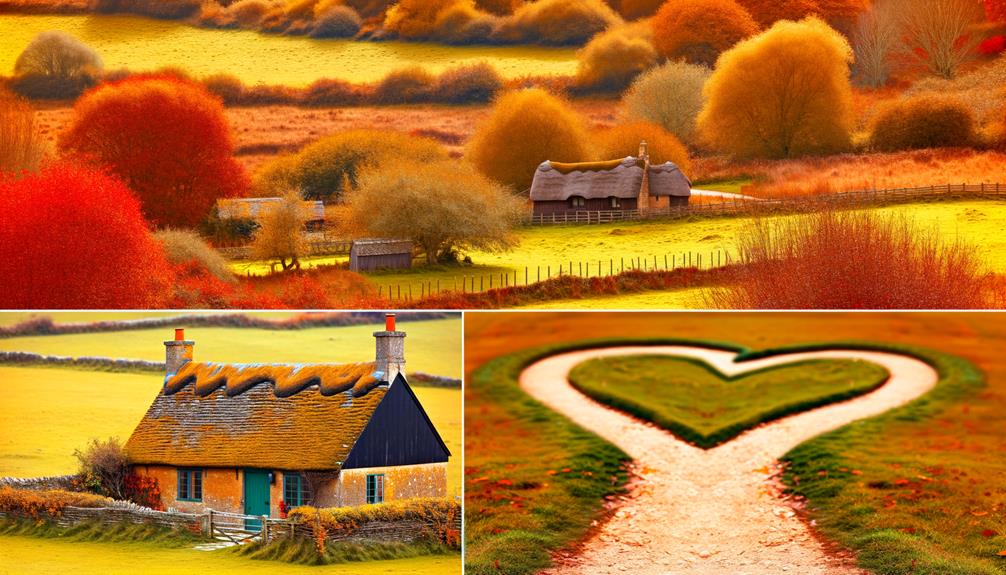
The name Hartley originates from Old English, combining 'heorot' (hart) and 'leah' (wood or clearing), symbolizing a woodland area frequented by deer. It reflects historical pastoral and hunting activities common in Anglo-Saxon culture.
Initially a surname, Hartley evolved into a first name in the 19th century, influenced by evolving naming conventions. Its historical significance is deeply tied to noble lineage, regional identity, and settlement patterns.
Figures named Hartley, like novelist L.P. Hartley and philosopher David Hartley, underscore the name's cultural resonance.
Understanding this rich historical context can enhance appreciation for the name's profound legacy.
Key Takeaways
- Hartley derives from Old English, combining 'heorot' (hart) and 'leah' (wood or clearing).
- The name signifies a woodland clearing frequented by deer, reflecting pastoral landscapes.
- Initially a surname, Hartley transitioned to a first name in the 19th century.
- It reflects historical and cultural transformations, including noble lineage and regional identity.
- Prominent individuals named Hartley have contributed significantly to literature, philosophy, and the arts.
Origin of Hartley
Deriving from Old English, the name Hartley originates from the combination of 'heorot' (hart or stag) and 'leah' (wood or clearing), signifying a woodland clearing frequented by deer. This nomenclature reflects a landscape historically associated with pastoral and hunting activities.
The integration of these elements suggests a geographical and cultural significance, indicating areas where deer were prominent, either naturally or through managed hunting grounds. Hartley, thus, encapsulates not just a name, but a narrative of human interaction with the natural environment.
The etymological roots provide insights into the socio-economic conditions of early English societies, where such clearings were essential for sustenance and community activities. This origin underscores the name's deep connection to both nature and historical land use.
Etymology of Hartley
The etymology of the name Hartley can be traced to Old English, wherein 'heorot' signifies a hart or stag, and 'leah' denotes a wood or clearing.
This composite formation, 'heorot-leah', translates to a clearing frequented by stags, suggesting a landscape rich in wildlife and vegetation.
The name encapsulates not just a geographical location but also an ecological essence, reflecting the natural history of the region.
The linguistic elements 'heorot' and 'leah' are emblematic of the Anglo-Saxon penchant for descriptive toponyms, providing insight into the terrain and its fauna.
Such nomenclature is indicative of a society deeply intertwined with its environment, where names were imbued with both descriptive and cultural significance.
Historical Context
In examining the historical context of the name Hartley, it is essential to contemplate its early origins, which can be traced back to Old English roots combining 'heorot' (hart) and 'leah' (woodland clearing).
During the medieval period, the name gained prominence, reflecting settlement patterns and societal structures of the time.
Over the centuries, the name evolved both in form and frequency of use, influenced by linguistic shifts and cultural transformations.
Early Name Origins
Rooted in the Old English elements 'heorot' (hart) and 'leah' (wood or clearing), the name Hartley traces its origins back to the Anglo-Saxon period, reflecting the region's linguistic and cultural heritage.
This nomenclature is indicative of the Anglo-Saxon practice of combining elements descriptive of the natural environment and fauna. The term 'heorot' specifically refers to a stag or male deer, while 'leah' denotes a clearing within a forest, suggesting an area where such animals were prevalent.
This composite naming convention was not merely functional but also emblematic of the relationship between early inhabitants and their surroundings. Consequently, Hartley offers valuable insights into the socio-environmental context of early medieval England.
Medieval Usage Patterns
Medieval England's socio-political landscape greatly influenced the proliferation and evolution of the name Hartley, as it became emblematic of both noble lineage and regional identity. Originating from Old English, 'Hartley' combines 'heorot' (hart) and 'leah' (woodland), suggesting a landscape populated by deer.
During the medieval period, land ownership signified power, and surnames often derived from geographical features of estates. The name Hartley, as a result, was not merely a personal identifier but a marker of territorial control and status. Its usage was prevalent among the gentry, signifying ancestral ties to specific locales.
Additionally, the name's association with noble estates reinforced social hierarchies, highlighting the interconnectedness of nomenclature and feudal society in medieval England.
Evolution Over Centuries
The socio-political significance of the name Hartley in medieval England laid the groundwork for its complex evolution over subsequent centuries, reflecting broader historical shifts and cultural transformations.
Initially denoting geographical origins, Hartley became associated with land ownership and local governance, emblematic of feudal hierarchies. Post-Norman Conquest, the name adapted to changing power structures, maintaining its relevance.
During the Industrial Revolution, Hartley evolved into urban settings, reflecting migration patterns and economic shifts. By the 19th and 20th centuries, the name gained prominence in literary and intellectual circles, reflecting evolving societal values.
Therefore, Hartley encapsulates a rich historical tapestry, mirroring the interplay between geography, socio-economic status, and cultural identity through England's dynamic history.
Transition to First Name
The evolution of Hartley from a surname to a first name warrants examination of its historical usage patterns, which reveal its initial prevalence in English-speaking regions.
Over time, the name's adoption as a first name has fluctuated in popularity, influenced by broader cultural trends and societal shifts.
This change also underscores the cultural significance attributed to the name, reflecting evolving perceptions and values within different communities.
Historical Usage Patterns
Initially emerging as a surname, Hartley began its transformation to a first name during the 19th century, influenced by evolving naming conventions and cultural shifts. This shift was marked by specific historical usage patterns, reflecting broader societal trends.
- Literary Influences: The 19th century saw a rise in literary works where surnames were repurposed as first names, contributing to Hartley's new role.
- Migration and Settlement: As families moved and settled in new regions, there was a tendency to honor ancestral lineage by adopting surnames as first names.
- Social Mobility: The period's increasing social mobility allowed individuals to redefine their identities, often incorporating surnames like Hartley to signify heritage and distinction.
These patterns underscore the dynamic interplay between cultural evolution and naming practices.
Popularity Over Time
Tracking the popularity of Hartley as a first name reveals significant fluctuations over time, reflecting broader societal and cultural influences.
Initially, Hartley was primarily used as a surname, but it evolved into a first name with varying degrees of acceptance. Historical records indicate its modest usage in the early 20th century, often linked to literary and geographical associations.
However, its popularity waned mid-century, likely due to shifting naming conventions favoring more contemporary choices. Recent decades have witnessed a gradual resurgence, possibly attributable to a renewed appreciation for classic and unique names.
Data from social security records and naming databases underscore these trends, illustrating how Hartley's appeal has evolved in response to changing cultural dynamics and preferences.
Cultural Significance
Hartley's shift from a surname to a first name encapsulates a significant cultural change influenced by historical, social, and literary factors. This transformation underscores the evolving nature of naming conventions and societal trends.
Historically, surnames like Hartley often indicated geographic origins or occupational identities, but their adaptation into first names reflects broader social fluidity.
Several factors contribute to this phenomenon:
- Literary Influence: The portrayal of characters named Hartley in novels and films has popularized the name, imbuing it with cultural resonance.
- Social Changes: Modern naming practices embrace uniqueness, leading to the rise in using surnames as first names.
- Heritage and Identity: Choosing Hartley as a first name can signify a connection to ancestral roots or familial heritage, enriching personal identity.
This multifaceted evolution highlights the dynamic interplay between culture and nomenclature.
Hartley in Literature
In literary contexts, the name Hartley often embodies a rich tapestry of historical and symbolic significance, inviting nuanced interpretations across various genres and narratives. Authors frequently employ the name to evoke a sense of tradition, heritage, and depth. For instance, Hartley can be found in works that explore themes of identity, belonging, and transformation. It often serves as a vehicle for character development, imbuing individuals with a sense of gravitas and introspection.
| Aspect | Details |
|---|---|
| Historical Context | Often associated with English rural heritage |
| Symbolic Meaning | Represents tradition and introspection |
| Character Development | Adds depth and complexity to personas |
| Thematic Relevance | Explores identity and belonging |
| Literary Usage | Found in diverse genres and narratives |
This multifaceted name enriches literary works by providing layers of meaning and historical resonance.
Popularity Over Time
The name Hartley has experienced fluctuating levels of popularity throughout different historical periods, reflecting broader cultural and societal trends. Analyzing its trajectory reveals several key phases:
- 19th Century: During this era, Hartley saw moderate usage, often associated with pastoral and literary influences.
- Mid-20th Century: A decline occurred, likely due to a broader shift towards more modern-sounding names.
- 21st Century: Hartley has witnessed a resurgence, partly driven by a renewed interest in unique, traditional names.
These trends highlight the dynamic nature of naming conventions, influenced by factors such as literary movements, cultural shifts, and the cyclical revival of vintage names. Understanding these patterns provides valuable insight into the evolving preferences that shape naming practices over time.
Notable People Named Hartley
Several distinguished individuals named Hartley have made significant contributions across various fields, underscoring the name's enduring legacy and cultural impact.
In literature, L.P. Hartley, an eminent British novelist, is renowned for his 1953 work, 'The Go-Between,' which explores themes of memory and loss.
In the sciences, David Hartley, a pioneering 18th-century philosopher and psychologist, developed the theory of associationism, profoundly influencing modern psychology.
Additionally, in the arts, the American painter Marsden Hartley is celebrated for his vibrant expressionist works that encapsulate early 20th-century modernism.
Each of these figures not only excelled in their respective disciplines but also contributed to enriching our collective understanding of human experience, thereby reinforcing the significance of the name Hartley.
Cultural Significance
Hartley, as a name, carries a rich cultural significance, weaving through history, literature, and the arts to embody a multifaceted tapestry of human endeavor and intellectual achievement. Its prominence is evident in several key areas:
- Literature: The name Hartley appears in classic and contemporary works, symbolizing various attributes from strength to intellectual prowess.
- History: Figures bearing the name have made impactful contributions in politics, philosophy, and science, underscoring its association with leadership and innovation.
- Arts: Artists and musicians named Hartley have left an indelible mark, enhancing the cultural landscape with their creativity and vision.
Collectively, these elements illustrate the profound and enduring legacy encapsulated within the name Hartley, reflecting its broad and enduring cultural resonance.
Modern Usage
In contemporary contexts, the name Hartley continues to be embraced, reflecting both its historical depth and evolving modern significance. As a surname-turned-first-name, it evokes a sense of heritage while aligning with current naming trends that favor traditional yet distinctive choices.
The name's etymological roots in Old English, meaning 'stag meadow,' resonate with modern parents seeking names that convey a connection to nature and pastoral imagery. Hartley's gender-neutral appeal further enhances its versatility, making it a favored choice among diverse populations.
Data from baby name registries indicate a steady, albeit modest, increase in Hartley's popularity, suggesting its growing acceptance. In literary and media circles, Hartley has also gained traction, contributing to its contemporary relevance and allure.
Conclusion
To sum up, the name Hartley, with its rich etymological roots and historical depth, has evolved from a surname of geographic origin to a modern first name.
Its literary appearances and fluctuating popularity underscore a cultural resonance that transcends time.
The myriad notable individuals named Hartley further elevate its status, making it a veritable titan in the domain of nomenclature.
The name's enduring usage in contemporary society attests to its timeless appeal and significance.