Meaning of the Name Buster
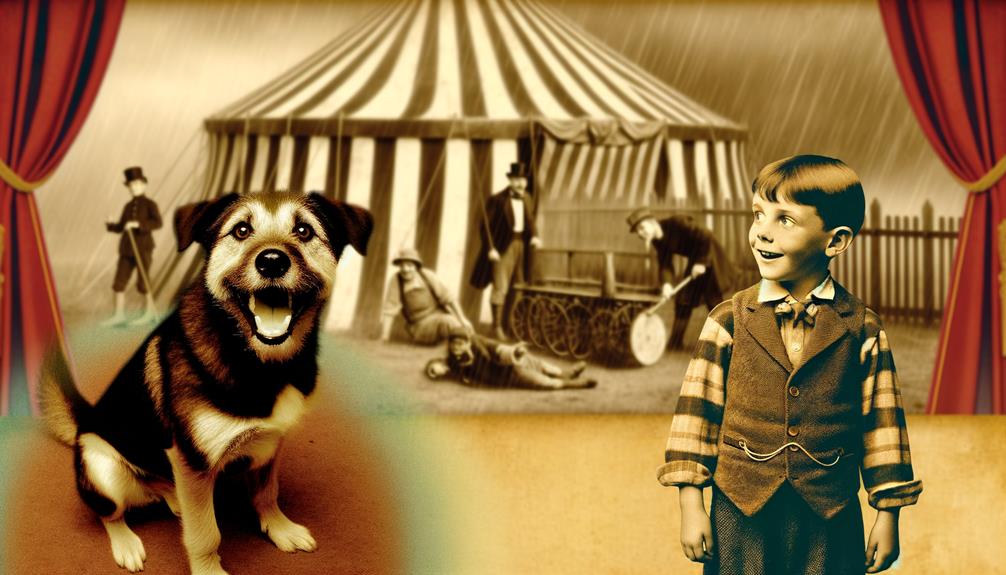
The name 'Buster' originates from late 19th to early 20th century American English vernacular. Initially a term of endearment, it evolved from the verb 'bust,' associated with breaking or bursting, symbolizing robustness and energy.
Rising in popularity with figures like comedian Buster Keaton, it became prevalent in children's literature and entertainment. Despite later declines, periodic revivals highlight its enduring cultural resonance.
Modern naming trends favoring individuality have prompted renewed interest in 'Buster,' reflecting its blend of historical charm and contemporary appeal. For a deeper understanding, one might consider the name's broader historical and cultural contexts.
Key Takeaways
- 'Buster' originates from American English, meaning to break or burst, implying robustness and energy.
- Initially a term of endearment, it evolved into a given name in the early 20th century.
- Popularized by entertainment figures like silent film star Buster Keaton.
- Reflects cultural values of humor, resilience, and affection.
- Modern use symbolizes uniqueness, nonconformity, and a blend of nostalgia and individualism.
Etymology and Origins
The name 'Buster' originates from the American English vernacular of the late 19th and early 20th centuries, initially used as a term of endearment and later evolving into a given name.
Derived from the verb 'bust,' meaning to break or burst, 'Buster' colloquially implied someone who was robust, energetic, or spirited.
Its evolution from a casual nickname to a formal given name reflects broader linguistic trends of the period, wherein informal monikers gained mainstream acceptance.
This etymological progression underscores a cultural shift towards embracing more familiar and affectionate forms of address in naming conventions.
Hence, 'Buster' epitomizes a blend of linguistic creativity and social evolution, encapsulating attributes of importance and resilience in its semantic core.
Historical Usage
Throughout the early 20th century, 'Buster' found increasing popularity as both a given name and a nickname, particularly in American cultural contexts. This rise was significantly influenced by several key factors:
- Entertainment Industry: The name gained traction through prominent figures such as Buster Keaton, a renowned silent film actor.
- Literature: Children's books and comic strips often featured characters named Buster, further embedding the name in popular consciousness.
- Sports: Athletes like Buster Crabbe contributed to the name's association with vigor and athleticism.
- Military: 'Buster' was occasionally used as an affectionate moniker among soldiers during World War II.
- Media: Radio shows and early television programs featured characters named Buster, solidifying its place in American vernacular.
These elements collectively illustrate the historical usage of 'Buster'.
Cultural Significance
In contemporary culture, 'Buster' retains a multifaceted significance that spans various domains, from popular media to personal identity. The name has been immortalized in entertainment through iconic figures such as Buster Keaton, whose contributions to silent film comedy are renowned.
Additionally, 'Buster' appears in animated series, including 'Buster Bunny' from 'Tiny Toon Adventures,' which embeds the name in children's cultural lexicons. Beyond media, 'Buster' often conveys a sense of endearment or affectionate familiarity, frequently used as a nickname.
Its application in diverse contexts underscores its versatility and enduring appeal. Scholarly perspectives might view 'Buster' as a cultural artifact, reflecting societal values and norms through its persistent presence in both casual and formal spheres.
Popularity Over Time
Examining the historical trajectory of the name 'Buster' reveals noteworthy fluctuations in its popularity, influenced by cultural trends and societal shifts. The name saw varied usage patterns across different periods, reflecting broader societal dynamics.
Key factors contributing to these changes include:
- Early 20th Century Popularity: Buster gained prominence as a nickname during this era, often associated with humor and resilience.
- Hollywood Influence: The rise of silent film star Buster Keaton significantly boosted the name's appeal.
- Mid-Century Decline: Post-World War II, the name's popularity waned, possibly due to evolving naming conventions.
- Resurgence in Pop Culture: Occasional revivals linked to characters in television and film.
- Current Rarity: Presently, 'Buster' is seldom chosen, reflecting an era of more conventional names.
These shifts underscore the dynamic nature of naming trends.
Modern Interpretations
Modern interpretations of the name 'Buster' often reflect a blend of nostalgia and contemporary individualism, signifying a departure from its historical associations. Historically linked with ruggedness and a certain rustic charm, the name now embodies a more nuanced identity.
In contemporary settings, 'Buster' is often chosen to evoke a sense of uniqueness and nonconformity. This shift is partly driven by popular culture, where characters named Buster are portrayed as quirky and endearing, reshaping its image. Additionally, parents seeking distinct names gravitate towards 'Buster' for its unconventional flair.
The modern usage of 'Buster' symbolizes a fusion of homage to the past and an embrace of a personalized, avant-garde identity.
Conclusion
To sum up, the name 'Buster' carries a rich tapestry of etymological roots, historical applications, and cultural significance. These factors have collectively influenced its fluctuating popularity over time.
Modern interpretations reveal a dynamic evolution, reflecting societal changes and contemporary values. As the adage goes, 'A name is a window to the soul,' encapsulating the multifaceted nature of 'Buster' and its enduring impact.
Such insights underscore the importance of understanding names within their broader historical and cultural contexts.