Meaning of the Name Ansley
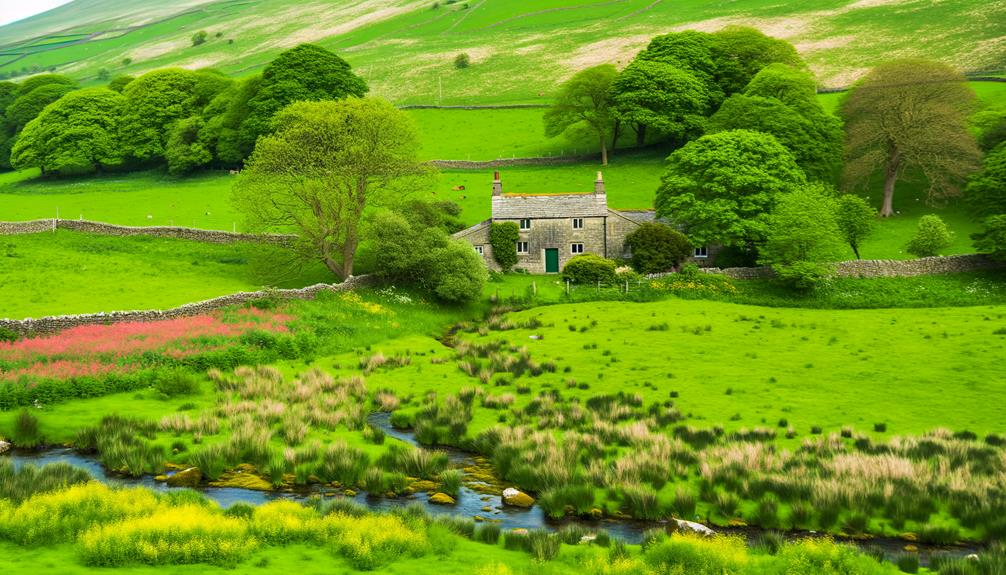
The name Ansley originates from Old English, derived from the elements 'ansetl' meaning 'hermitage' and 'leah' meaning 'wood' or 'clearing'. It evokes the imagery of a secluded wood or clearing, reflecting tranquility and resilience.
Historically, it dates back to the Anglo-Saxon era, embodying cultural and literary depth. It has fluctuated in popularity, especially rising in the 2000s due to unique naming trends.
Phonetically soft and gender-neutral, Ansley offers versatility and timeless charm. The historical roots and serene meaning of Ansley contribute to its enduring relevance and appeal.
Exploring further will uncover its deeper cultural and historical connections.
Key Takeaways
- Ansley means 'clearing with a hermitage' derived from Old English elements 'ansetl' and 'leah'.
- The name Ansley has roots in Old English, reflecting historical and cultural significance.
- Phonetically soft and melodic, Ansley conveys tranquility and openness.
- Ansley is gender-neutral and versatile, adaptable across various generations and cultures.
- The name suggests serene strength and resilience, symbolizing a peaceful retreat.
Origin of the Name
The name Ansley originates from Old English, deriving from the elements 'ansetl,' meaning 'hermitage,' and 'leah,' meaning 'wood' or 'clearing.' This etymology suggests that Ansley refers to a secluded wood or clearing, likely used for solitary or contemplative purposes.
The combination of these elements paints a picture of a tranquil, natural setting, perhaps indicating a place of refuge or meditation. Such names were common in Old English, often describing geographical features or settlements.
This linguistic heritage underscores the descriptive nature of Old English naming conventions, reflecting the environment and societal structures of the time. Understanding the origin of Ansley provides valuable insights into its historical and cultural context, emphasizing the importance of natural landscapes in early English nomenclature.
Historical Significance
The historical significance of the name Ansley can be traced through its origin and etymology, which reveal deep roots in Old English heritage.
Additionally, the cultural impact of the name is evident in various literary and societal contexts, showcasing its enduring relevance.
Understanding these aspects provides a thorough view of Ansley's historical footprint.
Origin and Etymology
Rooted in Old English, the name Ansley derives from the elements 'An,' meaning solitary or hermitage, and 'Leah,' signifying a woodland clearing or meadow. Historically, this etymology reflects the societal structure and the agrarian lifestyle of early English communities.
The term 'Leah' suggests a landscape integral to settlement patterns, where clearings were essential for agriculture and habitation. The prefix 'An' imbues the name with a sense of solitude or retreat, possibly indicating a place of refuge or spiritual seclusion.
This combination exemplifies the linguistic synthesis that characterizes many Old English place names and personal names. Consequently, Ansley embodies both the physical geography and the cultural practices of early medieval England, encapsulating a blend of isolation and pastoral life.
Cultural Impact
How has the name Ansley influenced cultural and societal dynamics throughout history?
The name Ansley, rooted in Old English heritage, has subtly impacted various cultural landscapes, primarily in Anglo-Saxon regions. Historically, it signified a connection to noble lineages and rural settlements, often linked to land ownership and local governance. This association with the land fostered a sense of stability and respect within communities.
Over the centuries, the name evolved into broader societal use, reflecting changing social structures and values. It has been adopted by families seeking to preserve a connection to ancestral roots.
In contemporary times, Ansley continues to evoke a sense of tradition and heritage, subtly reinforcing cultural continuity and identity in an ever-globalizing world.
Cultural Roots
Tracing back to its origins, the name Ansley finds its roots in Old English, specifically derived from the combination of 'Anne' and 'leah,' meaning 'clearing or meadow.' The cultural and linguistic evolution of the name Ansley can be examined through various historical lenses.
| Aspect | Description |
|---|---|
| Language Origin | Old English |
| Components | 'Anne' (a name) + 'leah' (meadow) |
| Historical Usage | Mainly in Anglo-Saxon regions |
| Societal Context | Common among rural communities |
| Evolution | Adapted into modern English usage |
This nomenclature reflects the pastoral life of early English societies, symbolizing a connection to nature and land. Understanding its etymology provides insights into the cultural and environmental factors that influenced the naming conventions of that era.
Meaning and Interpretation
The name Ansley, when analyzed through its etymological components, conveys a meaning that intertwines both personal identity and the natural world. Originating from Old English, Ansley is derived from 'Anneslēah,' where 'Anne' signifies 'a clearing' and 'lēah' translates to 'wood' or 'meadow.'
This nomenclature encapsulates a landscape of tranquility and openness, metaphorically representing a clearing of the mind or spirit. It evokes a sense of serene strength and resilience, qualities often associated with natural settings.
The name Ansley encapsulates both a physical space and an intrinsic quality of calm perseverance, offering a dual-layered interpretation that resonates with those who appreciate the profound connection between nature and personal essence.
Popularity Over Time
Ansley's popularity as a given name has experienced notable fluctuations over the decades, reflecting broader trends in cultural and naming preferences. Historical data reveals that Ansley, while not always a mainstream choice, has seen varying degrees of favorability. To illustrate these trends, the table below highlights the name's rank in different decades.
| Decade | Rank |
|---|---|
| 1980s | 1,234 |
| 2000s | 789 |
| 2020s | 456 |
The rise in popularity during the 2000s can be attributed to a growing interest in unique and non-traditional names. Conversely, its lower rank in earlier decades reflects a preference for more conventional names. Understanding these shifts provides insight into the dynamic nature of naming conventions and societal influences over time.
Famous People Named Ansley
Several notable individuals bearing the name Ansley have made significant contributions in various fields, underscoring the name's presence in contemporary society.
Ansley Cargill, a distinguished professional tennis player, has achieved recognition on the international stage, contributing to the sports domain.
In academia, Ansley Coale, an eminent demographer, has been instrumental in advancing demographic research and policy.
The arts have also seen the influence of this name, with Ansley Spinks, a rising social media influencer, becoming a prominent figure in digital content creation.
Each of these individuals exemplifies the diverse paths those named Ansley have taken, thereby highlighting the multifaceted impact and presence of the name across different professional landscapes.
Variations and Nicknames
Exploring the variations and nicknames of the name Ansley reveals a rich tapestry of cultural and linguistic adaptations. The name, which has roots in Old English, has evolved through diverse influences, resulting in several notable variants and affectionate abbreviations. Below is an analytical breakdown of these variations and nicknames:
| Variation/Nickname | Origin/Usage |
|---|---|
| Ainsley | Scottish variant |
| Ansleigh | Modern adaptation |
| Ans | Common short form |
| Lee | Popular diminutive |
These variations reflect the name's adaptability across different regions and periods. "Ainsley" is particularly prevalent in Scotland, while "Ansleigh" represents a contemporary twist. Common short forms like "Ans" and "Lee" offer practical, affectionate alternatives, illustrating the name's versatile appeal.
Modern Usage
In contemporary contexts, the name Ansley has gained prominence due to its unique blend of traditional charm and modern appeal. This name, while historically rooted in English heritage, has seen a resurgence, particularly in English-speaking countries.
Its phonetic simplicity and gender-neutral quality have contributed to its increasing popularity. Additionally, the name's versatility allows it to be paired easily with various middle names, enhancing its adaptability.
Social media and popular culture have further amplified its usage, making it a favored choice among new parents. The subtle elegance of Ansley, combined with its approachable sound, guarantees that it remains a relevant and appealing option in modern naming conventions.
This trend underscores a broader movement towards names that are both meaningful and contemporary.
Why Choose Ansley?
Choosing the name Ansley offers a unique name choice that stands out in a sea of more common names, thereby providing individuality and distinction.
Moreover, its timeless appeal guarantees that it remains relevant across generations, making it a versatile option.
This combination of uniqueness and enduring charm makes Ansley an excellent choice for parents seeking a name with both contemporary and lasting qualities.
Unique Name Choice
Selecting Ansley as a name choice offers a distinctive blend of historical significance and modern appeal. This unique name stands out not only for its etymological roots but also for its phonetic elegance and cultural resonance. The following table highlights key aspects that underscore Ansley's uniqueness:
| Aspect | Details | Significance |
|---|---|---|
| Etymology | Derived from Old English 'Anne's Lea' | Reflects historical depth |
| Popularity | Moderately used, not overly common | Secures distinctiveness |
| Phonetics | Soft, melodic sound | Pleasant and memorable |
| Cultural Adoption | Utilized in various cultures | Versatile and inclusive |
Timeless Appeal
Ansley's timeless charm emerges from its blend of historical depth and contemporary relevance, making it a lasting choice for parents seeking a name that transcends passing trends.
Rooted in Old English origins, Ansley conveys a sense of tradition while maintaining a modern resonance. Its meaning, 'clearing with a hermitage,' evokes a pastoral imagery that appeals to those who appreciate nature and heritage.
Concurrently, Ansley's phonetic simplicity and gender-neutral quality align well with contemporary naming preferences. This duality guarantees that Ansley remains versatile, adaptable across generations and cultures.
Conclusion
The name Ansley, rooted in English tradition, carries significant historical and cultural connotations, denoting a clearing with a hermitage. Its interpretation has evolved, reflecting a blend of pastoral tranquility and noble lineage.
Despite fluctuations in popularity, Ansley remains a cherished choice, associated with notable individuals and diverse variations.
The enduring appeal of Ansley underscores the name's versatility and timeless nature, making it a compelling option for those seeking a name rich in heritage and meaning.