Olympia Meaning of the Name
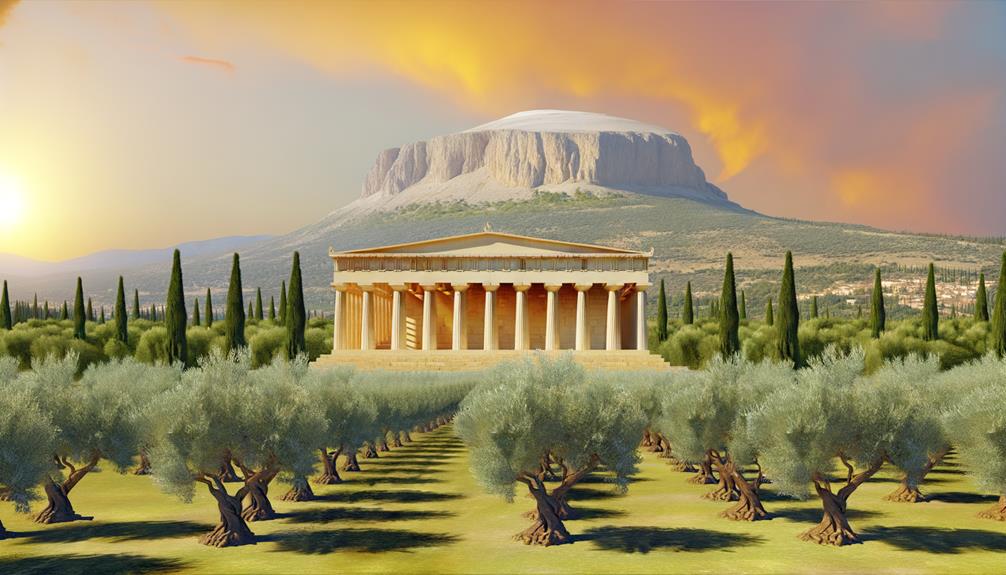
The name Olympia originates from the ancient Greek term 'Olympos,' which signifies the home of the Greek gods. Historically, it references the sanctuary dedicated to Zeus and the site of the ancient Olympic Games.
Mythologically, Olympia embodies divine inspiration and human aspiration, celebrated in narratives involving Zeus, Hera, and Heracles. Symbolically, it represents strength, elegance, and cultural heritage, resonating in art, sports, and literature.
Variations of the name include Olimpia, Olympe, and Olímpia, reflecting its cultural versatility. Prominent figures named Olympia underscore its impact in diverse fields, from acting to politics.
Explore further to uncover more facets of this timeless name.
Key Takeaways
- Derived from ancient Greek 'Olympos,' meaning the home of the Greek gods.
- Symbolizes Greek unity, competitive spirit, and cultural heritage.
- Associated with mythological figures like Zeus, Hera, and Heracles.
- Represents ideals of strength, elegance, and individual excellence.
- Popular variations include Olimpia, Olympe, and Olímpia across different languages.
Etymology of Olympia
The etymology of the name 'Olympia' traces its origins to ancient Greek, deriving from the word 'Olympos,' which refers to the mythological home of the Greek gods. This nomenclature is deeply embedded in Hellenic culture, signifying a domain of divine presence and power.
The suffix '-ia' in Greek often denotes a place or region, hence 'Olympia' can be interpreted as 'the place of Olympus.' It is striking that 'Olympos' itself is a term shrouded in ancient linguistic roots, possibly pre-Greek, pointing to a significant cultural and religious heritage.
The name encapsulates a rich tapestry of mythological and linguistic evolution, underscoring its profound resonance in both historical and contemporary contexts. This linguistic analysis reveals the depth and continuity of Greek cultural influence.
Historical Significance
The name Olympia holds substantial historical significance rooted in its ancient Greek origins and mythological associations. Originating from the sanctuary site of Olympia in Greece, the name is intrinsically linked to the ancient Olympic Games, a pivotal event in classical antiquity.
Additionally, Olympia is intertwined with Greek mythology, particularly through its connection to Mount Olympus, the mythic abode of the gods, thereby enriching its historical and cultural resonance.
Ancient Greek Origins
Rooted in the ancient Greek civilization, the name 'Olympia' carries profound historical significance as it is intrinsically linked to the site of the original Olympic Games and the sanctuary dedicated to Zeus. This sacred site was not merely a sporting venue; it was a focal point of religious, cultural, and social activities in ancient Greece. The ancient city of Olympia, located in the western Peloponnese, was a symbol of Greek unity and competitive spirit.
| Aspect | Description | Example |
|---|---|---|
| Location | Western Peloponnese, Greece | Near Alpheus River |
| Cultural Role | Center of athletic competitions and rituals | Olympic Games |
| Religious Role | Sanctuary dedicated to Zeus | Statue of Zeus |
| Symbolism | Unity and competitive excellence in Greece | Pan-Hellenic Games |
Understanding Olympia's origins provides insight into its enduring legacy.
Mythological Associations
Mythological narratives surrounding Olympia are replete with rich symbolism and cultural significance, intricately weaving together the legends of gods, heroes, and ancient rituals. Olympia, often considered the sanctuary of Zeus, was believed to be the site where divine and mortal domains intersected.
The significance of Olympia in mythological contexts can be summarized through key aspects:
- Zeus and Hera: Olympia was home to the grand Temple of Zeus, and rituals often involved Hera, emphasizing the divine union.
- Heracles: Heracles, a hero of immense stature, was said to have founded the Olympic Games, symbolizing strength and endurance.
- Pelopeia: The chariot race of Pelops and Hippodamia's marriage further underscores the site's mythological importance.
These elements underscore Olympia's enduring mythological and historical prominence.
Mythological Roots
Deriving its significance from ancient Greek mythology, the name Olympia evokes the grandeur and reverence associated with the sacred site of Mount Olympus. This legendary mountain, believed to be the divine abode of the Greek gods, served as a symbol of supreme power and celestial authority.
Olympia, as a name, inherently carries connotations of divine presence and the epic narratives of deities such as Zeus, Hera, and Athena. The mythological roots of Olympia are further enriched by its association with the ancient Olympic Games, held in honor of Zeus. These games symbolized unity, excellence, and human achievement.
Consequently, the name Olympia is imbued with a rich tapestry of mythological and cultural significance, reflecting ideals of divinity and human endeavor.
Olympia in Literature
The name Olympia has been a recurring motif in literature, serving as a powerful symbol of divine inspiration and human aspiration across various genres and eras. Its literary significance can be seen through various instances:
- Mythological Allusions: References to Mount Olympus, home of the Greek gods, highlight divine authority and celestial grandeur.
- Character Naming: Authors frequently use Olympia for characters embodying strength, beauty, or exceptional talent, illustrating aspirational qualities.
- Symbolic Settings: Olympia often denotes utopian or idyllic places, reflecting ideals of perfection and harmony.
These literary uses underscore Olympia's rich connotations, enhancing narratives with themes of excellence and transcendence. This multifaceted symbolism makes Olympia a perennial choice for writers seeking depth and resonance in their works.
Popularity Over Time
Examining the popularity of the name Olympia over time reveals significant insights into historical name trends, geographic popularity shifts, and its modern appeal.
Historical records indicate varying degrees of prevalence, often influenced by cultural and social factors.
Additionally, the name's resonance in different regions and its resurgence in contemporary naming practices highlight its enduring allure.
Historical Name Trends
Throughout history, the name Olympia has experienced fluctuating levels of popularity, influenced by cultural, social, and historical factors. The name's allure has been shaped by various epochs, often linked to notable events and figures.
Analyzing historical trends reveals:
- Ancient Greek Influence: Named after Mount Olympus, the seat of the gods, it was revered in classical antiquity.
- Olympic Games: The revival of the modern Olympic Games in 1896 spurred renewed interest in the name.
- Cultural References: Prominent figures and fictional characters bearing the name have periodically revived its usage.
These factors underscore the dynamic nature of Olympia's popularity, reflecting broader societal shifts and the enduring legacy of historical milestones. Each era imprints its unique influence, creating a rich tapestry of name trends.
Geographic Popularity Shifts
How has the popularity of the name Olympia varied across different regions over time, and what factors have driven these geographic shifts?
The name Olympia, historically rooted in Greek mythology and associated with the site of the ancient Olympic Games, has seen fluctuating popularity across various regions. In Europe, particularly Greece, its prevalence has remained relatively stable due to cultural and historical ties.
Conversely, in North America, the name experienced a renaissance in the late 19th and early 20th centuries, largely influenced by classical education trends and the revival of interest in ancient cultures.
More recently, localized spikes in popularity can be attributed to media influences, such as films and literature, that spotlight the name, thereby enhancing its appeal in specific regions.
Modern Name Appeal
The modern appeal of the name Olympia has been shaped by a combination of cultural trends, media influences, and evolving societal values, resulting in notable fluctuations in its popularity over time.
Factors contributing to these shifts include:
- Media Representation: Appearances in literature, film, and television can greatly boost a name's recognition and desirability.
- Cultural Movements: Names reflecting strong, historical, or mythological significance often see periodic resurgences.
- Celebrity Influence: Public figures naming their children Olympia can spark trends, making the name fashionable.
These elements collectively determine the name's contemporary appeal, reflecting broader societal changes.
Analysis of naming databases shows that Olympia, while not consistently popular, experiences periodic renewals in interest, symbolizing a dynamic pattern influenced by the interplay of cultural and media factors.
Modern Usage
In contemporary contexts, the name Olympia is often associated with strength, elegance, and cultural heritage, making it a popular choice for parents seeking a name that embodies both classical and modern virtues.
Its usage spans various cultural and professional domains, reflecting an enduring appeal that transcends time.
Evidently, Olympia has been embraced in both artistic and academic circles, symbolizing a link to historical grandeur and intellectual prowess.
Additionally, its presence in popular culture, including literature and media, reinforces its versatile and dynamic nature.
The name's resonance with the ancient Greek sanctuary, Olympia, known for its Olympic Games, also imbues it with a sense of tradition and excellence, appealing to those valuing heritage and achievement.
Variations and Derivatives
Drawing from its rich historical and cultural connotations, the name Olympia has given rise to numerous variations and derivatives across different languages and regions. These adaptations reflect both linguistic diversity and regional influences, maintaining the essence of the original name while introducing unique phonetic and morphological elements.
Below are a few notable variations:
- Olimpia: A common variant in Romance languages like Spanish and Italian, maintaining the name's classical roots.
- Olympe: The French version, which softens the pronunciation and adds a distinctive Gallic flair.
- Olímpia: Used in Portuguese and Hungarian, this variation preserves the name's traditional form while adapting to local phonetic rules.
Such variations highlight the name's enduring appeal and its ability to transcend cultural boundaries.
Famous Namesakes
Numerous individuals named Olympia have left significant marks in various fields, underscoring the name's historical and cultural resonance. Notable Olympias span the arts, sports, and politics, demonstrating the versatility and enduring appeal of the name.
| Name | Field |
|---|---|
| Olympia Dukakis | Acting |
| Olympia Snowe | Politics |
| Olympia Scott | Sports (Basketball) |
| Olympia LePoint | Science |
Olympia Dukakis, an Academy Award-winning actress, enriched the performing arts with her memorable performances. Olympia Snowe made impactful contributions to U.S. politics as a respected Senator from Maine. Olympia Scott excelled in professional basketball, inspiring many young athletes. Olympia LePoint, a prominent rocket scientist, has broken barriers in STEM fields. Each of these individuals highlights the diverse achievements associated with the name Olympia.
Cultural Impact
The name Olympia not only signifies individual excellence across diverse fields but also encapsulates a broader cultural significance that has influenced societal norms and values over time. Rooted in ancient Greece, the name has transcended its origins to become a symbol of human achievement and aspiration. Its impact is evident in various aspects of contemporary culture:
- Sports and Competitions: Inspired by the Olympic Games, the name evokes ideals of fairness, competition, and global unity.
- Art and Literature: Olympia often symbolizes beauty, strength, and heroism, appearing in works that celebrate human potential.
- Geographical Influence: Cities and landmarks named Olympia represent historical reverence and cultural continuity.
Conclusion
The name Olympia, steeped in rich etymological and historical significance, resonates through mythological tales and literary works, maintaining its allure over centuries. Its enduring popularity and modern usage reflect a timeless charm, much like the ancient city it represents. Variations and derivatives further attest to its widespread cultural impact.
As the adage goes, 'What's in a name?'—in the case of Olympia, it encapsulates a legacy of grandeur and profound cultural resonance.