Muqaddas Name Meaning in English
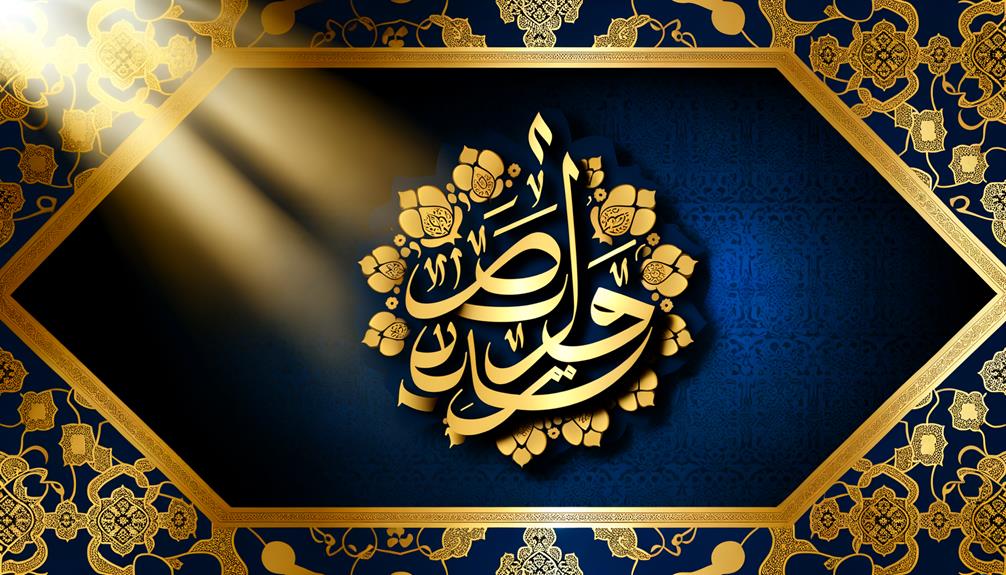
The name 'Muqaddas' originates from the Arabic root word 'Q-D-S', symbolizing sanctity, holiness, and purity. It holds deep historical and religious significance, particularly within Islamic traditions, where it is used to describe holy sites, texts, and individuals.
This name conveys respect, reverence, and a sense of the divine, making it a popular choice in Muslim communities. Culturally, it reflects values of purity and spiritual depth, often chosen for its profound and sacred connotations.
If you're interested in the cultural importance and famous namesakes of 'Muqaddas,' there's much more to uncover.
Key Takeaways
- 'Muqaddas' means 'holy' or 'sacred' in English.
- It originates from the Arabic root word 'Q-D-S'.
- It signifies sanctity, holiness, and purity.
- Commonly used in Islamic tradition for holy sites and texts.
- Reflects deep respect, veneration, and spiritual significance.
Etymology of Muqaddas
The term 'Muqaddas' originates from the Arabic language, where it is derived from the root word 'Q-D-S,' which signifies sanctity, holiness, and purity.
This etymological root is foundational in various Semitic languages, where it often conveys notions of sacredness and divinity. In Arabic, 'Muqaddas' is an adjective that means 'holy' or 'sacred,' frequently used in religious contexts to describe objects, places, or texts of significant spiritual value.
The root 'Q-D-S' also manifests in other related words, such as 'Quds,' referring to Jerusalem, a city imbued with profound religious significance. Understanding the etymology of 'Muqaddas' illuminates its deep cultural and linguistic connections, underscoring its importance in conveying reverence and veneration across different contexts.
Historical Background
Throughout history, the term 'Muqaddas' has held significant importance in various religious and cultural traditions, symbolizing the profound reverence accorded to sacred entities and concepts.
Rooted in the Arabic language, 'Muqaddas' translates to 'holy' or 'sacred,' and has been employed across diverse contexts to denote sanctity.
In Islamic tradition, it is often used to describe holy sites, texts, and persons, reflecting the deep-seated spiritual values associated with the term.
The historical usage of 'Muqaddas' extends to other Abrahamic faiths, where it similarly conveys an aura of divinity and sanctification.
This term encapsulates a rich legacy of veneration and respect, underscoring its enduring relevance and the timeless nature of its connotations.
Cultural Significance
In various cultural contexts, 'Muqaddas' is imbued with profound significance, reflecting its role in embodying the sacred and the divine. This term carries a weight of reverence and sanctity that permeates various aspects of life.
Linguistic Influence: The term 'Muqaddas' influences names, literature, and everyday language, enriching cultural expressions.
Art and Architecture: Sacred art and iconic structures often incorporate 'Muqaddas' symbols to convey holiness.
Ritual Practices: Cultural rituals and ceremonies frequently invoke 'Muqaddas' elements to enhance their spiritual depth.
Social Norms: The concept shapes social behaviors, emphasizing respect, purity, and moral integrity.
These dimensions illustrate how deeply 'Muqaddas' is woven into the cultural fabric, underscoring its multifaceted importance.
Religious Connotations
The name Muqaddas holds profound religious connotations, as it is imbued with divine significance and often referenced in holy scriptures. This term, meaning 'sacred' or 'holy' in Arabic, carries deep spiritual symbolism across various Islamic texts.
Understanding these aspects is essential for appreciating the full depth of the name's religious importance.
Divine Significance
Rooted deeply in religious traditions, the name Muqaddas holds profound significance, often associated with sanctity and revered as a symbol of divine purity. This name encapsulates a wealth of religious connotations, reflecting its crucial role in spiritual contexts.
The divine significance of Muqaddas can be understood through various aspects:
- Sacredness: The term denotes something that is holy and inviolable in religious settings.
- Purification: It symbolizes the process of achieving spiritual cleanliness and elevation.
- Divine Connection: Muqaddas is often linked to the divine, suggesting a close relationship with the sacred.
- Reverence: The name commands deep respect and veneration, reflecting its esteemed status in religious discourse.
Each of these elements underscores the name's profound religious and spiritual importance.
Holy Scriptures' Reference
Numerous holy scriptures reference the name Muqaddas, bestowing upon it a rich tapestry of religious connotations and historical significance. In Islamic texts, Muqaddas is often associated with sanctity and purity, underscoring its importance in defining spaces and objects deemed sacred.
The Quran, for instance, employs terms derived from the root word of Muqaddas to describe holy sites, such as Masjid al-Aqsa in Jerusalem. This lexicon extends to Hadith literature, where Muqaddas is invoked to highlight revered aspects of faith and practice.
Similarly, Judeo-Christian traditions also reflect a parallel reverence for sanctity, with terms like 'Qadosh' in Hebrew bearing comparable meanings. Hence, Muqaddas transcends linguistic boundaries, encapsulating a universal notion of holiness.
Spiritual Symbolism
In the domain of spiritual symbolism, the name Muqaddas embodies a profound sense of holiness and divine sanctity, resonating deeply within various religious traditions. This name, rooted in Arabic etymology, is often associated with elements that are considered sacred and pure.
The spiritual symbolism of Muqaddas can be understood through several key aspects:
- Divine Connection: The name implies a direct link to the divine, suggesting a person or object that is inherently holy.
- Sanctification: It denotes the process of making something holy, imbuing it with spiritual significance.
- Purity: Muqaddas carries connotations of unblemished purity, free from any form of corruption.
- Reverence: It commands a deep respect and veneration, often used to describe revered individuals or sacred texts.
These elements collectively highlight the profound spiritual and religious connotations of the name Muqaddas.
Usage in Muslim Communities
Within Muslim communities, the name Muqaddas is frequently chosen for its profound spiritual significance and reverence. It is commonly bestowed upon children as a reflection of the family's deep connection to their faith and values.
The name, translating to 'sacred' or 'holy' in English, serves as a constant reminder of the divine and the importance of moral and ethical conduct. It is often selected to honor the sanctity of religious traditions and is used across various cultures within the Islamic world.
Parents who choose the name Muqaddas for their children aim to imbue a sense of piety, respect, and spirituality, hoping that these qualities will be reflected in their child's character and life journey.
Symbolism and Meaning
The name Muqaddas, translating to 'sacred' or 'holy' in English, holds profound spiritual significance within Islamic tradition, symbolizing purity and reverence.
Culturally, it conveys a deep respect for the divine and is often chosen to reflect the sacred nature of religious and moral values.
This name resonates strongly within Muslim communities, embodying a sense of sanctity and cultural heritage.
Spiritual Significance
Renowned for its profound spiritual significance, the name Muqaddas embodies the essence of sanctity and purity in various religious and cultural contexts.
This name often symbolizes the following:
- Holiness: Muqaddas is frequently associated with sacredness, signifying a person or entity set apart for divine purposes.
- Purity: It conveys a sense of cleanliness and moral integrity, often used to describe individuals of impeccable character.
- Divine Connection: The name fosters a profound connection to the divine, reflecting a spiritual journey or quest for enlightenment.
- Respect and Reverence: It commands a level of respect, often bestowed upon revered personalities or places within religious traditions.
These attributes collectively underscore the deep spiritual resonance the name Muqaddas holds.
Cultural Relevance
Extending beyond its spiritual dimensions, the name Muqaddas also holds substantial cultural relevance, imbued with rich symbolism and meaning across diverse societies.
In regions with significant Islamic influence, Muqaddas is often associated with sanctity and reverence, reflecting societal values of purity and respect for the divine. This name is frequently chosen for its connotation of holiness, aligning with cultural norms that prioritize spiritual integrity.
Additionally, it carries a sense of historical continuity, connecting individuals to a legacy of piety and devotion. In modern contexts, Muqaddas signifies more than just a name; it embodies an adherence to cultural heritage and an affirmation of one's identity within the broader tapestry of Islamic tradition.
Pronunciation Guide
Pronouncing the name 'Muqaddas' accurately requires understanding its phonetic nuances and stress patterns. The name originates from Arabic, and its pronunciation may differ slightly based on regional accents. Here is a detailed guide to ensure precision:
- Initial Sound: Begin with an 'M' sound, similar to the 'm' in 'moon.'
- Vowel Sound: Follow with a short 'u' sound, akin to the 'u' in 'put.'
- Middle Consonants: Pronounce 'q' strongly from the back of the throat, and 'd' clearly, resembling the English 'd' in 'dog.'
- Ending Sound: Conclude with a short 'a' as in 'sofa' and a soft 's' like in 'sister.'
Famous Namesakes
Several notable individuals have borne the name 'Muqaddas,' each contributing to their respective fields and enhancing the name's significance. Among them is Muqaddas Haider, a respected journalist known for her insightful reporting on sociopolitical issues in South Asia.
Another prominent figure is Muqaddas Ali, an accomplished academic whose research in environmental science has garnered international recognition.
Additionally, Muqaddas Ashraf has made a name in the arts, particularly in contemporary dance, where her innovative choreography has captivated audiences globally.
These individuals, through their varied yet impactful careers, not only reflect the diverse paths one can take but also highlight the name 'Muqaddas' as one associated with excellence and dedication in their professional endeavors.
Modern Popularity
In recent years, the name 'Muqaddas' has seen a resurgence in popularity, particularly among parents seeking names with profound cultural and spiritual significance. This trend can be attributed to several factors:
- Cultural Revival: Increased interest in preserving cultural heritage has led many to choose names that reflect their roots.
- Spiritual Significance: The name 'Muqaddas' holds deep religious connotations, meaning 'sacred' or 'holy' in Arabic, appealing to those with strong spiritual beliefs.
- Unique Appeal: Modern parents often seek unique names that stand out, and 'Muqaddas' offers that distinctiveness.
- Globalization: Exposure to diverse cultures through media and travel has made names like 'Muqaddas' more familiar and accepted globally.
These elements have collectively contributed to the modern popularity of the name.
Conclusion
In summation, the name 'Muqaddas' carries profound historical, cultural, and religious significance, symbolizing sanctity and reverence within Muslim communities.
The term's etymology traces back to sacred roots, underscoring its elevated status.
As a beacon of purity and holiness, 'Muqaddas' resonates deeply in both personal and communal contexts.
Its enduring popularity, coupled with its rich heritage, continues to inspire and connect individuals to a shared spiritual legacy, much like a timeless bridge between past and present.