Biblical Meaning of the Name Moab
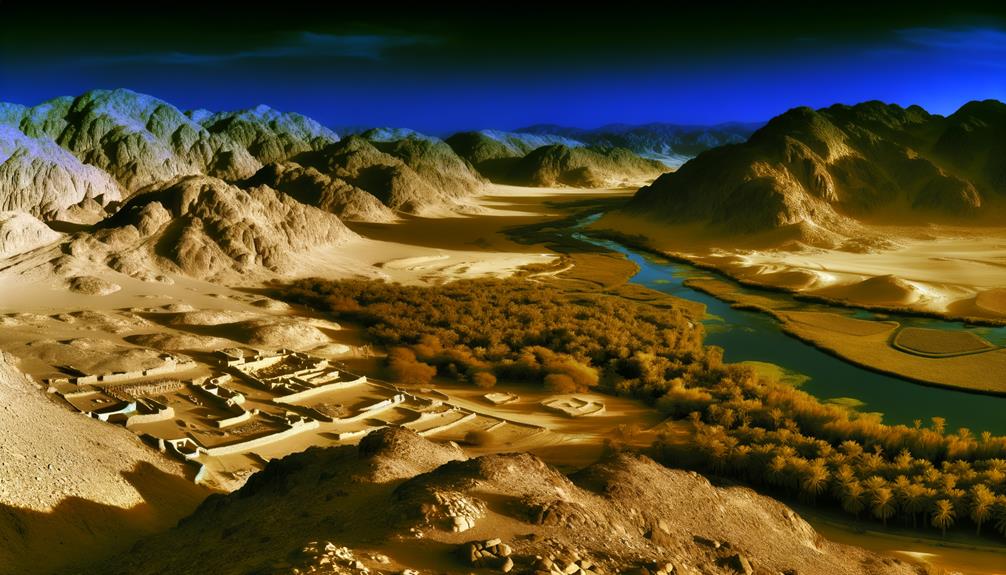
The name Moab, biblically rooted, means "from the father," referring to its ancestral origins in Genesis. As the son of Lot, Moab's conception involved complex narratives of morality and divine providence.
The Moabites, descendants of Moab, settled east of the Jordan River, forming a distinct nation. In biblical accounts, Moab embodies a mixed relationship with Israel, encompassing warfare, coexistence, and intermarriage.
Prophetic texts such as those from Isaiah and Jeremiah frame Moab in themes of divine judgment for arrogance and idolatry, yet also extend visions of future restoration. To fully understand Moab's multifaceted significance, historical and theological contexts must be considered.
Key Takeaways
- Moab means 'from the father' in Hebrew, reflecting his origin as the son of Lot.
- Moabites were descendants of Moab and settled east of the Jordan River.
- Biblical narratives depict Moab's complex interactions with the Israelites, involving both conflict and cooperation.
- Prophetic writings in Isaiah, Jeremiah, and Ezekiel discuss Moab's downfall due to arrogance and idolatry.
- Despite divine judgment, scriptures also promise future restoration for Moab, highlighting God's enduring compassion.
Origins of Moab
The origins of Moab trace back to the ancient biblical narrative found in the Book of Genesis, where Moab is described as the son of Lot and his elder daughter. This account is situated within the broader context of the destruction of Sodom and Gomorrah, highlighting a pivotal moment in Old Scripture history.
The name 'Moab' itself is often interpreted to mean 'from the father,' reflecting the peculiar circumstances of his conception. This etymology underscores the complex relationships and moral dilemmas that pervade the biblical text.
Additionally, Moab's birth marks the beginning of the Moabite nation, which would later play a significant role in the geopolitical and spiritual landscapes of the Israelite narrative. Understanding Moab's origins is hence vital for comprehending subsequent biblical events.
Moab's Ancestral Lineage
Moab's ancestral lineage is intricately woven into the fabric of biblical history, with his descendants forming a significant nation that frequently interacted with the Israelites. The progenitor, Moab, is described in Genesis as the son of Lot, Abraham's nephew, establishing a familial bond with the Israelites.
The Moabites settled east of the Dead Sea, forming a distinct yet interconnected cultural and religious identity. Scripturally, the Moabites often clashed with Israel but also shared periods of peaceful coexistence, as seen in the Book of Ruth where Ruth, a Moabite, becomes the great-grandmother of King David.
This lineage highlights the complex dynamics between Moab and Israel, illustrating themes of kinship, conflict, and redemption within the biblical narrative.
Lot and His Daughters
Understanding the origins of Moab requires an examination of the complex and ethically challenging narrative involving Lot and his daughters in Genesis 19. Following the destruction of Sodom and Gomorrah, Lot and his daughters took refuge in a cave. In a bid to preserve their lineage, the daughters resorted to desperate measures, leading to the conception of Moab, whose name means 'from my father.' This event is pivotal for theological and historical analyses, as it shapes the identity and destiny of the Moabite people.
| Aspect | Detail | Implication |
|---|---|---|
| Scriptural | Genesis 19:30-38 | Ancestral origins of the Moabites |
| Theological | Moral and ethical dilemmas | Examination of human actions |
| Historical | Post-destruction of Sodom and Gomorrah | Context of survival and continuity |
This narrative underscores the complexities of human frailty and divine providence.
Moab in Biblical Geography
Situated east of the Jordan River, Moab occupies a significant place in biblical geography, serving as both a physical and cultural landscape that influenced Israelite history and theology.
This region, often depicted in the Old Covenant, extended from the Arnon Gorge to the Zered Valley, encompassing rugged highlands and fertile plains.
Scripturally, Moab is referenced as the homeland of Ruth, an ancestor of King David (Ruth 1:1-4:22), and the setting for pivotal events such as Balaam's prophecies (Numbers 22-24).
Theologically, Moab symbolizes both divine judgment and mercy, as seen in Isaiah 15-16 and Jeremiah 48.
This geographical context underscores Moab's integral role in shaping the narrative of Israel's covenantal journey with Yahweh.
Moab and Israelite Relations
As a neighboring territory to ancient Israel, Moab's interactions and relationships with the Israelites were marked by a complex tapestry of conflict, coexistence, and cultural exchange.
Scripturally, the Book of Numbers recounts tensions, highlighted by King Balak's attempt to curse Israel through Balaam (Numbers 22-24). The Moabite oppression during the Judges period under King Eglon (Judges 3:12-30) further illustrates the adversarial dynamics.
However, peaceful interactions also occurred, exemplified by Ruth, the Moabite woman whose loyalty to her Israelite mother-in-law Naomi led to her becoming an ancestor of King David (Ruth 1-4).
These interactions reflect a nuanced relationship, shaped by divine mandates and historical circumstances, enriching the theological and historical tapestry of the biblical narrative.
Moabite Cultural Influence
The cultural influence of the Moabites is evident through their distinct religious practices, which often intersected with Israelite worship, as seen in the scriptural accounts of syncretism and conflict.
Their language and literature, encapsulated in artifacts like the Mesha Stele, provide essential insights into their societal values and historical narratives.
Additionally, Moabite art and architecture, characterized by their unique craftsmanship, reflect both indigenous traditions and external influences, contributing to the broader cultural mosaic of the ancient Near East.
Moabite Religious Practices
Moabite religious practices, deeply interwoven with their cultural identity, prominently featured the worship of the god Chemosh, as evidenced by both archaeological findings and biblical references. The veneration of Chemosh was central to Moabite spirituality, reflecting their theological constructs and societal values. Rituals often included sacrifices and elaborate ceremonies aimed at appeasing Chemosh to secure favor and protection.
| Aspect | Description | Biblical Reference |
|---|---|---|
| Deity | Chemosh | 1 Kings 11:7 |
| Rituals | Offerings and Ceremonies | Numbers 21:29 |
| Religious Texts | Moabite Stone (Mesha Stele) | 2 Kings 3:4-27 |
| Priestly Class | Specialized religious functionaries | Deuteronomy 23:3-6 |
| Worship Sites | High places and altars | Isaiah 15:2 |
These practices not only defined their religious life but also influenced their interactions with neighboring cultures and Israelite territories.
Moabite Language and Literature
Examining the Moabite language and literature reveals significant insights into their cultural influence and historical context.
The Moabite language, a Canaanite dialect closely related to Biblical Hebrew, is primarily known through the Mesha Stele. This ninth-century BCE inscription details King Mesha's victories and his devotion to the god Chemosh, offering a rare glimpse into Moabite history and religious ideology.
Scriptural references, such as those in the Books of Numbers and Isaiah, corroborate and expand upon these historical records, highlighting Moab's interactions with Israel.
Theologically, these texts underscore the complexities of Moabite identity and their role in the biblical narrative, reflecting broader themes of conflict, kinship, and divine judgment within the ancient Near Eastern milieu.
Moabite Art and Architecture
Building upon the insights gained from the study of Moabite language and literature, the exploration of Moabite art and architecture reveals further dimensions of their cultural and religious expressions.
Moabite art, as illustrated in reliefs and inscriptions, often depicts deities and ritualistic scenes, underscoring their polytheistic traditions. Architectural remnants, such as fortified cities and temples, reflect both the geopolitical significance and spiritual priorities of the Moabite society.
Biblical references, particularly in Isaiah and Jeremiah, allude to the grandeur and eventual desolation of Moabite strongholds, aligning with archaeological findings. These artifacts not only provide tangible evidence of Moabite resilience and religious fervor but also enrich our scriptural understanding of their interactions with neighboring Israelite communities.
Prophetic Writings About Moab
Prophetic writings about Moab in the Bible often highlight themes of divine judgments and future restoration promises. Scriptural texts, such as those found in Isaiah, Jeremiah, and Ezekiel, articulate God's impending retribution against Moab for its arrogance and idolatry.
However, these prophecies also include visions of eventual redemption, reflecting a complex interplay between divine justice and mercy.
Moab's Divine Judgments
Drawing from the prophetic writings within the Old Scriptures, the divine judgments pronounced upon Moab reveal a complex interplay of historical events and theological significance. The prophecies, particularly from Isaiah and Jeremiah, outline God's decrees against Moab for their arrogance and idolatry.
- Isaiah 15-16: Foretells a time of mourning and desolation for Moab.
- Jeremiah 48: Emphasizes Moab's downfall due to pride and misplaced trust in false gods.
- Amos 2:1-3: Condemns Moab for its violent actions against Edom.
These scriptures highlight the divine retribution Moab faced, serving as a somber reminder of the consequences of forsaking divine commandments and engaging in hubris.
This thematic interplay underscores the enduring relevance of prophetic admonitions.
Future Restoration Promises
Amidst the pronouncements of judgment, the scriptural texts also allude to a future restoration for Moab, reflecting the nuanced nature of divine justice and mercy.
The Prophet Jeremiah, in his oracle against Moab (Jeremiah 48:47), foresees a time when God will 'restore the fortunes of Moab in the latter days.' This proclamation suggests a divine plan that transcends immediate retribution, offering hope for redemption.
Similarly, Isaiah 16:4-5 envisions a throne established in steadfast love, pointing to an eschatological peace for Moab. These prophetic writings illustrate that while Moab faced divine chastisement, the overarching narrative of Scripture includes themes of restoration, emphasizing God's enduring compassion and covenantal faithfulness even toward historically adversarial nations.
Moab in Biblical Prophecy
In biblical prophecy, Moab often symbolizes a nation under impending judgment due to its historical enmity with Israel and idolatrous practices. Prophetic texts such as Isaiah 15-16, Jeremiah 48, and Ezekiel 25 articulate a divine retribution against Moab. This judgment underscores several key themes:
- Divine Justice: Moab's punishment reflects God's righteousness in dealing with nations.
- Historical Retribution: Moab's enmity with Israel, evident since the Exodus, is revisited in prophetic warnings.
- Spiritual Admonition: Moab's idolatry serves as a cautionary tale against straying from God.
Theologically, these prophecies highlight the sovereignty of God over all nations and emphasize the consequences of opposing His chosen people. The historical context enriches our understanding of these divine judgments.
Conclusion
The name Moab holds significant theological and historical connotations within biblical literature. Originating from the incestuous union of Lot and his daughters, Moab denotes a complex ancestral lineage.
Situated east of the Jordan River, Moab frequently interacted with Israel, both adversarially and diplomatically. Of particular interest, the Moabite culture influenced Israelite traditions, and Moab is recurrently mentioned in prophetic writings.
A striking statistic is that Moab is referenced over 180 times in the Hebrew Bible, underscoring its substantial biblical relevance.