Meaning of the Name Persia
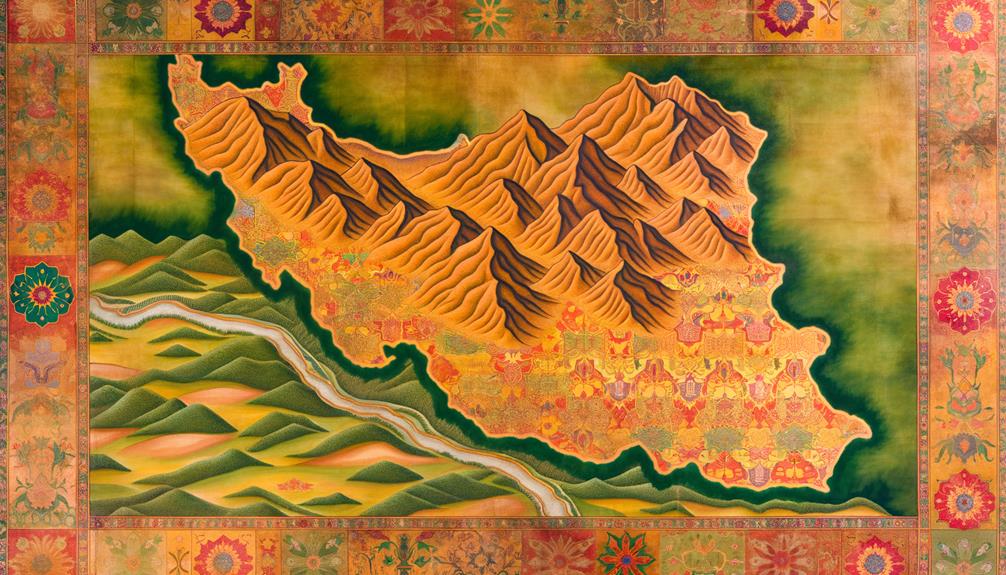
The name 'Persia' traces its origins to the Old Persian term 'Pārsā,' derived from the ethnonym of the Persian people. Historically, 'Pārsā' referred to the region of Persis, now Fars in modern-day Iran, and the term embodied cultural and political heritage as early as the Achaemenid Empire.
Linguistic shifts over millennia evolved this ancient name into 'Persia' in English. Despite Iran adopting its current name in 1935, 'Persia' continues to evoke the grandeur of its historical empire and cultural legacy.
This enduring legacy offers a rich tapestry of contributions in science, art, and governance. There is much more to uncover.
Key Takeaways
- The name 'Persia' originates from the Old Persian term 'Pārsā,' referring to the Persian people.
- 'Persia' evolved from the Old Persian 'Parsa,' rooted in the Achaemenid Empire's terminology.
- The term 'Persia' embodies a rich cultural and political heritage spanning millennia.
- Despite Iran's official renaming in 1935, 'Persia' remains significant in historical and cultural contexts.
- 'Persia' reflects the profound influence of ancient Persian civilization on global history and identity.
Ancient Origins
The name 'Persia' finds its roots in ancient times, originating from the Old Persian term 'Pārsā,' which referred to the region inhabited by the Persians.
This area, known today as Fars in modern Iran, was a central part of the Achaemenid Empire established by Cyrus the Great in the 6th century BCE.
The term 'Pārsā' itself is derived from the ethnonym of the Persian people, who played a pivotal role in the empire's foundation and expansion.
Historical records, such as inscriptions and classical texts, consistently reference this term, emphasizing its significance in identifying both the people and their homeland.
This nomenclature has persisted for millennia, embodying the region's rich cultural and political heritage.
Etymological Roots
The etymological roots of the name 'Persia' trace back to the Old Persian term 'Pārsa,' which referred to the region inhabited by the Parsa people.
This term evolved through linguistic shifts over centuries, influenced by the Persian language's dynamic evolution.
Understanding this historical nomenclature provides insight into the broader cultural and geopolitical significance of Persia throughout history.
Ancient Linguistic Origins
Etymologically, the name 'Persia' originates from the ancient Greek term 'Persis,' which itself derives from the Old Persian name 'Pārsa.' This nomenclature reflects the region known as Fars in contemporary Iran, the heartland of the ancient Persian Empire. The term 'Pārsa' not only conveys geographical significance but also cultural and political identity. The ancient Persians referred to themselves as 'Pārsa,' indicating their heritage and lineage.
| Term | Language | Significance |
|---|---|---|
| Pārsa | Old Persian | Original self-designation of the Persians |
| Persis | Ancient Greek | Greek adaptation of 'Pārsa' |
| Persia | English | Modern term derived from 'Persis' |
| Fars | Modern Persian | Region in Iran, origin of the term 'Pārsa' |
| Parsua | Assyrian | Early reference to Persians in Assyrian texts |
This table encapsulates the linguistic journey from ancient to modern terminology, anchoring the historical roots of the name 'Persia.'
Persian Language Evolution
Tracing the etymological roots of the Persian language reveals a rich tapestry of linguistic evolution influenced by various ancient cultures and languages. Originating from the Old Persian language, which was part of the Indo-Iranian branch of the Indo-European language family, Persian has undergone significant metamorphoses over millennia.
The earliest inscriptions date back to the Achaemenid Empire, using cuneiform script. Subsequent periods saw the influence of Middle Persian, or Pahlavi, during the Sassanian era, which evolved into Modern Persian, or Farsi, post-Islamic conquest. The lexicon incorporated elements from Arabic, due to religious and cultural integration, and later from Turkic and Mongolic languages.
This dynamic interplay has shaped Persian into the rich, multifaceted language it is today.
Historical Name Significance
In examining the historical name significance of Persia, one must explore into its etymological roots, tracing back to the ancient Achaemenid Empire where the term 'Parsa' denoted both a region and its inhabitants.
Originating from Old Persian, 'Parsa' referred specifically to the province surrounding the ceremonial capital of Persepolis. The Greeks later adapted this term to 'Persis,' which evolved into 'Persia' in Latin. This nomenclature persisted through various historical periods, embedding itself in Western lexicon and scholarship.
The term 'Parsa' itself is thought to derive from an Indo-European root, reflecting the linguistic and cultural tapestry of the early Persians. Understanding this etymology provides deeper insight into the historical and cultural significance of the name Persia.
Historical Significance
The name 'Persia' holds profound historical significance, originating from the ancient region known as Parsa, which was the homeland of the Persian people in modern-day southwestern Iran.
Etymologically, 'Parsa' derives from the Old Persian word 'Pārsa,' signifying both the region and its inhabitants. Historically, this name became synonymous with the expansive Achaemenid Empire (c. 550-330 BCE), the first Persian Empire, renowned for its advanced administrative systems and monumental architecture.
The term 'Persia' was adopted by Greek historians and subsequently permeated Western lexicons, symbolizing a civilization known for its contributions to art, science, and governance.
This nomenclature persisted until 1935 when Reza Shah Pahlavi requested the international community to refer to the country by its native name, Iran.
Cultural Impact
The name Persia has left an indelible mark on global culture, influencing artistic endeavors from intricate Persian carpets to classical Persian poetry.
Historically, it served as a beacon of intellectual and artistic innovation, with its legacy evident in the works of Western and Eastern scholars alike.
In modern times, references to Persia continue to evoke a sense of timeless elegance and cultural richness, reinforcing its enduring impact on contemporary art and literature.
Influence on Art
Persian art, deeply rooted in the region's rich historical and cultural milieu, has greatly influenced various artistic traditions across the globe.
The etymology of the term 'Persia' itself evokes images of intricate designs and masterful craftsmanship.
Historically, Persian art encompasses a wide range of media, including architecture, textiles, ceramics, and metalwork, each marked by distinctive styles such as arabesque patterns and calligraphy.
The Achaemenid Empire's monumental architecture, such as Persepolis, showcases grandiose structural designs that have inspired modern and contemporary aesthetics.
Additionally, Persian miniature paintings, characterized by their detailed and vivid depictions, have profoundly impacted Islamic and Mughal art forms.
Through centuries, Persian art has served as a conduit for cultural exchange, enriching global artistic heritage.
Historical Significance
Tracing its etymological roots to the ancient civilization of Pars, the name 'Persia' encapsulates a profound historical significance that has left an indelible mark on global cultural and intellectual landscapes.
Originating from the Old Persian 'Pārsa', the term referred to both a region and its people, who established one of the world's earliest and most enduring empires.
The cultural impact of Persia is immense, spanning contributions to art, science, literature, and governance. Persian scholars like Avicenna and Rumi have influenced philosophical thought, while Persian architectural styles have permeated various cultures.
The Achaemenid Empire's administrative innovations laid the groundwork for future governance systems. Consequently, 'Persia' symbolizes a legacy of intellectual and aesthetic advancements that continue to resonate globally.
Modern-Day References
Extending its profound historical significance into modern contexts, the name 'Persia' continues to evoke a rich cultural heritage that influences contemporary art, literature, and popular media.
Etymologically linked to the ancient Achaemenid Empire, 'Persia' often symbolizes opulence, mystique, and a storied past.
In literature, works such as Marjane Satrapi's 'Persepolis' highlight the enduring legacy of Persian culture.
In art, Persian motifs and aesthetics permeate both traditional and contemporary forms, from intricate carpet designs to modern visual arts.
Popular media also draws on the allure of Persia, with films and video games frequently referencing its ancient grandeur.
Therefore, the name 'Persia' remains a vibrant symbol of cultural depth and historical richness in today's global narrative.
Persian Empire
The ancient empire known as Persia, which flourished from approximately 550 to 330 BCE, played a pivotal role in shaping the political, cultural, and economic landscapes of the ancient Near East.
Rooted in the region of Persis (modern-day Fars in Iran), the empire's name derived from the Old Persian term 'Pārsa.' The Persian Empire, under leaders such as Cyrus the Great and Darius I, achieved remarkable feats:
- Political Unification: Established one of the largest empires in history, stretching from the Balkans to the Indus Valley.
- Cultural Syncretism: Promoted tolerance and integration of diverse cultures and religions within its territories.
- Economic Innovation: Implemented advanced administrative systems and infrastructure, such as the Royal Road, enhancing trade and communication.
These elements underscore Persia's enduring legacy.
Modern Usage
Modern usage of the name 'Persia' reflects a rich tapestry of historical, cultural, and linguistic evolution, illustrating the profound impact of ancient Persian civilization on contemporary identity and geopolitical nomenclature. Despite the official renaming to Iran in 1935, 'Persia' remains evocative in various contexts, including literature, art, and diaspora identity.
| Context | Usage of 'Persia' | Emotional Resonance |
|---|---|---|
| Literature | Romanticized historical term | Nostalgia for ancient grandeur |
| Art | Inspiration in design | Timeless beauty and elegance |
| Diaspora | Cultural identity marker | Connection to ancestral roots |
| Tourism | Marketing heritage | Exoticism and historical allure |
This enduring nomenclature underscores the lasting legacy of Persia, bridging past and present through a linguistic lens enriched by etymological and historical significance.
Global Influence
Building upon the cultural and historical resonance of the name 'Persia', its global influence is evident in the widespread adoption of Persian art, architecture, language, and traditions across various regions and epochs.
This influence can be categorized into three primary areas:
- Art and Architecture: Persian motifs, such as intricate tilework and domed structures, have greatly impacted Islamic and Western designs.
- Language and Literature: Persian literature, particularly the works of poets like Rumi and Hafez, has transcended linguistic boundaries, enriching world literature.
- Cultural Practices: Traditions such as Nowruz (Persian New Year) have been integrated into various cultural celebrations worldwide.
These elements collectively underscore the enduring and expansive impact of Persian culture on global civilizations, as seen through historical and contemporary lenses.
Legacy and Heritage
Persia's legacy and heritage are deeply grounded in its historical contributions to the development of early civilizations, encompassing advancements in science, governance, and cultural practices.
The etymological origins of 'Persia' trace back to the ancient Greek term 'Persis,' derived from 'Pars,' the region's name in Old Persian.
Historically, the Achaemenid Empire (550–330 BCE) exemplified administrative prowess by implementing an early bureaucratic system and pioneering infrastructure, notably the Royal Road.
In science, Persian polymaths like Avicenna played a significant role in influencing medical and philosophical thought.
Culturally, Zoroastrianism, one of the world's oldest monotheistic religions, originated in Persia, leaving a lasting spiritual legacy.
These multifaceted contributions underscore Persia's enduring impact on global civilization, reflecting a rich heritage that continues to resonate today.
Conclusion
The name 'Persia' carries profound historical significance and cultural impact, originating from ancient roots and evolving through centuries of etymological transformation.
Historically, the Persian Empire, at its zenith, encompassed over 2 million square miles, illustrating its vast influence.
In modern usage, the legacy of Persia continues to resonate globally, reflecting a rich heritage that has shaped civilizations.
The term encapsulates not only a geographic region but also a cultural and historical narrative that remains pivotal in understanding human history.