Meaning of the Name Dion
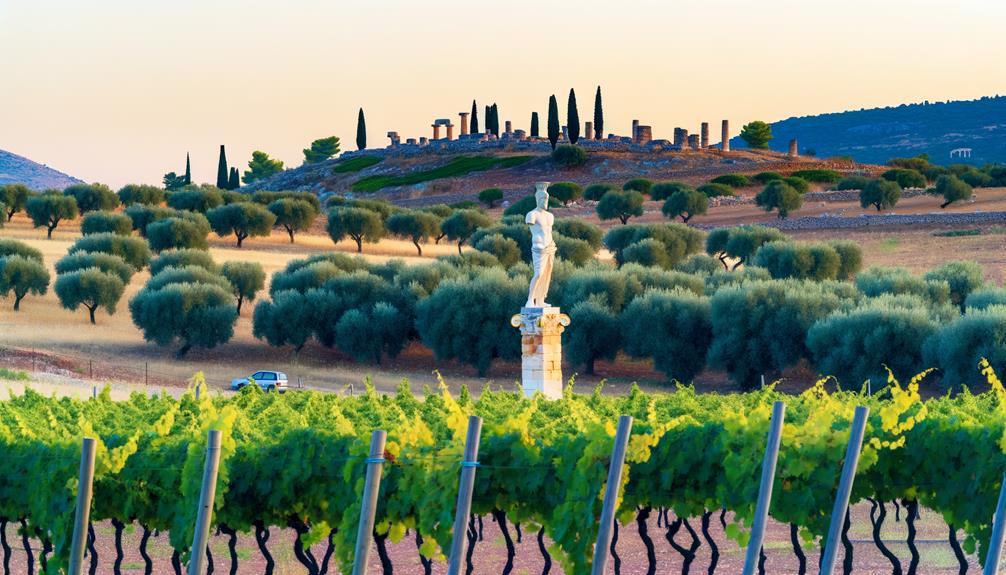
The name Dion stems from ancient Greece and is a shortened form of Dionysus, the god of wine, pleasure, and festivity. Its etymology links to 'Dios,' meaning 'of Zeus,' reflecting divine association.
Historically, individuals named Dion held influential positions in Greek society, embodying noble and sacred attributes. In contemporary culture, its phonetic simplicity and widespread media exposure, such as by Céline Dion, sustain its popularity.
The name's rich mythological roots and textual references further enhance its cultural and linguistic legacy. To grasp the full depth of Dion's historical and cultural influence, one must explore its multifaceted significance.
Key Takeaways
- Derived from the Greek god Dionysus, associated with wine, festivity, and ecstasy.
- Represents divine favor and nobility in ancient Greek culture.
- Simplified form of "Dionysus" with roots in 'Dios,' meaning 'of Zeus.'
- Popular in modern culture, influenced by celebrities like Celine Dion.
- Holds significant historical and mythological importance, symbolizing abundance and liberation.
Historical Origins
The name Dion traces its historical origins to ancient Greece, where it was derived from the Greek god Dionysus. This association roots the name in the rich tapestry of Greek mythology and culture.
Linguistically, the name Dion is a truncated form, simplifying Dionysus, which means 'follower of Dionysus.'
Historically, the name gained prominence as it was adopted by various regions and city-states in Greece, reflecting its cultural significance. The use of Dion was not confined to mythological contexts but extended into everyday life, signifying a connection to divine traditions and cultural heritage.
Over time, the name has transcended its initial geographical and cultural boundaries, illustrating the enduring legacy of ancient Greek civilization in contemporary nomenclature.
Mythological Connections
Dion's mythological connections are deeply entrenched in the lore of ancient Greece, primarily through its association with the god Dionysus, the deity of wine, fertility, and theatrical arts. This association enriches the name Dion with various symbolic and cultural connotations:
- Etymology: Derived from 'Dios' meaning 'of Zeus,' indicating divine nature.
- Cultural Significance: Represents liberation and ecstasy, as embodied in Dionysian rituals.
- Iconography: Often depicted with grapevines, symbolizing abundance and festivity.
- Literary References: Mentioned in numerous classical texts, reflecting its enduring legacy.
- Linguistic Evolution: The name has transcended time, maintaining relevance in various forms across different cultures.
The name's mythological roots provide a profound understanding of its enduring appeal and significance.
Dion in Ancient Greece
In ancient Greece, the name Dion not only carried mythological significance but also held a prominent place in societal and religious contexts. Derived from the Greek god Dionysus, the name is etymologically linked to the divine domain, denoting a connection to the god of wine, fertility, and revelry.
Historical records indicate that individuals named Dion often held influential positions in various city-states, suggesting the name's association with power and respect. Additionally, the usage of Dion in religious ceremonies and inscriptions highlights its revered status.
The name's linguistic roots are found in the Greek elements 'Dios' (of Zeus) and 'Nysa' (a mountain associated with Dionysus), reflecting the profound integration of divine mythology into everyday life.
Cultural Significance
Cultural significance surrounding the name Dion extends beyond ancient Greece, permeating various historical and contemporary contexts where it symbolizes power, reverence, and divine affiliation. This multifaceted name carries connotations that have evolved over centuries, reflecting its enduring legacy.
- Mythological Roots: Associated with the Greek god Dionysus, representing wine, fertility, and festivity.
- Historical Figures: Notable leaders and philosophers bearing the name, such as Dion of Syracuse, underscore its link to authority and intellect.
- Linguistic Evolution: Adaptations in various languages, including Latin and French, showing its wide-reaching impact.
- Cultural Representation: In literature and art, Dion signifies nobility and divine favor.
- Symbolic Resonance: The name's invocation in rituals and ceremonies highlights its sacred undertones.
Dion in Modern Times
In contemporary society, the name Dion retains a measure of popularity, underscored by its use across various cultures and regions. This modern appeal is bolstered by notable individuals such as singer Celine Dion, whose global fame has contributed to the name's visibility.
The continued usage of Dion reflects both historical roots and evolving trends in naming conventions.
Dion's Popularity Today
Dion has experienced fluctuating levels of popularity in modern times, influenced by cultural trends and prominent public figures bearing the name. Historically rooted in ancient Greece, the name's resurgence can be attributed to various factors, which include:
- Media Exposure: Increased visibility through television and film.
- Cultural Shifts: Evolving societal preferences for unique and classical names.
- Linguistic Appeal: The name's phonetic simplicity and ease of pronunciation.
- Globalization: Cross-cultural exchanges promoting diverse names.
- Historical Revival: Renewed interest in names with classical origins.
These elements collectively shape the contemporary perception and usage of the name Dion. While its popularity may ebb and flow, its enduring historical and linguistic significance guarantees it remains a notable choice.
Famous People Named Dion
Numerous notable individuals bearing the name Dion have made significant contributions across various fields in modern times.
One prominent figure is Dion DiMucci, an influential American singer-songwriter famed for hits like 'Runaround Sue' and 'The Wanderer,' which epitomized the early rock and roll era.
In the domain of sports, Dion Phaneuf stands out as a professional ice hockey player known for his leadership and defensive prowess in the NHL.
Additionally, Dion Dublin, an English former footballer, has garnered recognition not only for his sports career but also as a television presenter.
These individuals, among others, illustrate the diverse arenas—music, sports, and media—where the name Dion has left an indelible mark in contemporary times.
Famous People Named Dion
Prominent individuals named Dion have made significant contributions across various fields, including music, sports, and entertainment. Their achievements underscore the versatility and impact of this name throughout history.
Notable figures include:
- Dion DiMucci: An influential American singer-songwriter known for hits like 'Runaround Sue' and 'The Wanderer.'
- Céline Dion: A globally renowned Canadian singer celebrated for her powerful voice and chart-topping albums.
- Dion Waiters: A professional basketball player recognized for his dynamic playing style in the NBA.
- Dion Dublin: An accomplished English footballer and television presenter, noted for his versatility on the field.
- Dion Phaneuf: A former Canadian ice hockey defenseman who played in the NHL, exemplifying leadership and skill.
These individuals highlight the name's prominence and diverse influence.
Variations and Nicknames
The name Dion, with its classical roots, has evolved into various forms and nicknames across different cultures and languages. Originating from the Greek name Dionysios, which references the god of wine and revelry, Dion has been adapted into several variations.
In French, it is often seen as Dione, while the Spanish counterpart is Dionisio. English speakers might favor diminutives like D, Dee, or even Don. Additionally, Slavic cultures often use Dionis, a form closer to the original Greek. These variants demonstrate the name's adaptability and cultural resonance.
Each form retains a connection to its ancient origins, while also reflecting the linguistic tendencies of the adopting culture, highlighting the name's historical and linguistic versatility.
Popularity Trends
Dion's popularity has fluctuated over the centuries, reflecting broader cultural shifts and evolving naming conventions. Historically rooted in ancient Greece, the name saw a resurgence during the Renaissance, aligned with renewed interest in classical antiquity. In modern times, its popularity has been influenced by various cultural phenomena, including music and public figures.
Key factors affecting Dion's popularity include:
- Historical Revival: Renaissance interest in classical names.
- Cultural Influence: Prominent use in literature and media.
- Celebrity Impact: Popularity spikes due to famous individuals.
- Geographic Trends: Usage varies significantly by region.
- Linguistic Evolution: Adaptations in spelling and pronunciation.
Understanding these trends offers insight into how names like Dion traverse temporal and cultural landscapes, reflecting broader societal dynamics.
Conclusion
To sum up, the name Dion carries a rich tapestry of historical, mythological, and cultural significance. Originating from ancient Greece and associated with the divine, it has evolved through centuries, maintaining its relevance.
For instance, the renowned singer Celine Dion exemplifies how the name has permeated modern culture, symbolizing both artistic talent and enduring legacy. This linguistic journey reflects the broader historical and societal trends that influence naming conventions across different epochs.