Meaning of the Name Montserrat
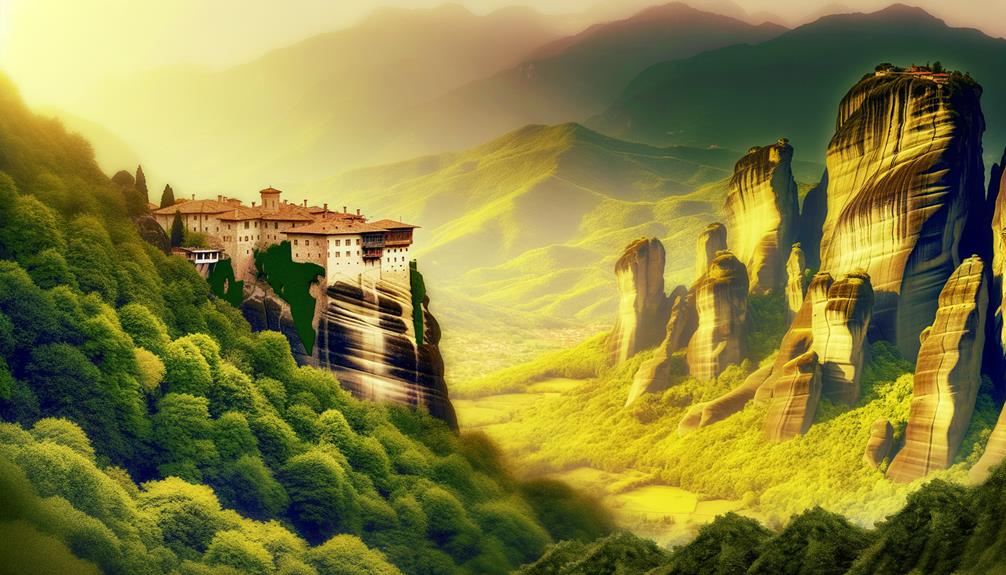
The name 'Montserrat' derives from Catalan and combines Latin roots 'mons' (mountain) and 'serrat' (serrated), aptly describing the jagged peaks of the Montserrat mountain range in Catalonia, Spain. It holds significant historical and cultural importance, symbolizing spiritual ascension, resilience, and Catalonian identity.
The mountain is renowned for housing the Benedictine abbey and the revered Virgin of Montserrat. Montserrat's legacy also influences art, literature, and modern naming conventions.
For a deeper exploration of its multifaceted heritage and enduring appeal, one can investigate further.
Key Takeaways
- The name 'Montserrat' originates from the Catalan words 'mont' (mountain) and 'serrat' (serrated).
- It refers to the jagged mountain range in Catalonia, Spain, known for its unique peaks.
- Montserrat symbolizes spiritual elevation and resilience, reflecting its historical and religious significance.
- The name is deeply intertwined with Catalonia's cultural and historical identity.
- The Virgin of Montserrat and the Montserrat monastery are central to its religious connotations.
Etymology of Montserrat
The name 'Montserrat' derives from the Catalan language, originating from the Latin words 'mons' meaning 'mountain' and 'serratus' meaning 'serrated,' reflecting the jagged, saw-like appearance of the Montserrat mountain in Spain.
This etymology encapsulates both geological and linguistic significance, highlighting the descriptive nature of ancient nomenclature. The Catalan term 'Montserrat' mirrors the region's rugged topography, where the mountain's distinctive silhouette has inspired not only local lore but also religious and cultural identities.
The term 'serratus' specifically denotes the series of peaks resembling a serrated edge, emphasizing the unique natural formation. Understanding this etymology offers insight into how early inhabitants related to their environment, using vivid descriptors that have endured through centuries.
Historical Significance
Rooted deeply in Catalonian history, Montserrat has served as a significant cultural and religious landmark for centuries. The name 'Montserrat,' derived from the Latin 'mons serratus' meaning 'serrated mountain,' reflects its unique geological structure, resembling a jagged saw blade.
Historically, Montserrat has been a symbol of Catalonia's identity, playing a pivotal role in the region's cultural narrative. The mountain was first referenced in medieval texts, indicating its long-standing prominence. It became a site of considerable pilgrimage and cultural gatherings, fostering a sense of community and continuity.
Montserrat also harbored resistance movements during conflicts, further embedding its significance in Catalonian heritage. Its historical importance is intertwined with its physical and symbolic presence in the region.
Religious Connections
The name Montserrat holds significant religious connotations, primarily through its association with the Virgin of Montserrat, a revered Marian figure in Catalonia.
This connection is further deepened by the Monastery of Montserrat, a historic abbey that has been a major pilgrimage site since its establishment in the 11th century.
The linguistic roots of Montserrat, meaning 'serrated mountain' in Catalan, underscore the deep intertwining of geographical and spiritual elements in its religious heritage.
Virgin of Montserrat
Revered as one of Spain's most significant religious icons, the Virgin of Montserrat holds profound historical and spiritual importance in Catalonia.
Known locally as 'La Moreneta' due to her dark complexion, this Romanesque statue of the Madonna and Child dates back to the 12th century.
The name Montserrat, derived from the Catalan words 'mont' (mountain) and 'serrat' (serrated), reflects the rugged geography of the region where the monastery housing the statue is situated.
The Virgin of Montserrat is not only a symbol of religious devotion but also a cultural emblem, representing Catalonia's rich heritage.
Her veneration is deeply embedded in the local traditions and continues to be a focal point of Catalan spirituality.
Monastery and Pilgrimage
Situated amidst the rugged peaks of the Montserrat mountain range, the historic Montserrat Monastery serves as a pivotal site for religious pilgrimage, drawing countless devotees each year. Founded in the 11th century, it is home to the revered statue of the Virgin of Montserrat, also known as La Moreneta. This monastery holds profound religious significance and has become a symbol of spiritual devotion.
Pilgrims journey to Montserrat for various reasons, including:
- Veneration of La Moreneta: The Black Madonna is a central figure of worship.
- Spiritual Retreats: The serene environment offers a haven for reflection.
- Historical Architecture: The monastery's design reflects Catalan Gothic and Renaissance styles.
- Cultural Significance: It stands as a symbol of the region's religious and cultural heritage.
Montserrat in Art
How has Montserrat's rich historical and cultural heritage inspired artists across various mediums throughout the centuries?
Montserrat, with its emblematic monastery and sacred Black Madonna, has profoundly influenced visual, musical, and literary arts. The jagged mountain landscape has been depicted in numerous paintings, symbolizing both spiritual ascent and natural majesty.
Catalan composer Frederic Mompou drew inspiration from Montserrat's serene environment, creating compositions that reflect its mystical aura. Literary works, including those by Jacint Verdaguer, celebrate Montserrat's storied past and cultural significance.
The etymology of Montserrat, meaning 'serrated mountain' in Catalan, underscores its distinctive topography, which has served as a muse for countless artists seeking to capture its unique blend of natural beauty and spiritual depth.
Geographical Importance
The enchanting allure of Montserrat in art is paralleled by its geographical significance, as this serrated mountain range in Catalonia not only symbolizes spiritual elevation but also serves as a critical landmark in the region's topography and history. Montserrat, derived from the Catalan words 'mont' (mountain) and 'serrat' (serrated), aptly describes its jagged peaks.
Its historical and geographical importance is reflected in several ways:
- Natural Formation: Montserrat's unique shape results from centuries of erosion, creating a striking natural monument.
- Ecological Haven: The mountain is home to diverse flora and fauna, contributing to regional biodiversity.
- Pilgrimage Site: Historically, it has been a pivotal religious pilgrimage destination.
- Cultural Landmark: Its prominence in Catalan identity reinforces its geographical significance.
Cultural Impact
Montserrat's profound cultural impact is deeply rooted in its historical, religious, and artistic significance. This has woven it into the fabric of Catalan identity. The name Montserrat, derived from the Catalan words 'mont' (mountain) and 'serrat' (serrated), reflects the rugged geography of the Montserrat mountain range.
Historically, the site has been a pivotal religious center, housing the Benedictine abbey of Santa Maria de Montserrat since the 11th century. This sanctuary, renowned for the Black Madonna statue, has attracted pilgrims and influenced Catalan spirituality. Artistically, Montserrat has inspired numerous works, including those by composers like Federico Mompou.
Its cultural resonance is further amplified by its role in Catalan folklore, literature, and national symbolism.
Modern Usage
In contemporary contexts, the name Montserrat has seen a resurgence in popularity, particularly in regions with strong Catalonian heritage. This revival underscores its enduring cultural significance, reflecting a broader trend towards names that carry historical and linguistic weight.
Moreover, Montserrat's influence is evident in modern naming conventions, where traditional names are increasingly valued for their rich historical connotations and unique phonetic qualities.
Popularity in Names
Despite its ancient origins, Montserrat has experienced a resurgence in popularity as a given name in recent years. This revival can be attributed to various factors that have contributed to its modern appeal.
- Cultural Heritage: The name Montserrat has strong links to Catalan culture, appealing to individuals seeking to honor their roots.
- Unique Sound: The melodic and distinctive phonetics of Montserrat make it stand out among other names.
- Celebrity Influence: High-profile personalities and public figures have chosen Montserrat for their children, enhancing its visibility.
- Religious Significance: Its association with the Virgin of Montserrat, a revered figure in Spanish Catholicism, adds layers of spiritual and historical depth.
These elements collectively underscore the name's enduring and evolving relevance.
Cultural Significance Today
How does the name Montserrat continue to hold cultural significance in contemporary society, reflecting its rich historical context and linguistic roots?
Montserrat, derived from the Catalan words 'mont' (mountain) and 'serrat' (serrated), refers to the jagged mountain range in Catalonia, Spain, that is home to the Benedictine abbey and the Virgin of Montserrat.
Today, the name carries multifaceted significance, blending religious reverence with geographical identity. In modern usage, Montserrat is recognized globally, symbolizing resilience and cultural pride. It evokes historical reverence, particularly among Catalans and the global Catholic community.
The name's usage in both personal naming and geographic contexts underscores its enduring influence, connecting contemporary identity with deep-rooted historical and linguistic heritage.
Influence on Trends
Beyond its historical and cultural reverence, the name Montserrat has greatly influenced contemporary naming trends and branding practices. This name, derived from the Catalan term for 'serrated mountain,' continues to resonate in various modern contexts.
The following are key areas where Montserrat's influence is particularly notable:
- Typography: The Montserrat typeface, inspired by urban typography from the Montserrat neighborhood in Buenos Aires, is widely used in digital and print media.
- Geographic Branding: The name is employed in place names, enhancing the historical depth and cultural allure of destinations.
- Personal Naming: Montserrat has seen a resurgence as a given name, symbolizing strength and heritage.
- Cultural Products: Films, books, and musical compositions have adopted the name, reflecting its enduring appeal.
These trends underscore Montserrat's timeless relevance.
Symbolism and Meaning
Montserrat's name, steeped in rich historical context, derives from the Catalan words 'mont' meaning mountain and 'serrat' meaning serrated, reflecting the jagged peaks of the famous Montserrat mountain in Spain.
This geographic landmark has long been a symbol of spiritual ascension and resilience. The mountain is home to the Benedictine monastery of Santa Maria de Montserrat, a significant pilgrimage site. The name Montserrat hence carries connotations of faith, perseverance, and cultural heritage.
Additionally, the Virgin of Montserrat, also known as La Moreneta, adds a layer of religious significance. Linguistically, the name encapsulates the physical characteristics of the mountain while symbolizing the enduring strength and spiritual devotion associated with this iconic site.
Conclusion
The name Montserrat, rooted in linguistic, historical, and religious contexts, acts as a reservoir of cultural significance. It symbolizes a mountain of heritage, where art, geography, and tradition converge.
From its etymological origins to its widespread modern usage, Montserrat encapsulates a multifaceted legacy. The name serves as a beacon, guiding the understanding of its profound impact across various domains.
Montserrat, hence, stands as a proof of the enduring interplay between language, history, and culture.