Marcus Name Meaning in English
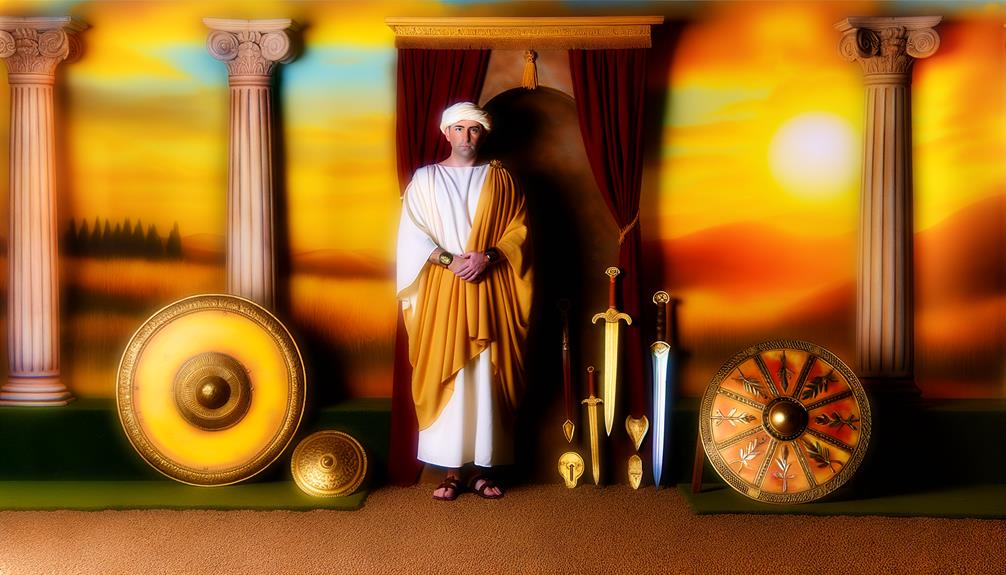
The name Marcus has ancient Roman origins, deriving from the Latin word 'Marticus' and associated with Mars, the Roman god of war. This reflects values of strength, valor, and leadership in ancient society.
Its historical significance is reinforced by figures like Marcus Aurelius and its continued popularity through different epochs. Marcus remains internationally recognized, symbolizing martial prowess and societal prominence.
Its variants include Mark, Marcos, Markus, Marc, and Marco, showcasing its cultural adaptability. The legacy of Marcus interweaves with historical narratives, underscoring its enduring relevance across civilizations and epochs.
Explore further to uncover the intricate dimensions of this name.
Key Takeaways
- Marcus originates from the Latin word 'Marticus,' linked to Mars, the Roman god of war.
- The name signifies strength, valor, and leadership, reflecting ancient Roman societal values.
- Marcus has been popular across cultures and epochs, maintaining historical and modern relevance.
- Notable bearers include Marcus Aurelius, emphasizing its historical and cultural significance.
- Variants include Mark, Marcos, Markus, Marc, and Marco, adapting to various languages and regions.
Origins of Marcus
Rooted deeply in ancient history, the name Marcus is believed to have originated from the Latin word 'Marticus,' which is derived from Mars, the Roman god of war. This etymology underscores a connection to strength and valor, emblematic of martial prowess.
The name was prevalent in ancient Rome, reflecting societal values that esteemed courage and leadership. Linguistically, Marcus is an exemplar of Latin's capacity to influence nomenclature across centuries. Its phonetic structure, characterized by the robust consonants 'M' and 'R,' conveys authority and resilience.
Additionally, Marcus has transcended its ancient roots, maintaining relevance in various cultures and languages over time. This enduring appeal can be attributed to its classical origins and the universal admiration for its connotations of strength.
Historical Significance
The name Marcus boasts a rich historical significance, originating from ancient Rome where it was borne by notable figures such as Marcus Aurelius.
Its sustained popularity over centuries underscores its enduring legacy, influencing various cultural contexts worldwide.
Examining the historical trajectory of the name reveals its profound impact on cultural and social paradigms across different epochs.
Ancient Roman Origins
Often regarded as a name of considerable antiquity, Marcus traces its origins back to ancient Rome, where it was commonly associated with martial prowess and societal prominence. Derived from the Latin word 'Mars,' the Roman god of war, the name Marcus inherently carried connotations of strength, valor, and leadership. These attributes were highly esteemed in Roman culture, aligning the name with the virtues of a warrior class.
Inscriptions and historical records reveal that numerous notable figures bore the name, including political leaders, military generals, and scholars. This widespread usage underscores the name's integration into the fabric of Roman society, where it symbolized not only individual distinction but also an enduring legacy of Roman virtue and excellence.
Popularity Over Centuries
Tracing the name Marcus through the annals of history reveals a consistent pattern of its usage across various epochs, highlighting its enduring appeal and significance.
Originating from the Roman era, Marcus was borne by numerous notable historical figures, including Marcus Aurelius, the philosopher-emperor. Its prevalence persisted through the Middle Ages, reflecting the continued veneration of classical heritage.
The Renaissance period further revitalized interest in classical names, ensuring Marcus remained in use. In modern times, the name has maintained a steady presence in various cultures, often perceived as a versatile and timeless choice.
Statistical data from historical records affirm its sustained popularity, corroborating its status as a name imbued with historical gravitas and enduring relevance.
Cultural Impact Worldwide
Examining the cultural impact of the name Marcus worldwide reveals its profound historical significance, extending beyond mere popularity to influence various aspects of social and intellectual life across different civilizations.
Originating from ancient Rome, Marcus was borne by notable figures such as Marcus Aurelius, a Stoic philosopher and emperor whose works remain foundational in Western philosophy. The name's prevalence in literature, including its presence in Shakespearean plays, underscores its enduring resonance through centuries.
In contemporary times, Marcus continues to be a symbol of leadership and intellect, evidenced by its adoption in various languages and cultures. This persistent relevance highlights not just a name, but a legacy interwoven with historical narratives, intellectual achievements, and cultural heritage globally.
Meaning in Modern English
In contemporary English usage, the name Marcus is mainly associated with qualities of strength, leadership, and historical significance. Rooted in its Latin origins, Marcus conveys a sense of robustness and authority. This name, often linked to figures of classical antiquity, such as Marcus Aurelius, has retained its resonance in modern times, offering a timeless appeal. Analyzing its current relevance, the name Marcus embodies several key attributes:
- Strength: A common perception of physical and moral fortitude.
- Leadership: Frequently associated with influential historical leaders.
- Legacy: A name that carries historical depth and resonance.
- Timelessness: Endures across generations and cultures.
- Popularity: Maintains a steady presence in contemporary naming conventions.
Thus, Marcus continues to exemplify enduring virtues in modern English nomenclature.
Cultural Impact
Beyond its contemporary significance, the name Marcus has also left a substantial imprint on various cultural landscapes, influencing literature, film, and societal norms.
In literature, the name often connotes strength and valor, echoing its Latin origins. Historically, it has been a favored choice for characters in classical and modern works alike, underscoring its enduring appeal.
In film, Marcus frequently appears as a name for protagonists and leaders, reinforcing its association with authority and heroism.
Societally, the name has been emblematic of a certain timelessness, often chosen by parents seeking a name that balances tradition with modernity.
Therefore, Marcus serves as a cultural touchstone, bridging historical depth with contemporary relevance.
Famous People Named Marcus
The name Marcus has been borne by numerous prominent individuals throughout history, each contributing to its legacy across diverse fields such as politics, sports, and the arts. Their achievements and influence have underscored the name's enduring appeal and widespread recognition.
Notable figures named Marcus include:
- Marcus Aurelius: Renowned Roman Emperor and Stoic philosopher, whose writings continue to inspire.
- Marcus Garvey: Influential leader in the early 20th-century Black nationalism and Pan-Africanism movements.
- Marcus Allen: Hall of Fame NFL running back known for his exceptional career with the Los Angeles Raiders.
- Marcus Smart: Esteemed professional basketball player for the Boston Celtics, lauded for his defensive prowess.
- Marcus Mumford: Lead singer of the folk-rock band Mumford & Sons, contributing significantly to modern music.
Popularity Over Time
Examining the historical trajectory of the name Marcus reveals its fluctuating popularity across different eras and regions, reflecting broader cultural and societal shifts. In ancient Rome, Marcus was a prevalent name, often associated with notable figures such as Marcus Aurelius. Its usage waned during the Middle Ages but saw a resurgence during the Renaissance, aligning with the revival of classical antiquity. Modern times have witnessed varying popularity, as illustrated in the table below:
| Decade | Rank in the U.S. | Rank in the U.K. |
|---|---|---|
| 1900s | 150 | 175 |
| 1950s | 120 | 140 |
| 1980s | 90 | 110 |
| 2000s | 70 | 95 |
| 2020s | 80 | 85 |
Variations and Nicknames
While the historical popularity of the name Marcus offers insight into its cultural significance, examining its variations and nicknames provides a deeper understanding of its linguistic adaptability and personal resonance across different cultures.
The name Marcus, rooted in ancient Rome, has transformed through various linguistic traditions, yielding numerous variants and affectionate diminutives. These variations not only reflect regional phonetic preferences but also underscore the name's enduring appeal.
- Mark: A common English variant, simplifying pronunciation.
- Marcos: A Spanish and Portuguese adaptation, maintaining the original Latin essence.
- Markus: A German and Scandinavian version, preserving phonetic integrity.
- Marc: A French diminutive, offering a sleek, modern touch.
- Marco: An Italian and Spanish variant, exuding a timeless classical charm.
These diverse forms illustrate Marcus's extensive cultural reach and dynamic flexibility.
Conclusion
Essentially, the name Marcus is a time-honored moniker, deeply rooted in ancient history and rich in cultural significance.
Like an ancient tree whose branches stretch across time, it has both evolved and remained steadfast in its meaning and appeal.
The name's endurance and adaptability, evidenced by its historical prominence and continued popularity, underscore its timeless charm.
Marcus, in its various forms, continues to resonate, embodying a legacy that intertwines the past and present.