Meaning of the Name Maui
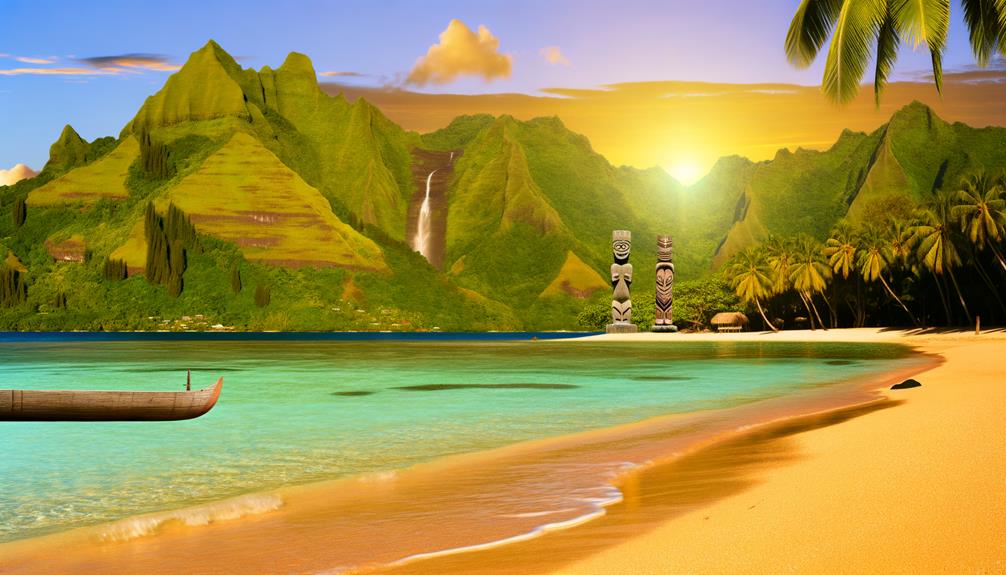
The name Maui is deeply entrenched in Polynesian mythology and Hawaiian culture. It originates from ancient oral traditions and is associated with a revered demi-god known for extraordinary feats such as fishing up islands and slowing the sun.
Maui symbolizes resourcefulness, heroism, and ingenuity, values that are integral to the cultural ethos of Polynesian communities. In Hawaiian culture, Maui's tales are not just stories but reflect profound connections to the land, environment, and social norms.
This name represents both a transformative hero and an enduring cultural legacy. Understanding Maui's multifaceted significance offers a rich perspective on Polynesian identity.
Key Takeaways
- Maui is a demigod in Polynesian mythology, symbolizing resourcefulness and heroism.
- The name Maui originates from ancient Polynesian oral traditions.
- Maui's exploits, like fishing up islands, explain natural phenomena.
- Tales of Maui reflect cultural values of ingenuity and perseverance.
- Maui embodies the cultural identity and spiritual beliefs of Hawaiian heritage.
Origins in Polynesian Mythology
Often rooted in the rich tapestry of Polynesian mythology, the name 'Maui' carries profound cultural and historical significance. Deriving from ancient oral traditions, Maui is a central figure across numerous Polynesian cultures, including Hawaiian, Maori, and Tahitian.
The etymology of 'Maui' is linked to the demi-god known for his extraordinary feats, which include fishing up islands and slowing the sun. This name encapsulates the dynamism and ingenuity attributed to Maui, reflecting a broader cultural ethos that values resourcefulness and heroism.
Through these mythological narratives, the name 'Maui' embodies the rich interplay between human endeavor and natural forces, offering a lens through which the cultural identity and spiritual beliefs of Polynesian societies can be understood.
The Demigod Maui
Drawing from these mythological roots, the demigod Maui emerges as a quintessential hero whose exploits resonate profoundly within Polynesian culture. Maui's legendary feats are not only tales of adventure but also serve to explain natural phenomena and human development. His deeds are emblematic of cultural values such as bravery, ingenuity, and perseverance.
Key narratives surrounding Maui include:
- Fishing Up Islands: Maui is famed for using his magical fishhook to pull entire islands from the ocean depths, symbolizing creation and expansion.
- Slowing the Sun: To lengthen the days, Maui lassoed the sun, reflecting human desire to control and optimize time.
- Stealing Fire: By bringing fire to humanity, Maui symbolizes the acquisition of knowledge and technological advancement.
These stories underscore Maui's cultural significance and enduring legacy.
Maui in Hawaiian Culture
In Hawaiian culture, Maui is revered not only as a demigod but also as a symbol of resourcefulness and heroism, embodying values that deeply influence the community's identity and traditions.
The legendary feats of Maui, such as slowing the sun and pulling islands from the ocean, serve as allegorical tales that highlight ingenuity and courage. These stories are integral to Hawaiian oral traditions, passed down through generations, reinforcing communal values and resilience.
Maui's character is celebrated in various cultural practices, including chants (oli), dances (hula), and traditional storytelling (moʻolelo). His influence extends beyond mythology, shaping social norms and inspiring both individual and collective perseverance within the Hawaiian community.
Symbolism and Meanings
How does the name Maui encapsulate the intricate layers of cultural significance, mythology, and identity within Hawaiian tradition?
The name Maui holds profound symbolism and meanings that reflect the essence of the Hawaiian ethos.
To begin with, Maui is a symbol of transformation and ingenuity, often associated with the demigod known for his clever feats.
Following that, the name represents a deep connection to the land and environment, resonating with the island of Maui itself, which is revered for its natural beauty.
To conclude, Maui embodies cultural identity, serving as a touchstone for Hawaiian heritage and storytelling.
Maui's Role in Legends
Maui's role in legends is multifaceted, characterized by his origins as a trickster demigod and his extraordinary feats, such as fishing up islands and lassoing the sun. These narratives not only highlight his cunning and strength but also reflect the deep cultural significance attributed to him in Polynesian mythology.
Through thorough research and contextual analysis, we can explore how these legendary tales have shaped the cultural and spiritual landscape of the communities that revere him.
Trickster Demigod Origins
Throughout Polynesian mythology, the figure of Maui emerges as a quintessential trickster demigod, whose exploits and cunning shape the cultural narratives across numerous islands. Maui's actions often defy the natural order, showcasing his wit and resourcefulness. His significance is underscored by his roles in various legends:
- Shaping Landscapes: Maui is credited with altering geographical features, demonstrating his power and ingenuity.
- Teaching Humanity: Through his cleverness, Maui provided essential knowledge and skills, such as fire-making.
- Subverting Authority: As a trickster, Maui often challenged the gods and natural laws, embodying the spirit of rebellion and innovation.
These elements highlight Maui's enduring influence and the cultural importance of his mythological exploits in Polynesian societies.
Fishing Up Islands
Among the many feats attributed to Maui in Polynesian mythology, one of the most remarkable is his legendary act of fishing up entire islands from the depths of the ocean. This tale underscores Maui's status as a culture hero and a divine figure, illustrating his immense power and ingenuity.
According to the legend, Maui used a magical fishhook, named Manaiakalani, to pull the islands to the surface, thereby shaping the geographical landscape of Polynesia. This myth holds profound cultural significance, symbolizing the connection between the Polynesian people and their maritime environment.
It also reflects the ingenuity and resourcefulness that are celebrated traits within Polynesian culture, thereby cementing Maui's role as a pivotal figure in their historical and mythological narratives.
Lassoing the Sun
In addition to his exploits with the magical fishhook, Maui's legend also encompasses the audacious feat of lassoing the sun to slow its journey across the sky, thereby lengthening the days for his people. This remarkable tale is rich in cultural significance and illustrates Maui's pivotal role in Polynesian mythology.
The act of lassoing the sun highlights:
- Maui's ingenuity and resourcefulness: Employing clever tactics to confront natural phenomena.
- Cultural importance of daylight: Reflecting the community's need for longer days to complete essential tasks.
- Symbolic representation: Demonstrating humanity's desire to control and harmonize with nature.
This legend not only underscores Maui's heroism but also encapsulates the profound interplay between myth and daily life in Polynesian culture.
Modern Interpretations
The modern interpretations of the name Maui reflect a blend of cultural heritage, linguistic evolution, and contemporary usage that underscores its enduring significance. While rooted in Polynesian mythology, the name has transcended its origins, finding relevance in various modern contexts. It serves as a cultural touchstone, evoking the rich mythological traditions and the distinctive linguistic heritage of the Hawaiian Islands.
| Aspect | Traditional Meaning | Modern Interpretation |
|---|---|---|
| Mythology | Demigod known for feats | Symbol of strength and ingenuity |
| Linguistics | Polynesian origin | Widely recognized name globally |
| Pop Culture | Featured in media | Celebration of Hawaiian culture |
| Tourism | Attraction and branding | Icon of natural beauty |
| Identity | Heritage and pride | Connection to ancestral roots |
These aspects illustrate the multifaceted modern-day significance of Maui.
Maui as a Place Name
Although the name Maui is steeped in mythological and cultural significance, its application as a place name has garnered global recognition, particularly through the island of Maui, which serves as a prominent symbol of Hawaii's natural beauty and cultural heritage. Known as the 'Valley Isle,' Maui attracts millions of visitors annually, drawn by its stunning landscapes and rich history.
To understand the island's significance:
- Geographical Features: Haleakalā National Park and its volcanic crater.
- Cultural Landmarks: Historic towns such as Lahaina, a former whaling village.
- Ecological Importance: Unique marine environments, exemplified by the Molokini Crater Marine Reserve.
These aspects underscore Maui's intricate blend of natural splendor and enduring cultural importance.
Influence on Popular Culture
Maui's profound cultural and geographical significance extends beyond its shores, influencing various facets of popular culture, including film, literature, and music.
In cinema, Disney's animated film 'Moana' prominently features Maui, a demigod, introducing global audiences to Polynesian mythology.
In literature, Maui's mythological exploits are detailed in numerous works, providing rich material for storytelling and academic study.
Musically, Maui's traditional chants and contemporary songs contribute to the island's vibrant cultural identity, resonating through genres from Hawaiian to mainstream music.
Such portrayals not only celebrate Maui's unique heritage but also secure its enduring legacy within global culture, highlighting the island's historical and mythological narratives as potent sources of inspiration and cultural enrichment.
Conclusion
The name 'Maui' encapsulates a rich tapestry of mythology, cultural significance, and modern relevance. Its origins in Polynesian mythology, as exemplified by the demigod Maui, highlight its symbolic depth and enduring presence in Hawaiian culture.
For instance, the narrative of Maui slowing down the sun to lengthen the day illustrates the name's profound impact on cultural storytelling.
The continued use of 'Maui' as both a personal and place name underscores its lasting influence in contemporary society and popular culture.