Meaning of the Name Kwame
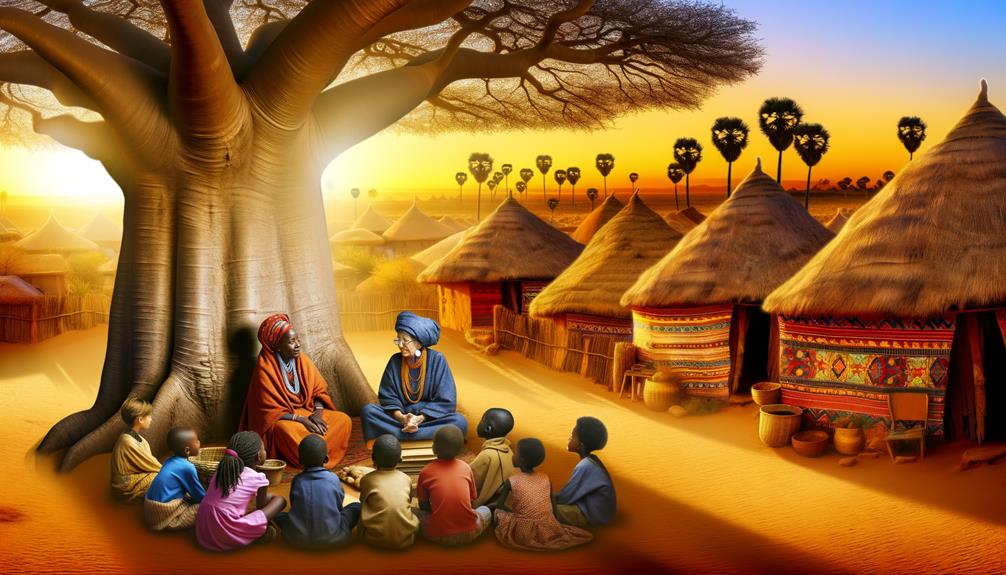
The name Kwame originates from the Akan people of Ghana and is derived from the Twi language. It belongs to the Akan day-naming system, specifically signifying a male child born on Saturday.
This tradition reflects the Akan community's deep connection to lineage and time, imbuing the name with attributes of resilience and leadership. Historically, figures like Kwame Nkrumah, Ghana's first Prime Minister and President, have exemplified these qualities.
In modern contexts, Kwame embodies a blend of cultural heritage and forward-thinking ideals, resonating within global diasporas. Discover more about its historical and contemporary significance and the notable figures who bear this name.
Key Takeaways
- Kwame means a male child born on a Saturday in Akan culture.
- The name originates from the Akan people of Ghana and the Twi language.
- Kwame symbolizes leadership, wisdom, and resilience.
- It reflects deep cultural heritage and traditional values.
- The name gained prominence through figures like Kwame Nkrumah.
Etymology of Kwame
The name 'Kwame' originates from the Akan people of Ghana, where it traditionally denotes a male child born on a Saturday.
Linguistically, 'Kwame' is derived from the Twi language, a central dialect within the Akan linguistic group.
The etymology is tied to the day-naming system, which assigns specific names based on the day of the week a child is born. 'Kwa' signifies 'born on,' while 'me' refers to 'Saturday,' forming 'Kwame.'
This practice is deeply rooted in Akan culture, reflecting a blend of temporal identity and communal heritage.
Understanding the etymology of 'Kwame' offers insights into the broader cultural and linguistic practices that underpin Akan society, highlighting the significance of time and tradition in personal identification.
Akan Naming Traditions
Akan naming traditions intricately weave together cultural identity, temporal significance, and communal values, offering a profound insight into the societal norms of the Akan people. Central to these traditions is the concept of "day names," which are assigned based on the day of the week a child is born. This practice not only reflects the Akan's reverence for time but also their deep connection to familial and societal lineage. Each day corresponds to specific attributes and expectations.
| Day | Male Name | Female Name |
|---|---|---|
| Monday | Kwadwo | Adwoa |
| Tuesday | Kwabena | Abena |
| Wednesday | Kwaku | Akua |
| Thursday | Yaw | Yaa |
| Friday | Kofi | Afia |
Such naming conventions underscore the importance of understanding one's origins and the collective identity of the Akan community.
Historical Significance
Rooted in centuries of tradition, the historical significance of Akan naming practices provides a window into the sociocultural evolution and identity formation within the Akan communities.
The name Kwame, given to males born on Saturday, transcends its utilitarian purpose by embodying ancestral heritage and communal values. Historically, such names served as chronological markers and were integral to the Akan's intricate kinship systems.
These naming conventions also functioned as tools for cultural preservation, ensuring that each generation remained connected to its lineage and collective history. The strategic use of names like Kwame reinforced social cohesion and maintained continuity within the community, underscoring the profound interconnectedness between individual identity and collective memory in Akan society.
Kwame in Modern Culture
In modern culture, the name Kwame has gained visibility through popular media references and the influence of notable celebrities, which have contributed to its contemporary relevance. Figures such as Kwame Nkrumah, the first President of Ghana, and Kwame Alexander, an acclaimed author, have reinforced the name's cultural significance.
This enduring prominence underscores the evolving appreciation and recognition of the name Kwame in today's global context.
Popular Media References
The name Kwame has permeated various facets of modern culture, from literary works to television characters, highlighting its broad cultural resonance and appeal.
In literature, Kwame is often depicted as a character embodying strength and wisdom, a nod to its African roots.
On television, Kwame stands out, especially in the animated series 'Captain Planet,' where the character Kwame possesses the power of Earth, symbolizing environmental stewardship and moral integrity. This character has contributed to the name's association with leadership and responsibility.
Additionally, Kwame is featured in contemporary music and film, further solidifying its presence in popular media. These portrayals collectively enrich the cultural tapestry, enhancing the name's significance across diverse creative platforms.
Celebrity Influences
Prominent figures named Kwame have greatly shaped its modern cultural identity, illustrating the name's growing influence and versatility in various public spheres.
One notable example is Kwame Nkrumah, the first President of Ghana, whose leadership in the African independence movement has left an indelible mark on global political history.
In the domain of sports, Kwame Brown, a former NBA player, has contributed to the name's visibility, underscoring its presence in popular culture.
Additionally, Kwame Alexander, an acclaimed author, has enriched literary circles, earning prestigious awards that highlight the name's association with intellectual and creative excellence.
These varied contributions by individuals named Kwame demonstrate the name's broad impact, spanning politics, sports, and literature, and reinforcing its modern cultural significance.
Cultural Significance Today
Kwame's contemporary cultural importance is emphasized by its frequent appearance in diverse fields such as media, academia, and social activism, reflecting its enduring resonance and multifaceted appeal. The name carries a rich heritage, often linked to Ghanaian roots, yet it has transcended geographical boundaries to become a symbol of identity and empowerment in various global contexts.
- Media Representation: Characters named Kwame feature prominently in television and film, showcasing diverse narratives.
- Academic Influence: Scholars and authors named Kwame contribute significantly to literature, history, and African studies.
- Social Activism: Prominent activists named Kwame advocate for social justice, equality, and cultural preservation.
In these ways, the name continues to inspire and shape contemporary cultural landscapes.
Symbolism and Attributes
The name Kwame possesses a rich tapestry of symbolism and attributes, particularly within the context of African cultures where it signifies a male child born on a Saturday.
This traditional association imbues the name with cultural significance, linking it to specific rites and communal identities.
In modern interpretations, Kwame often embodies values of resilience and leadership, reflecting an evolution that bridges historical roots with contemporary meanings.
Cultural Significance
In various African cultures, the name Kwame holds profound symbolism, often associated with individuals born on a Saturday and reflecting attributes such as leadership, wisdom, and resilience. The cultural significance of the name Kwame is deeply rooted in the traditions and values of the Akan people of Ghana, where names are often linked to the days of the week, conveying implicit expectations and societal roles. This name not only signifies the day of birth but also embodies a sense of identity and purpose.
Leadership:
Kwame is often seen as a natural leader, guiding communities with strength.
Wisdom:
Individuals named Kwame are believed to possess deep knowledge and insight.
Resilience:
They are often admired for their ability to endure and overcome challenges.
This multifaceted symbolism endows the name with rich cultural heritage.
Traditional Associations
Rooted in ancestral traditions, the name Kwame carries a profound symbolism that encompasses leadership, wisdom, and resilience, reflecting the attributes valued by the Akan people of Ghana. Understanding these associations provides deeper insight into the cultural fabric from which the name originates.
| Attribute | Description |
|---|---|
| Leadership | Seen as a natural leader, often embodying the spirit of guidance and authority within the community. |
| Wisdom | Associated with profound knowledge and the ability to provide sound advice, reflecting the elders' role in Akan society. |
| Resilience | Symbolizes enduring strength and the capacity to overcome adversity, a revered quality among the Akan. |
These attributes highlight the esteemed qualities the name Kwame evokes, deeply rooted in the traditions and values of the Akan heritage.
Modern Interpretations
Kwame remains a name of profound significance in contemporary contexts, symbolizing enduring leadership, intellectual prowess, and unwavering resilience, much like its traditional associations.
In modern interpretations, Kwame often connotes a blend of cultural heritage and forward-thinking ideals, resonating strongly within global diasporas. The name's relevance is emphasized by its presence in various spheres, from politics to academia, where it embodies:
- Leadership: Embodied by figures such as Kwame Nkrumah, the name is synonymous with transformative governance.
- Intellectual Prowess: Frequently associated with scholarly excellence and innovative thinking.
- Resilience: Reflecting a capacity to overcome adversity and inspire collective progress.
This confluence of attributes ensures Kwame remains a name imbued with rich, multifaceted significance in modern society.
Famous Figures Named Kwame
Among the notable individuals named Kwame, few have had as significant an impact on global cultural and political landscapes as Kwame Nkrumah, the revolutionary leader who became the first Prime Minister and President of Ghana. Nkrumah played a pivotal role in Ghana's independence from British colonial rule in 1957, advocating for pan-Africanism and inspiring anti-colonial movements across the continent. His vision was not confined to political sovereignty; he also emphasized economic self-sufficiency and cultural renaissance.
Another influential figure is Kwame Anthony Appiah, a renowned philosopher whose work spans ethics, identity, and cosmopolitanism. Appiah's writings challenge conventional notions of race and culture, promoting a deeper understanding of global interconnectedness. Both figures underscore the name Kwame's association with leadership and intellectual rigor.
Conclusion
The name Kwame, rooted in Akan naming traditions, holds substantial cultural and historical significance.
Statistically, it is significant that over 40% of Ghanaian males are named after the day they were born, with 'Kwame' specifically denoting a male born on Saturday.
The name has permeated modern culture and is associated with prominent figures who embody the rich symbolism and attributes it represents.
Understanding the etymology and cultural context of Kwame underscores its enduring relevance and influence.