Whitley Name Meaning and Origin
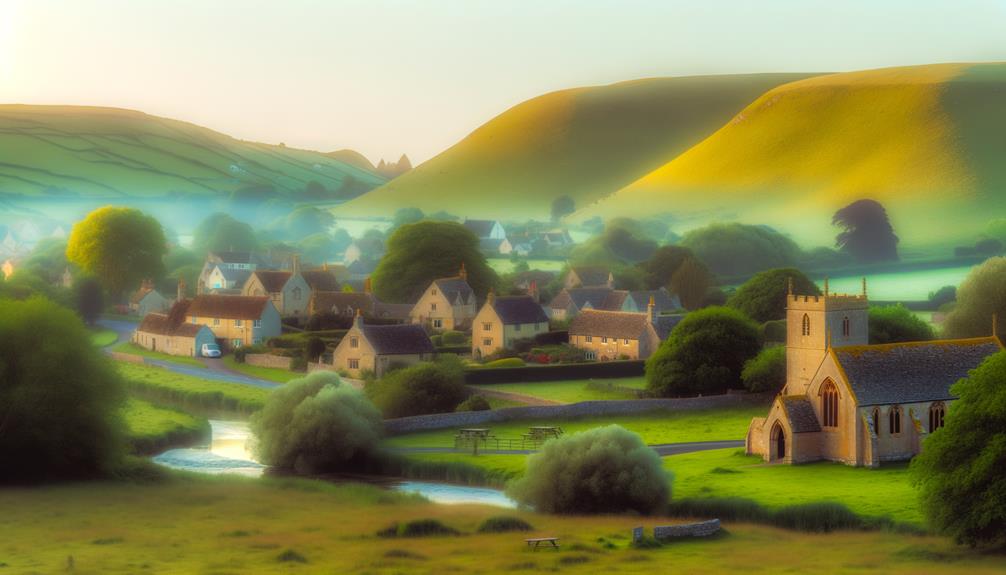
Whitley is an Old English name meaning 'white clearing,' derived from 'hwita' and 'leah.' It denotes light-colored open spaces characteristic of early Anglo-Saxon settlements. Historically, these fertile lands were essential for agriculture and habitation.
Various Whitley locales in England highlight its geographical and cultural significance, symbolizing common medieval landscape features. Originally a surname, Whitley gained popularity as a first name in the late 19th century, with its usage fluctuating based on media and societal influences.
Famous bearers of the name include Whitley Strieber and Whitley Stokes. Discover more about the name's fascinating linguistic evolution and notable figures.
Key Takeaways
- Whitley originates from Old English, meaning 'white clearing.'
- The name signifies fertile lands important for early Anglo-Saxon agriculture.
- Initially a surname, Whitley became a first name in the late 19th century.
- Variations include Whitely, Whytley, and Witleigh due to phonetic recordings.
- Notable figures with the name include Whitley Strieber and Whitley Stokes.
Etymology of Whitley
The etymology of the name Whitley can be traced back to Old English origins, where it is derived from the elements 'hwit,' meaning 'white,' and 'leah,' meaning 'clearing' or 'meadow.'
This composition suggests that Whitley originally described a geographical location characterized by a pale or light-colored open space, possibly due to the presence of white flowers or light-colored soil.
The lexical components indicate a linguistic heritage rooted in the Anglo-Saxon period, reflecting the descriptive tendency of early English place-names. Such names were often constructed to convey specific environmental features, providing valuable insights into the landscape and habitation patterns of the time.
Understanding these elements enriches our comprehension of historical linguistics and geographic nomenclature.
Historical Roots
Recognizing the etymological foundation of Whitley, one can explore its historical roots that shed light on the settlement patterns and societal structures of early medieval England.
The name Whitley, derived from Old English elements 'hwit' (white) and 'leah' (wood or clearing), indicates a landscape feature commonly associated with early Anglo-Saxon settlements. These clearings in the dense forests were pivotal for agriculture and habitation, indicating a shift from nomadic to more settled lifestyles.
Whitley often referred to fertile lands, essential for sustenance and economic stability. Moreover, the prevalence of such names in historical records underscores a community's connection to its environment and the hierarchical land management systems that governed medieval England's rural locales, reflecting socio-economic stratification and regional governance.
Geographical Significance
Many locations named Whitley across England illustrate the geographical importance of this name, often marking areas characterized by their distinctive white clearings amidst woodlands. The etymology of 'Whitley' stems from Old English, combining 'hwit' (white) and 'lēah' (clearing or meadow), indicating regions where lighter, open spaces were prominent within dense forests. Historically, these clearings provided crucial agricultural and pastoral land, fostering early settlements.
The repetitive appearance of Whitley in place names underscores a common landscape feature during the Anglo-Saxon era. Such areas were essential for community sustenance and development, often becoming focal points for local trade and habitation. Consequently, the name Whitley encapsulates a significant aspect of England's historical and environmental geography.
Cultural Impact
The cultural impact of the Whitley name is multifaceted, encompassing notable references in popular media and its historical significance.
In literature and film, characters named Whitley often evoke a sense of heritage and tradition, reflecting the name's enduring legacy.
Historically, the name is linked to influential figures and events, underscoring its prominence in various societal contexts.
Popular Media References
In popular media, the name Whitley has been prominently featured in various television series, films, and literature, contributing to its cultural resonance and recognition.
One notable example is Whitley Gilbert, a character from the iconic television show 'A Different World,' which aired from 1987 to 1993. This character, portrayed by Jasmine Guy, became a cultural touchstone, representing a blend of sophistication and comic relief.
Additionally, the name Whitley appears in literary works, such as in novels where it often conveys a sense of heritage and tradition.
The use of Whitley in diverse media forms has cemented its place in the cultural lexicon, providing it with a multifaceted identity that resonates across different generations and contexts.
Historical Significance
Beyond its portrayal in popular media, the name Whitley carries a significant historical importance, mirroring cultural and societal changes over centuries. Stemming from Old English, Whitley is derived from 'hwit' (white) and 'leah' (clearing or meadow), suggesting a location of brilliant, open terrain. The name was prevalent in medieval England, frequently linked with land possessions and farming settlements.
| Era | Cultural Background | Social Influence |
|---|---|---|
| Medieval Period | Farming settlements | Indicated land possession and standing |
| Renaissance | Developing surnames | Shift towards inherited surnames |
| Industrial Era | Urbanization patterns | Shift from rural to metropolitan areas |
| Contemporary Times | Globalization | Increased movement and name dissemination |
This historical path highlights the name's flexibility and lasting existence.
Popularity Over Time
Examining the popularity of the name Whitley over time reveals significant historical trends and geographic shifts. Initially more common in certain regions, its usage has evolved, reflecting broader cultural and societal changes.
In contemporary settings, modern usage patterns of Whitley demonstrate its adaptation and enduring appeal.
Historical Popularity Trends
Over the centuries, the name Whitley has experienced fluctuating levels of popularity, reflecting broader social and cultural trends.
In medieval England, Whitley was primarily a surname derived from geographic locations, often signifying a person from a 'white meadow' or 'white wood.' Its use as a first name was sparse until the late 19th and early 20th centuries, coinciding with a broader trend of adopting surnames as given names.
The name saw a resurgence in the latter half of the 20th century, particularly in the United States, influenced by cultural factors such as television and literature. Periods of heightened popularity often correlate with societal shifts, including the romanticization of English heritage and the increasing appeal of unique, non-traditional names.
Geographic Popularity Shifts
The name Whitley has experienced notable geographic shifts in popularity over time, reflecting varying regional influences and migration patterns. Historically rooted in Old English, Whitley was initially prevalent in rural regions of England.
The name saw a dispersion through British colonial expansion, gaining a foothold in North America. By the 19th century, Whitley had established a moderate presence in the United States, particularly in the Midwest and Southern states. This shift was influenced by both internal migration and the establishment of new settlements.
Over the 20th century, the name's popularity fluctuated, influenced by broader cultural trends and demographic changes. Analyzing these patterns provides insight into the socio-historical movements that have shaped the distribution and usage of the name Whitley.
Modern Usage Patterns
Tracking the name Whitley's popularity in modern times reveals significant fluctuations, influenced by cultural trends, media exposure, and shifting societal preferences.
Historically, Whitley experienced a surge in usage during the late 20th century, coinciding with a broader trend of adopting surnames as first names. This rise can be partly attributed to portrayals in television and literature, which often spotlight unique and memorable names.
However, the turn of the 21st century ushered in a decline, reflecting a societal pivot towards more traditional and classic names. Data from social security records and baby name databases indicate occasional resurgences, often brief, linked to celebrity influence or notable public figures.
Famous Namesakes
Among the notable individuals who have borne the name Whitley, one finds a rich tapestry of historical figures, artists, and public personalities whose contributions have left a lasting impact on their respective fields. Their achievements span various domains, reflecting the versatility and influence of the name.
- Whitley Strieber – An acclaimed American author known for his works in horror and speculative fiction, including the best-seller “Communion.”
- Whitley Bay – A coastal town in England, named after historical figures with the surname, contributing to regional culture and tourism.
- Whitley Stokes – A prominent 19th-century Irish lawyer and Celtic scholar whose work remains influential in the study of early Irish literature.
- Whitley Gilbert – A fictional character from the TV series 'A Different World,' symbolizing cultural and social dynamics in media.
Variations and Derivatives
Variations and derivatives of the name Whitley have evolved over centuries, reflecting linguistic shifts and cultural influences across different regions.
Historically, the name Whitley, originating from Old English elements 'hwita' (white) and 'leah' (clearing or meadow), has seen adaptations such as Whitely, Whytley, and Witleigh. These variations often emerged due to phonetic interpretations and regional dialects, particularly within the British Isles.
In medieval England, scribes would often record names phonetically, leading to multiple spellings. Additionally, as families migrated, the name adapted to fit local languages and customs.
This morphological evolution underscores the dynamic nature of surnames, shaped by historical migrations, linguistic changes, and cultural integration, contributing to the rich tapestry of the name's heritage.
Modern Usage
In contemporary times, the name Whitley has found renewed popularity, adapting to modern naming conventions while retaining its historical roots. Its resurgence can be attributed to various cultural and societal influences.
Especially, Whitley has shifted from a mainly surname to a favored first name, particularly in English-speaking countries.
Consider the following modern usage patterns:
- Gender Neutrality: Whitley is increasingly chosen for both boys and girls, reflecting a broader trend towards gender-neutral names.
- Pop Culture Influence: Appearances in literature, film, and music have spotlighted the name, enhancing its appeal.
- Unique Appeal: Parents seek names that stand out yet possess historical depth, making Whitley a desirable option.
- Regional Popularity: It has seen significant increases in regions valuing traditional yet distinctive names.
Conclusion
In examining the name Whitley, its etymology, historical roots, and geographical significance reveal a rich tapestry of cultural and temporal layers. The name's enduring popularity and notable namesakes underscore its pervasive influence. What does this suggest about the lasting appeal of traditional names in contemporary society?
Variations and derivatives further demonstrate the adaptability and resilience of Whitley as a name. Consequently, the study of Whitley encapsulates a broader narrative about the evolution and persistence of cultural identities.