Meaning of the Name Kami
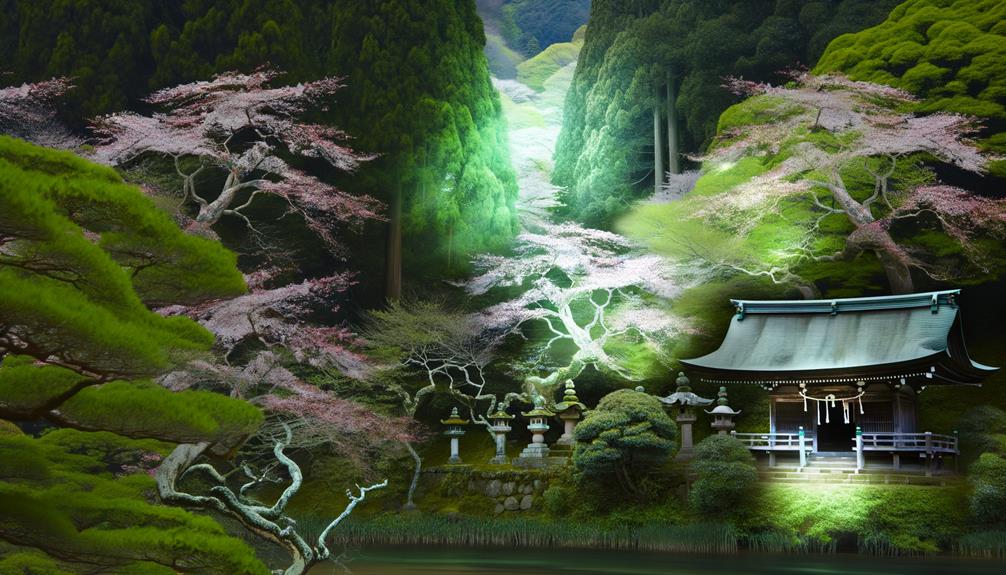
'Kami' originates from the Japanese language and plays a vital role in Shinto religion, denoting deities or spirits. The term is deeply rooted in ancient texts, combining characters that signify divine presence and expression.
Kami encompasses both benevolent and malevolent forces and symbolizes a harmonious relationship between humans and nature. It is integral to various rituals and festivals, reflecting Japan's cultural and spiritual heritage.
The name also has a melodious sound, making it appealing in other cultures and modern contexts. To further understand its cultural relevance and enduring resonance, exploring its historical and spiritual depths is necessary.
Key Takeaways
- Kami originates from the Japanese language and refers to spirits or deities.
- It is integral to Shinto practice, symbolizing harmony between humanity and the divine.
- Kami encompasses natural phenomena, ancestral spirits, and mythological beings.
- The name reflects a deep cultural and historical context in Japanese culture.
- Modern interpretations of Kami blend ancient reverence with contemporary identity.
Etymology of Kami
Originating from the Japanese language, the term 'Kami' is deeply rooted in Shinto beliefs and refers to spirits or deities that inhabit natural elements and phenomena.
Linguistically, 'Kami' (神) is derived from ancient Japanese texts and carries a profound historical context. The character 神 combines the radical 礻, which signifies a divine or spiritual presence, with 申, meaning to express or extend. This etymology underscores the reverence for natural forces and ancestral spirits, central to Shintoism.
Historically, the term has evolved, yet its core essence remains tied to the spiritual fabric of Japan. Understanding 'Kami' requires an appreciation of its linguistic origins, offering a glimpse into the profound relationship between language, spirituality, and the natural world in Japanese culture.
Kami in Japanese Culture
Building upon the profound historical and linguistic roots of 'Kami,' its role within Japanese culture extends beyond mere semantics to encompass a fundamental aspect of Shinto practice and everyday life.
The term 'Kami' is deeply interwoven with the fabric of Japanese society, epitomizing a myriad of natural phenomena, ancestral spirits, and deified beings revered in Shinto shrines. This veneration echoes through rituals and festivals, symbolizing harmony between humanity and the divine.
Etymologically, 'Kami' translates to 'god' or 'spirit,' yet its cultural significance is far more nuanced, reflecting Japan's intrinsic relationship with nature and spirituality. The integration of 'Kami' into daily practices underscores its enduring influence, shaping both communal and individual identities within the Japanese ethos.
Spiritual Significance
The spiritual significance of 'Kami' in Japanese culture is deeply rooted in the Shinto belief system, where these entities are revered as manifestations of sacred power and the essence of natural phenomena.
Etymologically, the term 'Kami' (神) is derived from ancient Japanese, signifying a profound respect for what is deemed mysterious and awe-inspiring.
Historically, Shintoism has imbued 'Kami' with a dual nature, encompassing both benevolent and malevolent forces, reflecting the duality inherent in nature itself.
This reverence extends to various elements, including mountains, rivers, and ancestral spirits, all considered embodiments of 'Kami'.
Consequently, the veneration of 'Kami' underscores a harmonious relationship between humans and the environment, emphasizing respect, ritual purity, and spiritual interconnectedness.
Deities and Spirits
Expanding on the spiritual significance of 'Kami', these entities represent a diverse pantheon of deities and spirits that inhabit and animate the natural and supernatural domains within Shinto belief. The term 'Kami' (神) linguistically derives from the ancient Japanese root, suggesting a sense of awe and reverence.
Historically, Kami encompass a wide spectrum—from natural phenomena like mountains and rivers to ancestral spirits and mythological beings. This multifaceted nature underscores a deep cultural and historical context, where the mundane and the mystical coexist.
The conceptualization of Kami as immanent and transcendent beings reflects Japan's intrinsic connection to its environment and heritage, embodying a worldview where the sacred permeates every aspect of existence.
Kami in Shintoism
In Shintoism, Kami are revered as the sacred forces that animate the natural world and embody the spirit of the Japanese people and their heritage. The term 'Kami' (神) is derived from ancient Japanese, signifying 'divinity' or 'spiritual essence.'
Historically, Kami are not limited to deities but include natural phenomena, ancestral spirits, and mythological beings. Their reverence is integral to Shinto practices, encapsulating the following key aspects:
- Nature: Kami inhabit natural objects like mountains, rivers, and trees.
- Ancestry: They encompass the spirits of ancestors, reflecting familial veneration.
- Mythology: Represent mythological figures from Japanese lore.
- Moral Virtue: Embody moral qualities and societal values.
Understanding Kami offers insights into Japanese cultural and religious identity.
Meaning in Other Cultures
While Kami are foundational to Shinto beliefs in Japan, similar concepts of sacred spirits or entities manifest in various other cultures around the world. These cultural and linguistic parallels provide a rich tapestry of spiritual understanding and historical context. For instance, the African Yoruba people recognize “Orisha” as spiritual entities. In Native American traditions, the term “Manitou” denotes a spirit or life force. Hinduism in India venerates “Deva,” divine beings who embody various aspects of life and nature.
| Culture | Term | Meaning |
|---|---|---|
| Japanese (Shinto) | Kami | Sacred spirits or deities |
| Yoruba (Africa) | Orisha | Spirits governing natural elements |
| Native American | Manitou | Life force or spirit |
| Hindu (India) | Deva | Divine beings |
| Norse | Aesir/Vanir | Gods representing various forces |
These terms reflect a global recognition of the sacred within the natural world.
Popularity of the Name
The popularity of the name Kami has experienced notable fluctuations over time, influenced by historical name trends and cultural shifts.
Geographic variations also play a significant role, with certain regions exhibiting a higher prevalence of the name.
Modern usage statistics reveal intriguing insights into its contemporary appeal and adoption.
Historical Name Trends
Tracing the historical popularity of the name Kami reveals a fascinating journey through linguistic evolution and cultural shifts. From ancient times to the present, the name has undergone significant transformations, both in its usage and significance.
- Ancient Roots: The name Kami originates from Japanese Shintoism, meaning 'god' or 'spirit,' reflecting deep religious connotations.
- Medieval Period: During this era, Kami was less common as personal names were often derived from familial lineage and societal roles.
- 20th Century: The name saw a resurgence, influenced by an interest in Eastern philosophies and a revival of traditional names.
- Modern Usage: Today, Kami is appreciated for its simplicity and spiritual resonance, making it a popular choice in diverse cultures.
These trends illustrate the dynamic nature of naming conventions over time.
Geographic Popularity Variations
Examining the geographic popularity of the name Kami reveals intriguing patterns influenced by cultural exchanges, historical migrations, and contemporary global trends.
In Japan, Kami holds profound significance as a term for deities in Shintoism, reflecting deep spiritual roots.
Conversely, in Persian-speaking regions, Kami is a diminutive for Kamran, symbolizing success and joy.
The name's migration to Western countries showcases its adaptability, often chosen for its phonetic appeal and multicultural resonance.
In Scandinavian countries, Kami has gained traction as a modern, gender-neutral choice, reflecting evolving naming conventions.
These variations underscore how Kami's etymological journey is shaped by regional cultural contexts and the interconnectedness of global societies.
Modern Usage Statistics
In recent years, tracking the popularity of the name Kami reveals its rising prevalence across diverse cultural landscapes, driven by its unique phonetic charm and adaptable nature. This modern adoption can be traced to several key factors:
- Phonetic Appeal: The name Kami possesses an easy-to-pronounce, melodious sound, making it attractive across linguistic boundaries.
- Cultural Flexibility: Kami's adaptability in different languages and cultures, from Japanese spiritual contexts to modern Western naming trends, adds to its universality.
- Historical Resonance: The name carries historical significance, often linked to concepts of divinity and reverence in Shinto tradition, enhancing its depth.
- Modern Media Influence: Increased exposure through global media and literature has popularized the name, embedding it in contemporary contexts.
Modern Interpretations
Modern interpretations of the name 'Kami' often blend linguistic expertise and historical context to explore its evolving significance in contemporary culture. Originating from the Japanese term for 'deity' or 'spirit,' 'Kami' embodies a profound cultural and spiritual heritage.
In modern contexts, this name transcends its traditional roots, symbolizing a fusion of ancient reverence and contemporary identity. Linguistically, 'Kami' retains its phonetic simplicity and elegance, making it adaptable across various cultures and languages. Historically, its usage reflects the deep-seated respect for natural and divine forces in Japanese culture.
Today, 'Kami' is interpreted both as a nod to spiritual antiquity and as a modern, versatile name, appreciated for its historical depth and cultural resonance.
Naming Trends
Building on the historical and cultural significance of 'Kami,' current naming trends reveal a growing preference for names that embody both traditional reverence and modern adaptability. These trends highlight a blend of historical respect and contemporary relevance.
Linguistic experts and cultural historians have identified several key patterns in this evolving landscape:
- Cultural Fusion: Integrating elements from various cultures while maintaining a core traditional essence.
- Phonetic Appeal: Prioritizing names that are easy to pronounce and harmoniously blend with various languages.
- Symbolic Meanings: Choosing names with deep, resonant meanings that reflect personal or familial values.
- Gender Neutrality: Opting for names that transcend traditional gender associations, reflecting a shift towards inclusivity.
These trends underscore a dynamic interplay between past reverence and present-day innovation.
Conclusion
To wrap up, the name 'Kami' embodies deep etymological origins and significant cultural importance, especially within Japanese customs and Shintoism.
Significantly, the term 'kami' has a historical connection to the native spiritual beliefs of Japan, symbolizing deities and spirits.
An intriguing fact shows that more than 80% of Japanese individuals engage in Shinto ceremonies, emphasizing the lasting impact of kami in present-day society.
This fact underscores the deep and widespread involvement of kami in molding cultural and spiritual traditions.