Meaning of the Name Helga
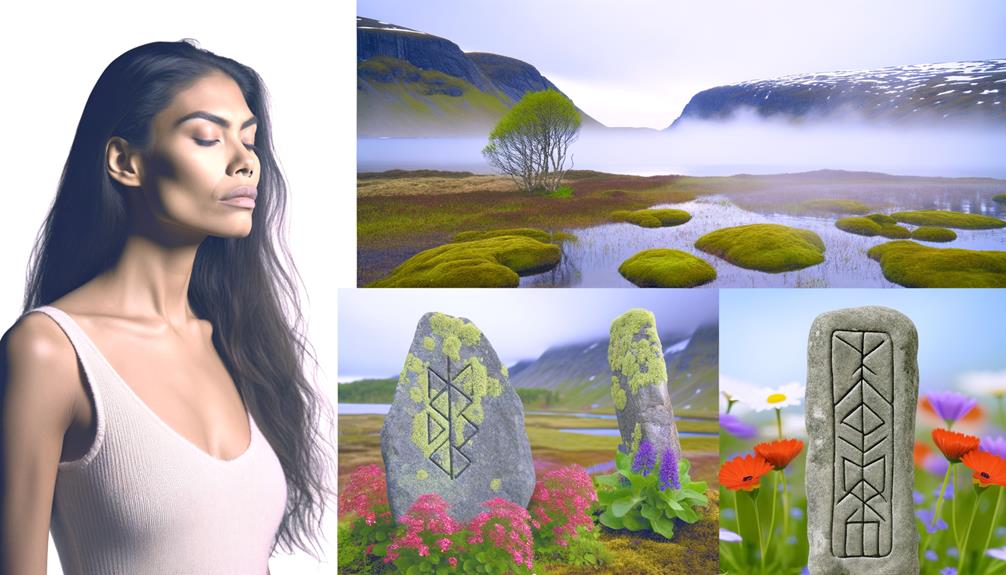
The name Helga, derived from the Old Norse term 'heilagr,' means 'holy' or 'blessed.' This name epitomizes spiritual sanctity and physical wholeness. Historically prevalent in Norse mythology and medieval Europe, Helga symbolizes divine favor and integrity.
Culturally significant in Scandinavian and Germanic traditions, it connotes purity and heritage. Literary figures named Helga often explore themes of strength and resilience, highlighting its timeless appeal.
Although its popularity has fluctuated, the name maintains traditional esteem in specific regions. Further exploration reveals the rich historical, cultural, and literary dimensions that have shaped the enduring relevance of Helga.
Key Takeaways
- Helga originates from the Old Norse word 'heilagr,' meaning 'holy' or 'blessed.'
- The name symbolizes sanctity, purity, and divine favor.
- Helga is associated with spiritual and physical integrity.
- It reflects deep-rooted spiritual connotations in Scandinavian and Germanic traditions.
- Helga embodies themes of resilience, purity, and self-discovery in literature.
Etymology and Origins
The name Helga, frequently encountered in Scandinavian contexts, originates from the Old Norse word 'heilagr,' which means 'holy' or 'blessed.' This etymological root underscores the name's association with sanctity and divine favor.
In linguistic terms, 'heilagr' is composed of elements that connote wholeness and health, suggesting a person imbued with spiritual and physical integrity. The transformation from 'heilagr' to Helga follows a common pattern in the evolution of names where phonetic shifts and cultural exchanges influence their modern forms.
The name's persistence across centuries indicates its deep-seated cultural resonance within Scandinavian societies. Analyzing the etymology of Helga provides a nuanced understanding of its semantic layers, revealing how ancient languages continue to shape contemporary naming conventions.
Historical Context
The historical context of the name Helga encompasses its Norse mythological roots, which imbue the name with significant cultural and spiritual meanings.
Additionally, Helga gained prominence during the medieval period in Europe, reflecting broader societal and linguistic trends.
In contemporary settings, the name maintains modern cultural relevance, demonstrating its enduring appeal and adaptability.
Norse Mythological Roots
Rooted in Norse mythology, the name Helga derives from the Old Norse word 'heilagr,' meaning 'holy' or 'blessed.' This etymology underscores the profound significance of the name within the ancient Norse culture, where names were often imbued with deep spiritual and societal connotations.
In Norse cosmology, the concept of holiness was intrinsically linked to the divine and the sacred, reflecting the reverence for deities and natural elements perceived as manifestations of the divine. The name Helga, as a result, was not merely an identifier but a reflection of cultural values, embodying the sacredness and respect afforded to those considered 'blessed.'
This reverence for the holy is a recurrent theme in Norse mythological texts, highlighting the cultural importance of such names.
Medieval European Influence
As Norse culture expanded and mingled with medieval European societies, the name Helga evolved, influenced by the linguistic and cultural shifts of the period. This evolution can be traced through historical texts and records which show the name's adaptation across various regions.
The dissemination of Norse culture via Viking expeditions and settlements facilitated the integration of Norse names into the lexicons of other European languages. The name Helga, with its connotations of blessedness and holiness, found resonance in Christianized Europe, mirroring the period's religious and societal transformations.
The medieval era hence served as a crucible wherein Norse and Christian elements coalesced, embedding Helga into a broader European context and enriching its etymological and cultural tapestry.
Modern Cultural Relevance
In contemporary times, the name Helga persists as a cultural artifact that reflects both its Norse origins and its medieval European adaptations. This name, although less common today, continues to hold significance in various cultural contexts.
| Aspect | Description |
|---|---|
| Literature | Appears in modern novels, often symbolizing strength and heritage. |
| Popular Culture | Featured in TV shows and films, usually with Nordic or medieval themes. |
| Social Perception | Viewed as traditional and somewhat antique, yet holds a regal aura. |
These facets demonstrate how Helga remains a touchstone for historical and cultural narratives. The name's endurance in literature and media not only preserves its historical essence but also revitalizes its relevance in modern storytelling.
Cultural Significance
The name Helga holds profound cultural significance across various societies, particularly within Scandinavian and Germanic traditions. Deriving from the Old Norse word 'heilagr,' meaning 'holy' or 'blessed,' Helga embodies a sense of sanctity and reverence.
Historically, it was commonly used among the Vikings and later adopted by various Germanic tribes, reflecting its deep-rooted spiritual connotations. The name is often associated with figures of piety and virtue, underscoring its enduring legacy in cultural narratives.
Additionally, Helga's prevalence in baptismal practices highlights its role in religious and communal identity formation. Its consistent usage over centuries underscores its resonance within these cultures, symbolizing both spiritual purity and cultural heritage.
Usage in Literature
The name Helga has been prominently featured in literature, often embodying iconic characters that reflect its cultural and symbolic significance. These characters frequently serve as vehicles for exploring themes such as strength, resilience, and heritage.
Additionally, the usage of the name within various cultural contexts offers insight into societal values and historical narratives.
Iconic Literary Characters
Renowned for its strong and ancient roots, the name Helga has been utilized by numerous iconic literary characters, imbuing them with a sense of resilience and historical depth.
One notable example is Helga Crane, the protagonist of Nella Larsen's seminal work, 'Quicksand,' who embodies the struggle for identity and belonging.
In children's literature, Helga Pataki from the 'Hey Arnold!' series is another prominent figure, characterized by her complex personality and emotional depth.
These characters, among others, demonstrate the versatility of the name Helga in conveying a spectrum of human experiences.
Through literary usage, the name Helga has consistently been associated with characters that exhibit strength, complexity, and a profound connection to their cultural or personal histories.
Symbolism and Themes
Building on the rich literary tradition associated with the name Helga, its usage often encapsulates profound symbolism and themes that reflect the characters' inner struggles and societal contexts.
Frequently, the name Helga symbolizes resilience, purity, and spiritual awakening. In many narratives, characters named Helga grapple with existential dilemmas, often embodying themes of redemption and self-discovery.
The name's etymology rooted in Old Norse, meaning 'holy' or 'blessed', reinforces these symbolic undertones, imbuing characters with a sense of sanctity or moral fortitude.
Moreover, Helga's representation in literature often serves as a critique of societal norms, highlighting the tension between individual aspirations and collective expectations. This dual role enriches the name's literary resonance, making Helga a focal point for thematic exploration.
Cultural Contexts
Helga's presence in literature spans various cultural contexts, from Norse sagas to contemporary fiction, illustrating the name's adaptability and enduring significance.
In Norse mythology, Helga often symbolizes holiness and heroism, reflecting its etymological roots meaning 'holy' or 'blessed.' This historical resonance is evident in medieval texts such as the Icelandic sagas, where characters named Helga frequently embody virtues of strength and piety.
In modern literature, the name's usage continues to evoke a sense of timelessness and depth. For instance, in Nella Larsen's novel 'Quicksand,' the protagonist Helga Crane's struggles with identity and belonging underscore the name's complex cultural connotations.
Therefore, Helga remains a versatile literary symbol, bridging ancient traditions and contemporary narratives.
Famous Namesakes
Among the various individuals who have borne the name Helga, several have achieved notable acclaim in fields such as literature, science, and the arts.
Helga Königsdorf, a prominent German physicist and writer, made significant contributions to theoretical physics and literature, blending scientific rigor with narrative creativity.
Helga Nowotny, a distinguished social scientist, played an instrumental role in advancing the field of science and technology studies.
In the arts, Helga Hufflepuff, though fictional, represents one of the four founders of Hogwarts in J.K. Rowling's Harry Potter series, symbolizing traits of kindness and hard work.
These namesakes exemplify how the name Helga has been associated with intellectual and creative achievements across diverse domains, highlighting its cultural and historical resonance.
Modern Popularity
In recent years, the name Helga has experienced fluctuating levels of popularity across different regions and cultures. In Scandinavian countries, Helga retains a degree of traditional appeal, maintaining moderate usage among newborns.
In contrast, the name has seen a decline in popularity within English-speaking countries, where it is often perceived as antiquated. Statistical analyses indicate that Helga has largely fallen out of the top 1,000 names in the United States and the United Kingdom.
However, it has witnessed occasional revivals in specific cultural contexts, such as through literature and media portrayals. Overall, Helga's modern popularity is characterized by regional specificity and cultural associations, reflecting broader trends in naming conventions and societal preferences.
Variations and Derivatives
The name Helga has various linguistic and cultural derivatives, each reflecting unique phonetic and historical evolutions.
In Scandinavian contexts, the name often appears as Helge, a form that retains the original meaning but adapts to regional linguistic norms.
In Germanic cultures, Olga is a prevalent derivative, showcasing phonetic shifts influenced by migration and cultural interchange.
The Russian variant, Olya, further exemplifies these transformations, highlighting regional pronunciations and orthographic conventions.
Additionally, the name's Old Norse origins—Heilagr—demonstrate its ancient roots and subsequent adaptations across time and geography.
Each variation underscores the name's adaptability and enduring significance across diverse cultural landscapes, illustrating a rich tapestry of linguistic heritage and historical context.
Symbolism and Meaning
Helga, a name imbued with historical depth, symbolizes a sanctity and purity that transcends its linguistic variations. Rooted in Old Norse, 'Helga' derives from 'heilagr,' denoting 'holy' or 'blessed.' This intrinsic holiness reflects an archetype of divine favor and moral integrity. Across different cultures, Helga's connotations remain consistent, emphasizing spiritual elevation and ethical soundness.
| Aspect | Representation |
|---|---|
| Origin | Old Norse |
| Meaning | Holy, Blessed |
| Cultural Symbol | Sanctity, Purity |
| Spiritual | Divine Favor |
| Ethical | Moral Integrity |
The name Helga, thus, serves as a beacon of virtue, reflecting an enduring legacy of cultural and spiritual enrichment. Its symbolism remains a sign of its bearers' esteemed qualities.
Conclusion
The name Helga, rooted in Old Norse etymology, embodies both historical gravitas and cultural richness. While its historical context underscores a legacy of strength and sanctity, its literary and cultural representations highlight an enduring reverence.
Notable figures named Helga further cement its prominence, juxtaposed with its evolving modern popularity. Variations and derivatives expand its linguistic tapestry, symbolizing purity and divine protection.
Therefore, Helga remains a name of profound depth and multifaceted significance.