Meaning of the Name Diya
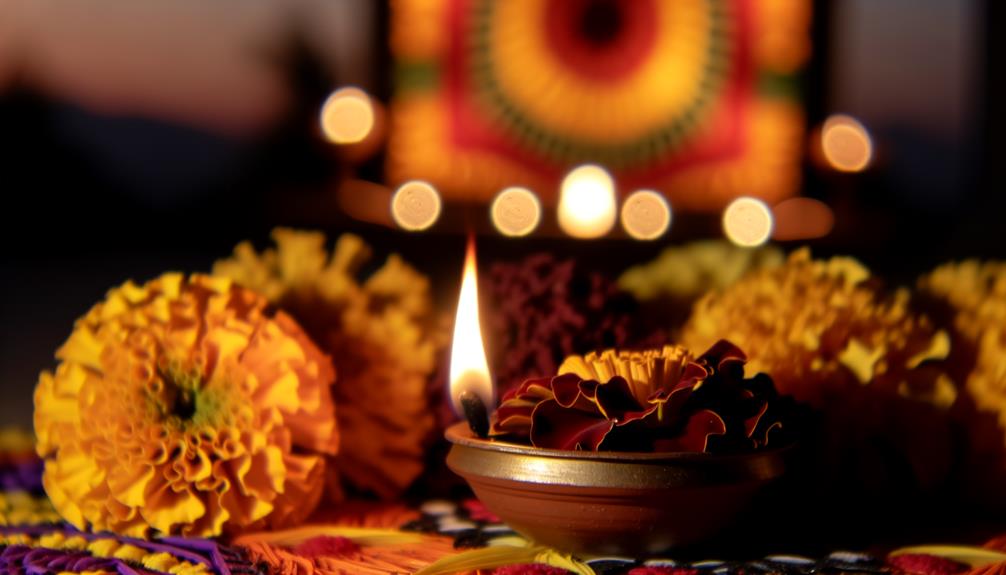
The name Diya, rooted in both Sanskrit and Arabic cultures, signifies light, illumination, and radiance. Historically traced back to early texts and inscriptions, Diya embodies cultural values of enlightenment and brilliance.
In Sanskrit and Arabic, it symbolizes knowledge dispelling ignorance and the triumph of light over darkness, reflecting purity and positivity. Diya's popularity is notable in South Asia, especially India, and has gained international recognition due to the South Asian diaspora.
Variations like Dhia and Zia enrich its cultural tapestry. This name, associated with spiritual enlightenment and historical richness, carries deep philosophical meaning and continues to inspire.
Further insights await on its cultural impact.
Key Takeaways
- Diya means light, illumination, and radiance.
- The name is rooted in Sanskrit and Arabic cultures.
- Diya symbolizes knowledge, hope, and spiritual enlightenment.
- It reflects the triumph of light over darkness and purity.
- Universally recognized and easy to pronounce, it has deep cultural significance.
Origins of the Name
The name 'Diya' has its origins deeply rooted in ancient linguistic traditions, prominently in Sanskrit and Arabic cultures. Historically, the name has been traced back to early texts and inscriptions in these languages, indicating its longstanding cultural significance.
In Sanskrit, Diya is often associated with light and illumination, while in Arabic, it carries meanings related to radiance and brightness. The dual presence of the name in these rich linguistic traditions highlights a confluence of cultural values centered around enlightenment and brilliance.
The transference of the name through generations and across regions underscores its enduring appeal and adaptability. This historical perspective provides a foundation for understanding the name's profound resonance in various cultural contexts.
Meaning in Sanskrit
In Sanskrit, 'Diya' is intrinsically linked to the concept of light, symbolizing illumination and clarity. The word derives from 'Deepa,' which means lamp or light. Historically, lamps have held significant cultural and spiritual meaning in ancient Indian practices, often representing knowledge dispelling ignorance and the triumph of light over darkness. The term 'Diya' encapsulates these profound elements, making it a name imbued with deep philosophical underpinnings.
| Term | Meaning | Cultural Significance |
|---|---|---|
| Diya | Light | Symbol of knowledge and clarity |
| Deepa | Lamp | Represents spiritual enlightenment |
| Jyoti | Flame | Emblematic of divine presence |
| Prakash | Brightness | Connotes wisdom and understanding |
This nomenclature reflects a rich tapestry of cultural heritage, emphasizing the name's profound connotations in Sanskrit.
Significance in Arabic
In Arabic, the name Diya, derived from the root 'Ḍ-Y-ʾ,' signifies radiance or light, symbolizing purity and enlightenment.
Historically, this name has been prevalent in Arabic-speaking cultures, reflecting its deep-seated cultural importance and its association with positive attributes.
The etymology underscores the name's enduring appeal and its prominent role in Arabic tradition and identity.
Etymology and Origins
Rooted in the Arabic language, the name Diya holds profound significance, symbolizing light and radiance.
Etymologically, the word 'Diya' (ضياء) is derived from the Arabic root ض و ء (ḍ-w-ʾ), which pertains to illumination and brightness.
Historically, this nomenclature has been woven into Arabic lexicons and literature, signifying not only physical light but also metaphorical enlightenment and clarity. The term is often associated with positive attributes, reflecting purity and guidance.
Arabic poetry and classical texts frequently employ 'Diya' to evoke imagery of dawn, the sun, and celestial brilliance. Therefore, the name carries a rich legacy, embodying notions of hope, wisdom, and divine presence within the Arabic linguistic and cultural tapestry.
Cultural Importance
How has the name Diya woven itself into the cultural fabric of Arabic-speaking societies, reflecting values of illumination and virtue? Historically, Diya, meaning 'light' or 'glow,' symbolizes enlightenment and moral integrity. Rooted in Arabic culture, the name is often chosen to represent an aspiration for wisdom and ethical conduct. It is associated with several cultural and religious contexts, reinforcing its significance.
- Religious Texts: Diya is frequently mentioned in Islamic literature, signifying divine light and guidance.
- Literature and Poetry: Arabic poets and writers have historically used Diya to symbolize purity and clarity.
- Naming Traditions: It is a popular choice for both boys and girls, reflecting an enduring cultural preference for names with profound meanings.
Thus, Diya remains a name of deep cultural resonance.
Cultural Symbolism
Why does the name Diya hold such deep cultural importance across various regions and traditions? Diya, meaning 'light' or 'lamp' in multiple languages, symbolizes illumination, purity, and hope. Historically, the term is deeply rooted in various cultures, especially within South Asian traditions where it is linked to the festival of Diwali. This festival involves lighting oil lamps to symbolize the victory of light over darkness. Moreover, in Arabic cultures, Diya represents a radiant and luminous presence.
| Region | Cultural Significance |
|---|---|
| South Asia | Symbol of light and purity |
| Middle East | Represents radiance and hope |
| Western Asia | Associated with spiritual light |
The name Diya transcends linguistic boundaries, embodying universal concepts of enlightenment and positive energy, solidifying its enduring cultural impact.
Popularity Over Time
The name Diya has experienced varying levels of popularity over time, influenced by cultural, historical, and social factors across different regions. Historically, the name has been prominent in South Asia, particularly in India, due to its deep-rooted connection with cultural and religious traditions.
Over the years, its adoption has seen fluctuations based on:
- Cultural Trends: The name's popularity often rises during times of cultural renaissance or increased visibility of traditional names.
- Globalization: The spread of South Asian diaspora communities has introduced the name to Western societies, contributing to its international recognition.
- Media Influence: Representation in films, literature, and television has also played a significant role in bringing the name to a wider audience.
These factors collectively shape the dynamic popularity of the name Diya.
Famous Personalities Named Diya
The name Diya has been carried by several notable individuals across various fields, contributing to its recognition and cultural significance.
Bollywood actress Diya Mirza has garnered acclaim for her performances and philanthropic efforts, while renowned author Diya Rai has made impressive contributions to contemporary literature.
Additionally, activist Diya Anand has been influential in championing social causes, further cementing the name's association with impactful achievements.
Bollywood Actress Diya Mirza
Renowned Bollywood actress Diya Mirza, who has also made significant contributions as a producer and social activist, exemplifies the multifaceted talent associated with the name Diya. Born on December 9, 1981, Mirza's career began with her crowning as Miss Asia Pacific in 2000, a title that propelled her into the limelight.
Her acting debut in the film 'Rehnaa Hai Terre Dil Mein' (2001) established her as a promising talent in the Indian film industry. Beyond her cinematic achievements, Diya Mirza is deeply involved in environmental activism and humanitarian efforts.
- Acting Career: Debut in 'Rehnaa Hai Terre Dil Mein' (2001)
- Awards: Miss Asia Pacific 2000
- Activism: Environmental and humanitarian initiatives
Her ongoing dedication to various causes underscores her commitment to societal betterment.
Renowned Author Diya Rai
Much like Diya Mirza, author Diya Rai has carved a niche for herself, earning acclaim for her literary contributions and enriching the cultural tapestry with her evocative storytelling.
Diya Rai's works are marked by their deep psychological insights and intricate narratives, reflecting a profound understanding of human nature. Her debut novel, *Whispers in the Wind*, received critical acclaim for its nuanced characters and compelling plot.
Historical themes and rich cultural contexts often permeate her writing, creating a vivid tapestry that captivates readers. Rai's ability to intertwine personal and collective histories has established her as a formidable voice in contemporary literature.
Her scholarly approach to storytelling ensures that her works are both intellectually stimulating and emotionally resonant.
Activist Diya Anand
Emerging as a prominent voice in social justice, activist Diya Anand has dedicated her efforts to advocating for marginalized communities and raising awareness on critical human rights issues. Anand's extensive work spans various social causes, making significant strides in areas often overlooked by mainstream activism. She has been instrumental in addressing systemic inequalities through grassroots movements and policy advocacy.
Key contributions by Diya Anand include:
- Establishing community outreach programs: These programs provide resources and support to underserved populations.
- Campaigning for legislative changes: Anand has been pivotal in lobbying for laws that protect the rights of vulnerable groups.
- Educational initiatives: She has launched numerous workshops and seminars to educate the public on social justice matters.
Anand's unwavering commitment continues to inspire many.
Variations and Nicknames
The name Diya, while retaining its core essence, has several variations and nicknames across different cultures and languages. Historically, this name has been adapted to suit linguistic nuances and cultural preferences. For instance, in Arabic-speaking regions, the name is often spelled as "Dhia" or "Zia," emphasizing its radiant meaning. In South Asian contexts, "Diya" is sometimes affectionately shortened to "Di," reflecting a sense of endearment.
| Variation | Region/Culture |
|---|---|
| Dhia | Arabic |
| Zia | Arabic |
| Di | South Asian |
| Diyah | Global |
These variations and nicknames not only enrich the name's cultural tapestry but also underscore its universal appeal. Understanding these nuances provides a deeper appreciation of the name's adaptability and timeless resonance.
Choosing Diya for Your Child
Selecting the name Diya for your child is a decision steeped in cultural significance and historical richness. Originating from ancient Sanskrit, Diya translates to 'light' or 'lamp,' symbolizing illumination and spiritual enlightenment. This name carries profound historical connotations, often associated with the traditional festival of Diwali, where lamps are lit to signify the triumph of light over darkness.
Choosing Diya reflects a thoughtful consideration of cultural heritage and conveys a sense of warmth and hope.
Here are some compelling reasons to choose Diya:
- Cultural Heritage: Embraces and celebrates rich traditions.
- Positive Connotations: Associated with light and positivity.
- Versatility: Universally recognized and easy to pronounce.
Conclusion
The name Diya, with its rich origins in Sanskrit and Arabic, carries profound meanings of light and illumination. Its cultural symbolism transcends linguistic boundaries, reflecting a universal quest for enlightenment.
How has this name maintained its appeal across different eras and societies? Its historical significance, along with notable personalities bearing the name, underscores its enduring popularity.
Hence, choosing Diya for a child resonates with a heritage of wisdom and a promise of a bright future.