Rebecca Name Meaning and Origin
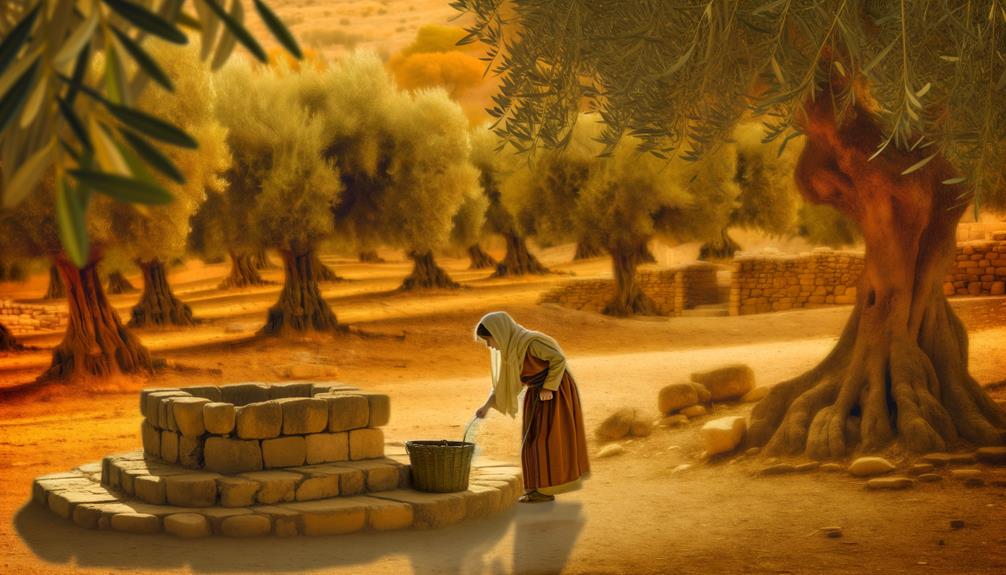
Rebecca is a name of Hebrew origin, deriving from 'Rivkah,' which means 'to bind' or 'to tie.' The term signifies connections, such as binding agreements and familial bonds, reflecting ancient Hebrew societal ties. In the Bible, Rebecca is the devoted wife of Isaac and mother of Jacob and Esau, highlighting themes of faith and lineage.
Over centuries, the name has sustained cultural significance, influencing literature, art, and media. Its popularity peaked in the 1970s and 1980s, though it remained a common choice due to its traditional yet versatile nature.
Discover more about Rebecca's enduring appeal and its contemporary relevance.
Key Takeaways
- Rebecca originates from the Hebrew name 'Rivkah,' meaning 'to bind' or 'to tie.'
- The name signifies familial bonds and societal ties in ancient Hebrew societies.
- In the Bible, Rebecca is Isaac's wife and mother of Jacob and Esau, pivotal in the Abrahamic lineage.
- Rebecca's cultural impact is seen in literature, art, and media, showcasing its timeless appeal.
- The name has fluctuated in popularity, peaking in the 1970s and 1980s, but remains enduringly relevant.
Hebrew Roots
Rebecca's name originates from the Hebrew name 'Rivkah,' which is etymologically derived from the Hebrew verb 'ribqah,' meaning 'to bind' or 'to tie.'
This etymological connection suggests a deep cultural and historical significance, reflective of ancient Hebrew customs and social structures.
The verb 'ribqah' encompasses connotations of binding agreements, familial bonds, and societal ties, which were integral to the communal life of early Hebrew societies.
The name Rebecca, thus, carries with it a sense of interconnectedness and relational depth.
Understanding the Hebrew roots of the name provides valuable insight into how names were not merely identifiers but also conveyed essential characteristics and expectations within the cultural context.
This etymological background enriches the contemporary appreciation of the name Rebecca.
Biblical Significance
Rebecca's biblical significance is deeply rooted in her role as the devoted wife of Isaac and the mother of Jacob and Esau, key figures in the lineage of Israel. Her story highlights themes of faith and obedience, as seen in her willingness to leave her home and family to marry Isaac.
Additionally, Rebecca is often viewed as a 'mother of nations,' given that her descendants played a pivotal role in shaping the history of the Israelites.
Isaac's Beloved Wife
In the Bible, Rebecca is celebrated as the devoted wife of Isaac, chosen through divine guidance to continue the Abrahamic lineage. This significant event unfolds in Genesis 24, where Abraham sends his servant to find a wife for Isaac. The servant prays for a sign and encounters Rebecca, who fulfills the divine criteria by offering water to him and his camels.
Rebecca's role in the biblical narrative extends beyond her selection; she is portrayed as an active participant in God's plan, demonstrating faith and obedience. Her marriage to Isaac not only solidifies her place in the biblical tradition but also underscores the importance of divine providence in the formation of Israel's foundational family.
Mother of Nations
Having established her role as Isaac's devoted wife, the narrative further elevates Rebecca by portraying her as the matriarch whose influence and progeny would shape the destiny of nations. Biblically, Rebecca is the mother of Esau and Jacob, the latter of whom becomes Israel, fathering the twelve tribes.
Her pivotal role is underscored in Genesis 25:23, where God reveals that 'two nations are in your womb,' signifying the future division and influence of her offspring. This prophecy not only positions Rebecca at the heart of God's divine plan but also accentuates her importance in the larger biblical narrative.
Her descendants would go on to play vital roles in the unfolding of biblical history, establishing Rebecca as a foundational figure in the lineage of nations.
Faith and Obedience
Demonstrating unwavering faith and obedience to divine guidance, Rebecca's actions throughout her life underscore her critical role in the fulfillment of God's promises in the biblical narrative. Her story reflects a deep commitment to spiritual principles and provides several key instances that highlight her piety and loyalty:
- Willingness to Marry Isaac: Rebecca accepted the proposal to marry Isaac without hesitation, trusting in God's plan for her life.
- Interceding for Her Children: She sought divine guidance during her challenging pregnancy and received a prophecy about her twins.
- Favoring Jacob: Rebecca's decisive support for Jacob secured the fulfillment of God's promise that the elder would serve the younger.
- Guidance to Jacob: Her strategic advice to Jacob in obtaining Isaac's blessing emphasized her obedience to what she believed was divine will.
This approach underscores Rebecca's pivotal role in biblical history, marked by faith and obedience.
Etymology
The name Rebecca originates from the Hebrew name 'Rivka,' which means 'to tie' or 'bind,' reflecting its ancient linguistic roots and cultural significance.
The etymology of Rivka is deeply embedded in the Hebrew language, where it is associated with notions of connection and joining. The name appears in the Old Scripture, specifically in the Book of Genesis, where Rebecca is a key matriarchal figure.
Linguistic scholars suggest that the name may also have connotations of securing or fastening, symbolizing strength and stability. Over time, the name evolved through various languages and cultures, including Greek ('Ρεβέκκα') and Latin ('Rebecca'), retaining its core meaning while adapting to different phonetic and orthographic systems.
Cultural Impact
Rebecca's cultural impact is deeply rooted in its biblical significance, originating from the Old Covenant figure who became the wife of Isaac and mother of Jacob and Esau. This historical and religious legacy has permeated through centuries, influencing various forms of literature, art, and media.
In modern times, the name Rebecca continues to be prevalent, with notable references in contemporary novels, films, and television series, thereby maintaining its relevance across diverse cultural contexts.
Biblical Significance and Legacy
In biblical narratives, the story of Rebecca offers profound insights into the cultural and religious practices of ancient times, underscoring her legacy as a pivotal matriarch in the Judeo-Christian tradition. Her life and actions are fundamental in understanding the lineage and ethics of these faiths.
Matchmaker Role: Rebecca's marriage to Isaac was arranged by Abraham's servant, showcasing early matchmaking customs (Genesis 24).
Motherhood: She gave birth to Esau and Jacob, influencing the Israelite lineage (Genesis 25).
Divine Guidance: Rebecca received a prophecy about her sons, reflecting divine intervention in human affairs (Genesis 25:23).
Moral Decisions: Her decision to support Jacob over Esau in receiving Isaac's blessing highlights complex familial and ethical dynamics (Genesis 27).
Modern Cultural References
How has the name Rebecca permeated modern cultural landscapes, influencing literature, media, and popular naming trends?
The name Rebecca has become a staple in various cultural mediums. In literature, Daphne du Maurier's 1938 novel 'Rebecca' remains iconic, influencing adaptations in film and theater.
Television shows and movies frequently feature characters named Rebecca, including 'Cheers' and 'This Is Us,' highlighting its enduring popularity.
The name's versatility and timeless appeal have made it a consistent choice for parents over decades. Statistical data from the Social Security Administration shows that Rebecca has maintained a steady presence in baby naming charts, reflecting societal preferences.
This cultural saturation underscores Rebecca's role as a name that seamlessly bridges historical significance with contemporary relevance.
Popularity Over Time
The popularity of the name Rebecca has experienced notable fluctuations over the decades, influenced by cultural, religious, and literary factors.
Historical data reveals these key trends:
- 1940s-1960s: Rebecca saw a steady rise in popularity, partly due to Daphne du Maurier's 1938 novel 'Rebecca' and its subsequent adaptations.
- 1970s-1980s: The name peaked, often ranking in the top 25 names for baby girls in the United States.
- 1990s: A gradual decline began, as newer names gained favor, though Rebecca remained within the top 50.
- 2000s-Present: The name continued to decrease in popularity, now ranking outside the top 100, reflecting broader naming trends that favor unique and less traditional names.
These shifts underscore the dynamic nature of naming conventions.
Modern Interpretations
Modern interpretations of the name Rebecca often reflect contemporary values and cultural shifts, emphasizing individuality and personal significance. Today, Rebecca is seen as a name that embodies both traditional elegance and modern versatility. It is chosen not only for its historical and biblical roots but also for its adaptability in various cultural contexts. The following table highlights key modern associations of the name Rebecca:
| Aspect | Interpretation | Example |
|---|---|---|
| Cultural Relevance | Cross-cultural adaptability | Popular in diverse regions |
| Personal Significance | Emphasis on uniqueness | Chosen for its distinctiveness |
| Modern Usage | Versatile in professional settings | Common among professionals |
These interpretations showcase the enduring appeal and contemporary relevance of the name Rebecca, making it a favored choice in today's society.
Conclusion
The name Rebecca, with its Hebrew roots and biblical significance, has maintained cultural relevance through centuries. Etymologically linked to the Hebrew term 'Rivkah,' it symbolizes binding or enchanting.
Despite concerns about the name's modern relevance, its enduring popularity and evolving interpretations indicate a lasting appeal.
Academic analysis confirms Rebecca's persistent resonance across different eras and societies, demonstrating that traditional names can retain contemporary significance through cultural and historical continuity.