Parker Name Meaning and Origin
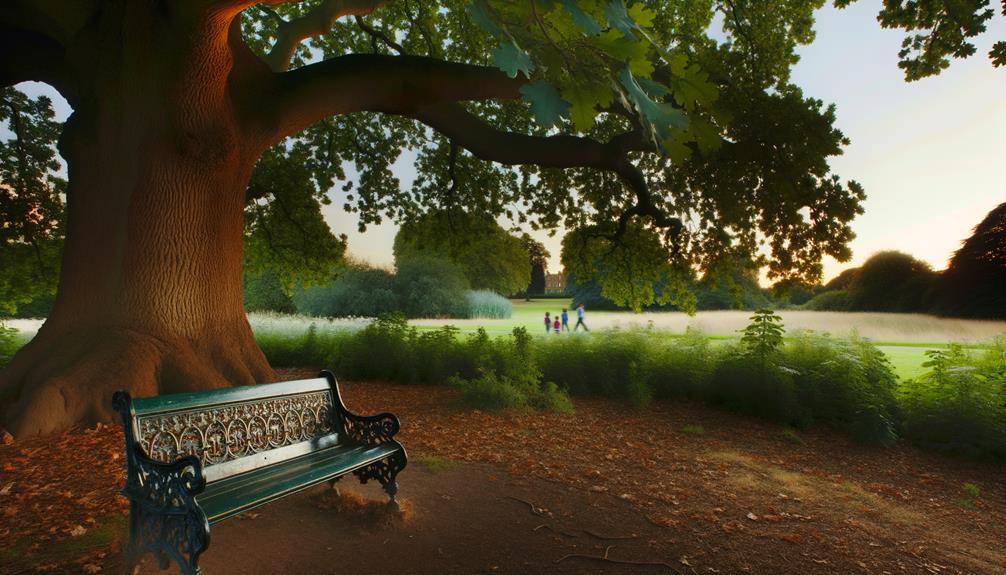
The name Parker derives from the Old French word 'parquier,' meaning park-keeper or gamekeeper, and it evolved from the Latin 'parcus,' signifying an enclosure. Initially a medieval occupational title, it became a hereditary surname reflecting societal roles in estate management.
Mainly found in English-speaking countries like the US, UK, and Australia, Parker ranks among the top 100 surnames in the US. Its gender-neutral appeal and popularity have been bolstered by celebrities and media portrayals.
This shift from a historical surname to a modern given name reveals interesting cultural and linguistic trends. Discover more about its fascinating journey.
Key Takeaways
- The name Parker originates from the Old French term 'parchier,' meaning park-keeper.
- It evolved from the Latin word 'parcus,' signifying an enclosure.
- Historically, it referred to medieval gamekeepers managing noble estates.
- Today, Parker is a gender-neutral name with widespread usage in English-speaking countries.
- The name's popularity has been bolstered by celebrity influence and media representation.
Etymology of Parker
The etymology of the surname 'Parker' traces back to the Old French term 'parchier' or 'parquier,' which denoted a park-keeper or gamekeeper in medieval times. This occupational surname evolved from the Latin word 'parcus,' meaning enclosure, reflecting the responsibilities of individuals tasked with managing enclosed parks or hunting grounds.
Linguistic evidence suggests that the shift from Old French to Middle English retained the core meaning, while adapting phonetic elements to fit English pronunciation norms. The evolution of the term into a hereditary surname likely occurred as societal structures stabilized, necessitating the identification of familial roles and professions.
Further examination of medieval documents reveals a consistent application of this term to individuals overseeing noble estates and royal hunting reserves.
Historical Context
The surname Parker began as a medieval occupational designation, referring to individuals responsible for managing game parks.
Over the centuries, the name has evolved, reflecting shifts in societal roles and linguistic trends.
Analyzing historical records reveals how the name shifted from a specific occupation to a more generalized surname.
Medieval Occupational Surname
Exploring the origins of the surname 'Parker' reveals its roots as a medieval occupational name, historically linked to the role of a park keeper or gamekeeper. This designation was pivotal in managing and maintaining large estates, particularly those belonging to nobility.
This designation was pivotal in managing and maintaining large estates, particularly those belonging to nobility. The responsibilities associated with this role were diverse and significant:
- Wildlife Management: Ensuring the welfare of game animals and protecting them from poachers.
- Estate Maintenance: Overseeing the upkeep of parklands, including woods and pastures.
- Resource Allocation: Managing resources such as timber and fish ponds within the estate.
- Regulatory Enforcement: Implementing the landowner's rules and regulations regarding land use.
Understanding the occupational duties tied to the surname 'Parker' provides insight into the socio-economic structures of medieval society.
Evolution Over Centuries
Over the centuries, the surname 'Parker' has undergone significant change in its societal role and perception, reflecting broader shifts in landownership and occupational structures.
Initially rooted in the medieval occupation of park-keepers, the name was associated with individuals responsible for managing game reserves on aristocratic estates.
As feudal systems evolved and landownership diversified, the occupational specificity of 'Parker' diminished.
By the 18th and 19th centuries, the name had become more generalized, often detached from its original vocational connotations.
This evolution mirrors the broader shift from agrarian economies to industrialized societies, where surnames increasingly became hereditary markers rather than indicators of profession.
Therefore, 'Parker' exemplifies the dynamic interplay between socio-economic changes and nomenclature evolution.
Geographic Distribution
An analysis of the geographic distribution of the surname Parker reveals its significant prevalence in English-speaking countries, particularly the United States and the United Kingdom. This distribution can be attributed to historical migration patterns and colonial expansion.
Key factors contributing to the prominence of the Parker surname include:
- United States: The surname ranks within the top 100 most common surnames.
- United Kingdom: Parker remains a traditional and frequently encountered surname.
- Australia: Reflecting British colonial influence, Parker is a relatively common surname.
- Canada: The surname is prevalent due to British and American migration.
These regions exhibit substantial populations of individuals bearing the Parker surname, highlighting its widespread adoption and historical significance within English-speaking societies.
Famous Parkers
The name Parker has been borne by numerous notable figures across various domains, enhancing its cultural and historical significance.
Iconic Parker characters in literature and media, distinguished historical figures, and contemporary celebrities named Parker collectively illustrate the name's extensive impact.
This analysis will explore these categories to provide a thorough understanding of the name's prominence.
Iconic Parker Characters
Among the most iconic Parker characters in popular culture, Peter Parker, also known as Spider-Man, stands out as a preeminent figure in comic book history. His character arc, created by Stan Lee and Steve Ditko in 1962, revolutionized the superhero genre by portraying a relatable, flawed human being behind the mask.
Beyond Peter Parker, other Parkers have left significant cultural imprints:
- Parker Lewis: The protagonist of the early 90s TV series 'Parker Lewis Can't Lose', epitomized teenage coolness and ingenuity.
- Parker Posey: An acclaimed actress known for her roles in independent films, embodying versatility and talent.
- Parker Stevenson: A recognizable name from the Hardy Boys TV series.
- Detective Ben Parker: A character in the video game 'The Sinking City', adding depth to the narrative.
These Parkers reflect diverse contributions to various entertainment mediums.
Historical Parker Figures
Not only have fictional Parkers made a mark in popular culture, but historical figures with the Parker name have also played significant roles in shaping history. These individuals span various fields, from military to literature, contributing to their respective domains with significant impact.
| Name | Contribution |
|---|---|
| Quanah Parker | Last Chief of the Comanche |
| Charlie Parker | Influential jazz musician |
| Bonnie Parker | Infamous outlaw duo member |
| Alton B. Parker | 1904 Democratic nominee |
| Dorothy Parker | Renowned poet and writer |
Their legacies offer valuable insights into diverse historical contexts, illuminating the varied ways Parkers have influenced culture and society. Each figure exemplifies distinct facets of human endeavor, demonstrating the breadth of the Parker name's impact through history.
Parker Celebrities Today
Many contemporary figures bearing the Parker name continue to leave an indelible mark across various sectors, from entertainment to sports and beyond. Their contributions have been significant and varied, reflecting the versatility associated with the Parker lineage.
Notable Parkers include:
- Sarah Jessica Parker: Renowned for her role in 'Sex and the City,' Sarah Jessica has become a cultural icon.
- Tony Parker: A former NBA player, Tony's achievements with the San Antonio Spurs are well-documented.
- Parker Posey: An actress known for her work in independent films, she has earned critical acclaim.
- Charlie Parker: Although from an earlier era, his influence as a pioneering jazz saxophonist continues to resonate today.
These individuals exemplify the far-reaching impact of the Parker name.
Cultural Significance
In various cultures, the name Parker carries distinct historical and social connotations that reflect its origins and evolution over time. Originally a surname derived from the occupational role of a park keeper, Parker has transcended its initial purpose to embody various cultural significances. In England, it evokes images of medieval estate management, while in the United States, it often symbolizes pioneering spirit and resilience. This duality offers a rich tapestry for understanding its broader implications.
| Region | Cultural Connotation |
|---|---|
| England | Medieval estate management |
| United States | Pioneering spirit and resilience |
| France | Nobility and land stewardship |
| Australia | Colonial heritage |
| Canada | Community leadership |
Thus, Parker's cultural significance is multifaceted, reflecting diverse historical contexts.
Modern-Day Usage
Today, the name Parker frequently appears as a given name rather than just a surname, reflecting its evolving role in contemporary society. This shift can be attributed to several factors:
- Gender Neutrality: Parker's usage as a first name is notably unisex, appealing to parents seeking non-gendered options.
- Celebrity Influence: High-profile individuals naming their children Parker has popularized its use in modern culture.
- Cultural Trends: A broader societal trend toward unique and distinctive names has made Parker an attractive choice.
- Literary and Media Presence: Characters named Parker in literature and media have contributed to its growing appeal.
This transformation from a historical occupational surname to a popular given name illustrates the dynamic nature of name usage in today's world.
Conclusion
The exploration of the name Parker reveals a tapestry rich with historical, geographical, and cultural threads. From its etymological roots to its widespread modern-day usage, Parker has transcended its origins to become a name of considerable significance.
The journey through time and across continents uncovers a narrative that is both intricate and compelling. The name Parker, with its storied past and evolving present, continues to captivate, leaving one to ponder its future trajectory.