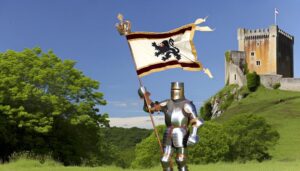
Olivier Name Meaning and Origin

Olivier is a name with rich French origins, tracing back to the Middle Ages. It gained early prominence through 'The Song of Roland,' reflecting chivalric virtues.
Olivier evolved from the Old High German 'Alfihar,' meaning 'elf army,' via Old Norse and Old French. The name also connects to the Latin ‘oliva,' symbolizing the olive tree and peace.
Historically significant, Olivier embodied valor, nobility, and loyalty, particularly in French culture. Its evolution mirrors historical interactions between Germanic and Romance languages.
To uncover more about Olivier's cultural and literary impact, and its transformation into modern times, a deeper exploration awaits.
Key Takeaways
- Olivier originated from the Old High German name 'Alfihar,' meaning 'elf army.'
- It evolved into 'Olifr' in Old Norse and 'Olivier' in Old French.
- Influenced by the Latin 'oliva,' Olivier is associated with the olive tree, symbolizing peace.
- The name gained prominence in the Middle Ages through 'The Song of Roland.'
- Olivier represents valor, nobility, and loyalty, embodying knightly virtues in French culture.
Historical Background
How did the name Olivier evolve through centuries of linguistic and cultural transformations?
The name Olivier, primarily associated with French origins, has undergone significant evolution since its inception. Emerging during the Middle Ages, it gained prominence through literary works such as 'The Song of Roland,' where Olivier was a notable knight. Its adoption spread across Europe, influenced by the Norman conquest of England, where it morphed into Oliver. This cross-cultural exchange was pivotal in its adaptation into various languages, retaining variations of its original form.
The Renaissance period further cemented its usage, reflecting the name's enduring appeal. Over the centuries, Olivier has remained a popular name, symbolizing valor and nobility, while adapting to the linguistic nuances of different cultures.
Etymology
The etymology of the name Olivier can be traced back to the Old High German name 'Alfihar,' which is composed of the elements 'alf' meaning 'elf' and 'hari' meaning 'army.' This combination reflects a cultural belief in the mystical and strategic prowess of elves in ancient Germanic mythology.
Over time, the name evolved into 'Olifr' in Old Norse, and subsequently into the Old French 'Olivier,' influenced by the Latin term 'oliva,' meaning 'olive tree.' This linguistic transformation reflects historical interactions between Germanic and Romance languages.
The name Olivier also gained prominence through medieval literature, particularly in 'The Song of Roland,' further solidifying its widespread adoption and slight morphological variations across European regions.
Cultural Significance
The name Olivier holds considerable cultural significance, especially in France where it has historical roots dating back to the Middle Ages. Its literary symbolism is prominently embodied in the character of Olivier from the epic poem 'The Song of Roland,' representing valor and nobility.
In contemporary times, the name has maintained its popularity, reflecting a blend of traditional values and modern appeal.
Historical Context in France
During the medieval era, the name Olivier gained significant prominence in France, largely due to its association with the chivalric hero Olivier, a legendary knight from the epic poem 'The Song of Roland.'
This narrative, integral to the Matter of France, depicted Olivier as a paragon of knightly virtues—courage, loyalty, and wisdom. The character's valor and steadfastness in the face of adversity resonated deeply with medieval French values.
The name Olivier thus became emblematic of the ideal knight and was embraced by French nobility and commoners alike. Its widespread usage signified not only admiration for the heroic figure but also a cultural aspiration to embody the same noble qualities in real life.
Symbolism in Literature
Building on the historical reverence for the name Olivier in medieval France, its literary symbolism extends deeply into various cultural narratives. It frequently embodies ideals such as honor, resilience, and moral integrity. In epic literature, Olivier is often depicted as a paragon of knightly virtues. This is most notably seen in the medieval epic 'The Song of Roland,' where Olivier stands as a symbol of unwavering loyalty and courage. This character's representation underscores the name's association with stalwart ethical principles and heroic steadfastness.
Such portrayals have solidified Olivier's status as a cultural touchstone, resonating through centuries of literary tradition. This enduring symbolism has not only shaped literary archetypes but has also influenced broader cultural perceptions of moral fortitude and noble conduct.
Modern Popularity Trends
In contemporary society, the name Olivier has experienced a resurgence in popularity, reflecting both its historical roots and evolving cultural significance. This name, with its origins in the Latin word "oliva" meaning olive tree, carries a timeless appeal that resonates across generations.
Several factors contribute to its modern-day prominence:
- Cultural Renaissance: A renewed interest in classic names.
- Celebrity Influence: Prominent figures named Olivier, notably in arts and sports.
- Literary Heritage: Enduring presence in literature and theater.
- Global Appeal: Universality and ease of pronunciation in multiple languages.
- Historical Resonance: Connection to noble lineages and historical figures.
These elements collectively underscore the enduring charm and relevance of the name Olivier in contemporary culture.
Literary Connections
The name Olivier is deeply ingrained in literary tradition, appearing most prominently in the epic medieval French poem 'The Song of Roland,' where the character Olivier stands as a symbol of wisdom and valor.
This chanson de geste, dating back to the 11th century, portrays Olivier as Roland's loyal friend and advisor, embodying the chivalric virtues of the time. His sage counsel and martial prowess are integral to the narrative, underscoring the idealized traits of knighthood.
Additionally, the name Olivier echoes through Shakespearean literature, notably in 'As You Like It,' where Oliver is the complex elder brother. Such literary connections emphasize the name's enduring cultural resonance, steeped in historical and moral significance.
Modern Usage
While Olivier's historical and literary roots have cemented its timeless appeal, its modern usage reflects a blend of tradition and contemporary sensibilities.
Today, the name Olivier enjoys widespread popularity, particularly in European countries, where it is often seen as a refined alternative to Oliver. This resurgence can be attributed to several factors:
- Cultural Revival: The name has seen a revival in francophone countries, paralleling a renewed interest in classical names.
- Global Appeal: Its use has expanded internationally, transcending linguistic barriers.
- Celebrity Influence: Modern figures bearing the name contribute to its fashionable status.
- Literary Prestige: The name's literary heritage continues to endear it to parents.
- Sophisticated Image: Olivier is often chosen for its elegant and sophisticated connotations.
Famous Oliviers
The name Olivier has been borne by numerous distinguished individuals across different eras, reflecting its enduring appeal and cultural significance.
Historically, figures such as Laurence Olivier, the iconic British actor, have exemplified the name's association with artistic excellence.
In contemporary times, celebrities like Olivier Martinez continue to uphold the name's prominence in global popular culture, contributing to its lasting legacy.
Historical Olivier Figures
Exploring the historical significance of the name Olivier reveals a lineage of notable figures who have made substantial contributions to various fields, including literature, politics, and the arts. These individuals have left an indelible mark on history, shaping cultural and intellectual landscapes.
- Laurence Olivier: Renowned British actor and director, instrumental in modernizing Shakespearean theatre.
- Olivier de Clisson: Prominent 14th-century French military commander, known for his role in the Hundred Years' War.
- Olivier Messiaen: Influential 20th-century French composer, noted for his innovative use of rhythm and harmony.
- Olivier of Rochefort: Medieval knight and chronicler, contributed to the preservation of historical narratives.
- Olivier de Serres: 16th-century agronomist, acclaimed for his advancements in agricultural science.
Each of these figures exemplifies the enduring legacy associated with the name Olivier.
Contemporary Olivier Celebrities
Building upon the historical prominence of the name Olivier, contemporary figures bearing this distinguished name continue to influence and shape modern culture and society. Notable Oliviers have emerged across various fields, including sports, entertainment, and academia. Olivier Giroud, a celebrated footballer for A.C. Milan and the French national team, exemplifies athletic excellence. In the domain of cinema, Olivier Assayas has garnered acclaim as a director and screenwriter, contributing significantly to the film industry. Additionally, Olivier Blanchard, a distinguished economist, has profoundly impacted economic thought and policy.
| Field | Notable Olivier | Contribution |
|---|---|---|
| Sports | Olivier Giroud | Football |
| Entertainment | Olivier Assayas | Cinema (Director/Screenwriter) |
| Academia | Olivier Blanchard | Economics |
These individuals exemplify the enduring legacy and versatility of the name Olivier.
Conclusion
The name 'Olivier' embodies a rich historical and cultural heritage, rooted in both its etymological origins and its prominence in literature and modern usage.
For instance, the character Olivier from the medieval epic 'The Song of Roland' exemplifies the name's enduring presence and valor.
Such historical and literary connections underscore the multifaceted significance of the name across different contexts, ensuring its continued relevance and appeal in contemporary society.